
My Daughter Rented a Luxury Christmas Vacation Home for Our Entire Family, But There Was a Huge Catch
My Daughter Rented a Luxury Christmas Vacation Home for Our Entire Family, But There Was a Huge Catch
The Gift of Togetherness
I almost cried when I saw it. We'd turned off the main road and climbed maybe half a mile through snow-dusted pines, and then there it was — this enormous mountain house with warm light pouring from every window, like something off a Christmas card. Lisa was already standing on the front porch waving at us, her breath making little clouds in the cold air, and I had to sit in the car for a moment before I could get out. Three years of quiet, diminished Christmases, and my daughter had done this. She'd actually done this. Inside, the ceilings soared two stories above us, and a stone fireplace the size of a small room anchored the entire main floor. Towering windows framed the mountains like paintings. There were bedrooms enough for everyone, a kitchen that made Emily gasp, and a dining room table that could seat a small village. Lisa walked us through every room with this quiet pride she was trying to hold back, and David carried bags and smiled and said things like "can you believe this place" in a way that made me laugh. Josh found the game room within about four minutes and didn't come back for a while. I stood at those big windows and looked out at the snow-covered peaks going pink in the late afternoon light, and I thought about how much I had needed exactly this — all of us together, in a place big enough to hold all of us. The warmth of it settled into my chest like something I hadn't realized I'd been missing.
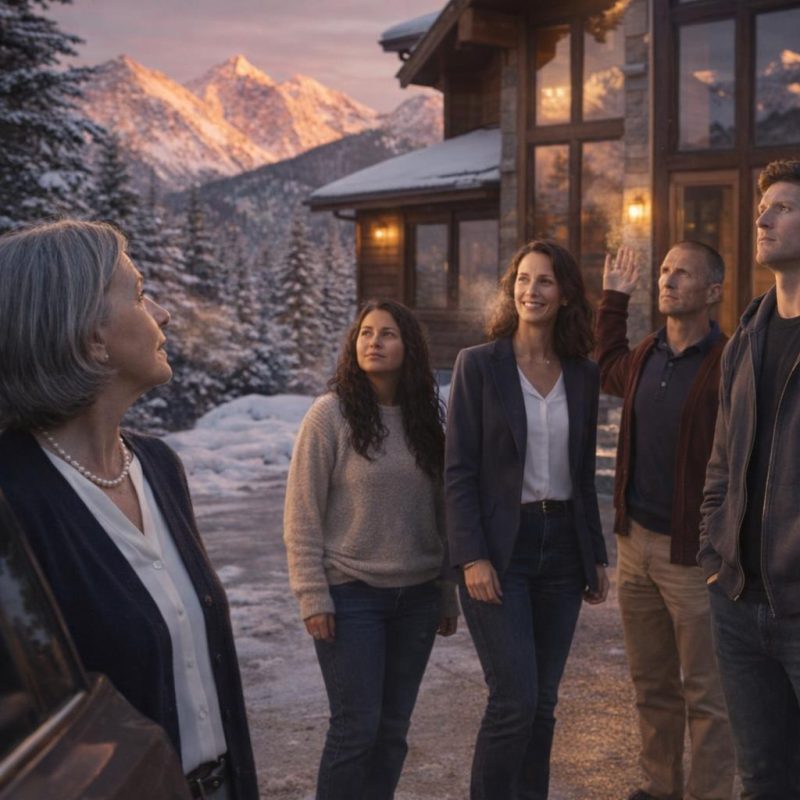 Image by RM AI
What Robert Would Have Wanted
My room was at the end of the upstairs hall, and it was quieter than I expected — the good kind of quiet, the kind that lets you breathe. There was a window seat overlooking the mountain, and I sat there for a while before I even started unpacking. Robert would have loved this room. He would have sat in that window seat with his coffee every morning and just looked at those mountains like they were doing him a personal favor by being there. That was the thing about Robert — he never took a beautiful view for granted. Three years. It still surprised me sometimes, the way grief worked. Not always a wave anymore, more like a shift in the light. The holidays had been the hardest part. That first Christmas without him, I'd barely managed to get the tree up. The second, I'd gone through the motions for the grandchildren's sake. But this year felt different. Lisa had made sure of it. I thought about how proud he would have been of her — organizing all of this, pulling the whole family together. He always said Lisa had his stubborn streak and my heart, and I used to argue with him about which one was the compliment. I unzipped my suitcase and started setting things on the dresser, and that's when my hand closed around something cool and solid at the bottom of the bag — Robert's old watch, the one with the worn leather strap, the one I hadn't even remembered packing.
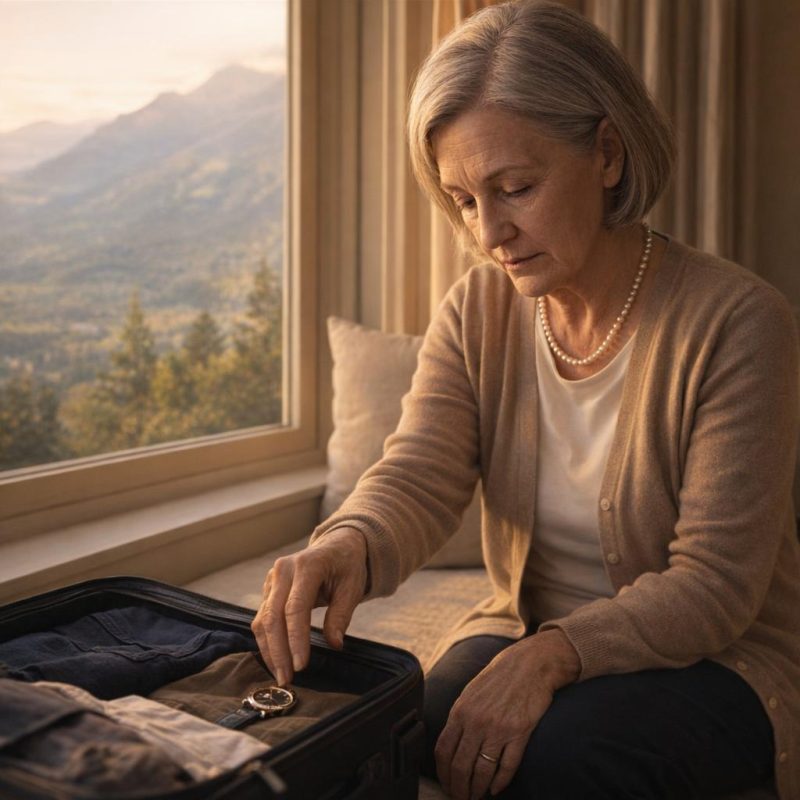 Image by RM AI
A House Full of Laughter
After everyone had settled in, Lisa suggested a proper tour, and we all wandered through the house together like we'd been given the run of a museum. The gourmet kitchen had one of those six-burner ranges that made David actually rub his hands together, even though the man burns toast on a good day. Emily discovered a reading nook tucked behind the staircase and immediately claimed it as hers, draping herself across the built-in bench with the theatrical satisfaction only a young woman in her twenties can manage. Josh found that the game room had a full-size pool table and a foosball table, and he challenged David to a match before we'd even finished the tour. I trailed behind everyone at my own pace, running my hand along the back of a leather sofa, pausing at the windows. The view from the main living area was something else entirely — the mountains sat out there in the afternoon light, white and enormous and completely unbothered by any of us, and I found myself just standing and looking for longer than I meant to. The dining room could have seated twenty without anyone feeling crowded. The whole house had this quality of being both grand and genuinely comfortable, which is harder to pull off than people think. I watched my family spread out and fill the space, each of them finding their corner of it, and something in me went very still and very grateful. The sound of Emily and Josh laughing about something in the game room drifted through the whole house, and the rooms felt alive in a way they hadn't in years.
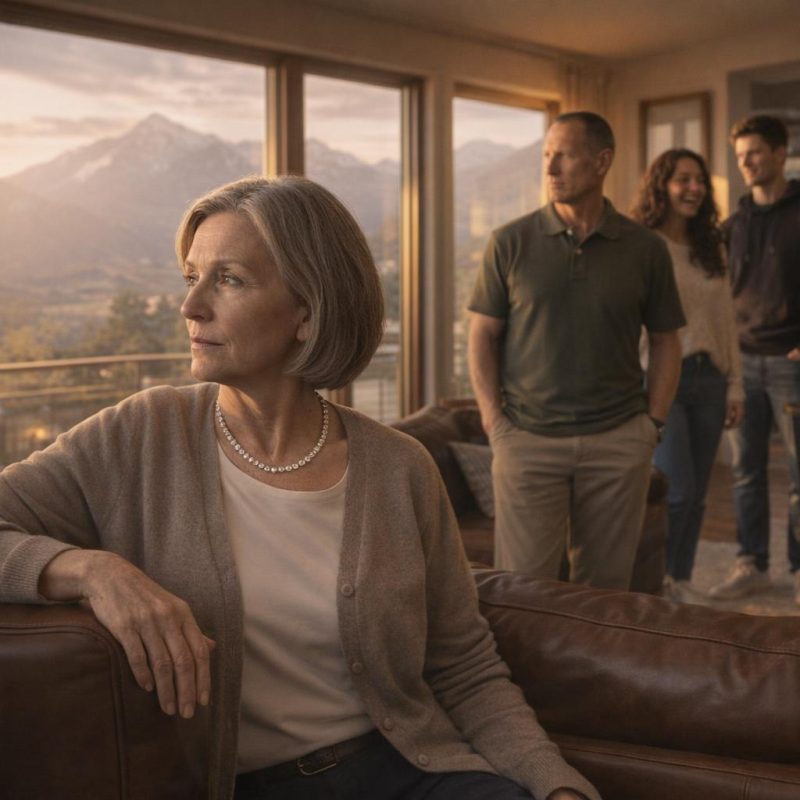 Image by RM AI
Too Good to Be True
I found Lisa in the kitchen that evening, and I tried to be casual about it. I asked her, while she was arranging things in the refrigerator, what a place like this ran for a week over Christmas. She straightened up and gave me that smile — the one that's warm but also means the conversation is already over. She said she'd found an incredible holiday promotion, some kind of last-minute deal through a property management company, and that I shouldn't give it another thought. I pressed a little. I said that even with a promotion, a house like this in the mountains at Christmas had to cost more than she should be spending on us. David was leaning against the counter by then, and he nodded along and said something about how Lisa had done her research and gotten a genuinely good rate. Lisa put her hand on my arm and said, "Mom, this is my gift. Let me give it." And there was something so settled in the way she said it — not defensive, just certain — that I felt the question dissolve right out of me. I thought about how hard she'd worked over the years, how much she'd built. I thought about how Robert used to say that the best thing you could do for your children was raise them to be more capable than you. Standing there in that beautiful kitchen, I decided to do what she asked. I decided to receive the gift. What stayed with me afterward was the ease in her voice when she told me not to worry about money — like it was the simplest thing in the world.
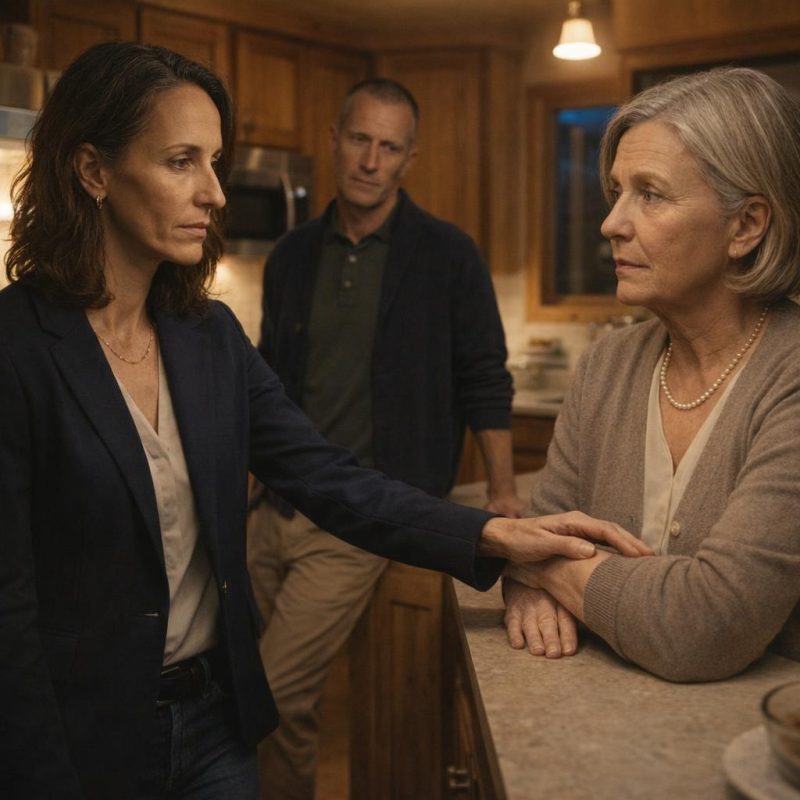 Image by RM AI
Christmas Eve Magic
Christmas Eve turned the house into something out of a dream. We'd found boxes of decorations in a hall closet — the owners had left them, or maybe Lisa had arranged it, I wasn't sure — and by mid-afternoon every surface had garland or candles or little wooden reindeer on it. Emily had strong opinions about where the ornaments should go and Josh had strong opinions about Emily's opinions, and the two of them bickered over the tree in the most affectionate way while David untangled lights with the patience of a saint. I was in the kitchen with Lisa most of the afternoon, working through a roast and two kinds of pie, and we talked the way we used to when she was younger — easy and unhurried, trading stories, finishing each other's sentences. The smell of cinnamon and pine filled the whole downstairs. By evening, the fire was going and someone had put on old Christmas music, the kind with real orchestras, and we all ended up in the living room at some point, full and warm and a little drowsy. I sat in the armchair nearest the fire and thought that Robert would have been in that chair if he were here, and the thought didn't hurt the way it used to — it just felt true, and tender. Later, when the grandchildren had gone upstairs and David had fallen asleep on the sofa, Lisa came and sat on the arm of my chair and put her arms around me, and she whispered that she was so glad we were all here together.
 Image by RM AI
The Morning Robert Would Have Loved
Josh knocked on my door at seven in the morning, which I suspected was actually sleeping in for him. By the time I got downstairs in my robe, Emily had already arranged herself cross-legged under the tree and was reading the tags on every package with the focused energy of someone conducting an audit. The living room looked like Christmas had arrived with serious intentions — the fire was already lit, the lights on the tree were going, and someone had started coffee. We opened gifts in that slow, unhurried way that only happens when nobody has anywhere to be, passing things around, reading cards out loud, laughing at the wrapping jobs. Lisa had found me a first edition of a book I'd mentioned once, years ago, in passing — I didn't even remember telling her — and I had to hold it for a moment before I could say anything. David got a new set of lenses for his camera and immediately started photographing everyone whether they wanted him to or not. Josh and Emily gave each other gifts that made them both laugh in a way that suggested an inside joke I wasn't meant to understand, and I loved that they had that. At some point I looked around the room — the fire, the wrapping paper everywhere, my daughter and her husband and my grandchildren all in their pajamas — and something settled in me that I hadn't felt in three years. Not happiness exactly, though it was that too. More like wholeness. Like the morning was complete in a way nothing had been since Robert died.
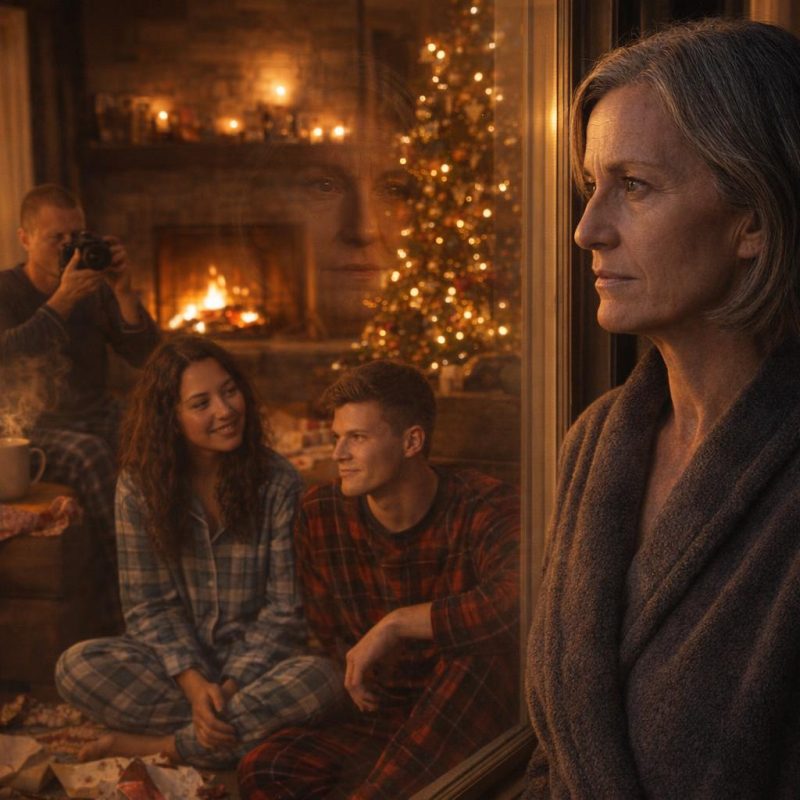 Image by RM AI
Twenty Around the Table
I don't know how Lisa managed it, but by six o'clock on Christmas evening there were twenty people around that dining room table. Cousins I hadn't seen since the summer, David's brother and his family, a few neighbors who'd become close enough over the years to count as family — they all came, and the table held every one of them. The room was loud in the best possible way, the kind of loud that means everyone is talking at once because they actually want to. I stood up at some point and tapped my glass, and I said something about gratitude and about Lisa, and I didn't get very far before my voice did that thing it does, and everyone was kind enough to applaud before I had to finish the sentence. The food was extraordinary — we'd been cooking in shifts for two days — and the wine was good and the candles were lit and the mountains were dark and enormous outside the windows. I sat back down and just let it wash over me for a while, all of it. I watched Josh explain something to David's brother with his hands, the way Robert used to do. I watched Emily lean her head on her cousin's shoulder. I felt, for a little while, like I was exactly where I was supposed to be. And then, in one of those quiet pauses that happen even in loud rooms, I glanced across the table and found Lisa watching me with an expression I couldn't quite name.
 Image by RM AI
Days of Simple Joy
The days after Christmas had their own gentle rhythm. Mornings started slow — coffee and the mountain view and whoever wandered downstairs first. Some days Josh and Emily and David drove up to the ski area, and I'd watch them load into the car with their gear and feel perfectly content to stay behind. Lisa and I cooked together most afternoons, working through recipes she'd saved on her phone and a few I knew by heart, and we'd talk while we chopped and stirred in a way that felt like the best version of us. One afternoon Emily taught me a card game that involved a suspicious amount of slapping the table, and I lost badly and repeatedly and didn't mind at all. Evenings were for the fireplace — games, conversation, the occasional movie that nobody finished because someone always fell asleep first. I noticed, in those days, how genuinely relaxed everyone seemed. Not performing relaxation, actually having it. David laughed more easily than I'd seen in a while. Josh put his phone down for whole hours at a stretch. Even Lisa, who had a tendency to manage everything from a slight distance, seemed to let herself just be present. I thought more than once that this was what Robert had always wanted for us — not any particular place or occasion, just this quality of time, unhurried and unguarded. The days moved the way good days do when you're not watching the clock, each one folding quietly into the next.
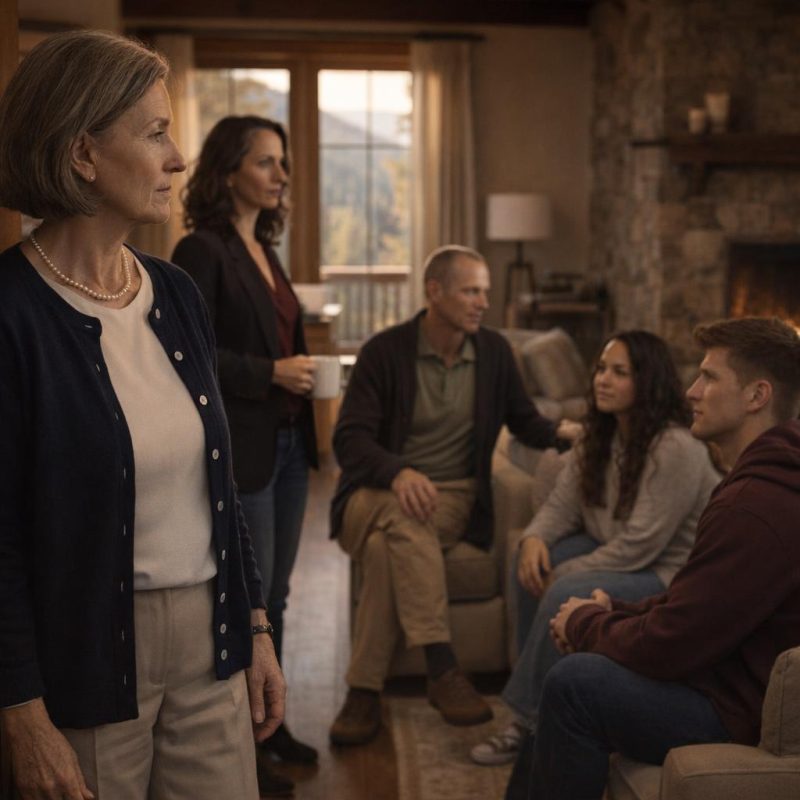 Image by RM AI
What Robert Always Wanted
That last evening I found myself alone by the fireplace for a little while, everyone else drifting off to bed in ones and twos, and I just sat there with my hands wrapped around a mug that had gone mostly cold. The fire had burned down to a low, steady glow — the kind that doesn't demand anything from you, just keeps you company. I thought about Robert. I do that more than people probably realize, even three years on. He used to talk about this — not a vacation specifically, but this quality of thing. He'd say that what he wanted most for our family was for everyone to actually like each other, not just love each other, because love you're born into but liking takes work. And watching everyone this week — David laughing until he had to take his glasses off, Emily slapping the card table with pure competitive joy, Josh sitting still long enough to just be a person instead of a schedule — I thought Robert would have recognized exactly what he'd been hoping for. Lisa had given us this. Whatever it had cost her in planning and logistics and probably more money than I wanted to think about, she had handed us a week that felt like the family Robert always believed we could be. I sat there in the quiet, the embers settling, and felt something I hadn't felt in a long time — not happiness exactly, but the particular peace of knowing that the people you love are going to be all right.
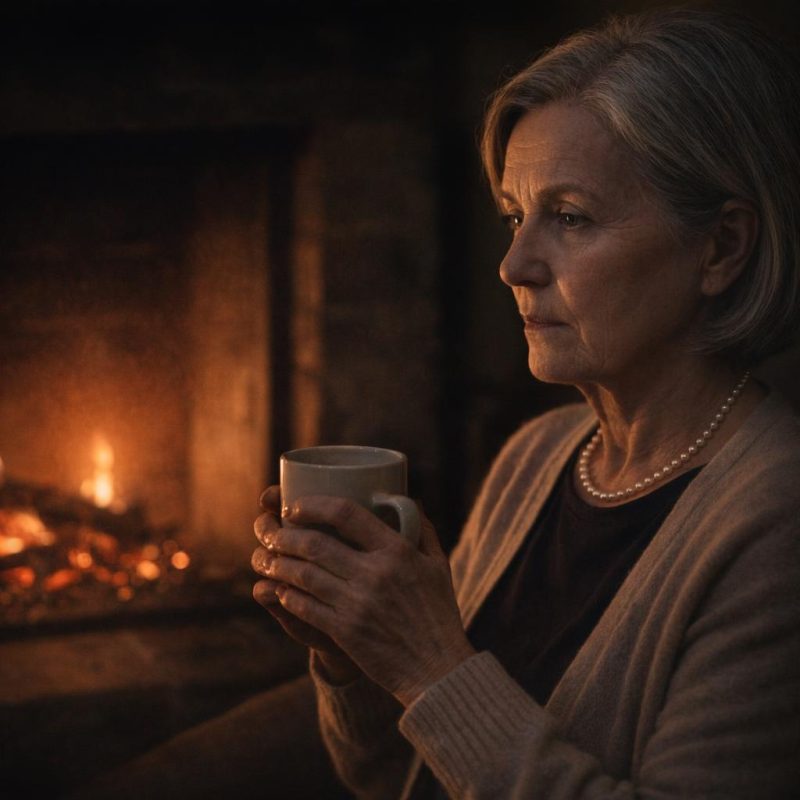 Image by RM AI
The Last Perfect Night
Nobody said it out loud, but we all felt it at dinner — that particular heaviness that settles over a good thing when you know it's almost finished. Josh made a point of going back for seconds of everything, like he could slow time down by eating more of it. Emily kept taking photos on her phone, not of anything specific, just the table, the window, the fire, as if she was trying to hold onto the light. David refilled everyone's glasses without being asked. Lisa was quieter than usual, but I put that down to the same thing I was feeling — the reluctance to let go of a week that had been genuinely good. We went around the table sharing favorite moments, the way you do at the end of something, and I listened to each of them and felt grateful in a way that was almost too big to sit with comfortably. I said that mine was all of it, which made Emily roll her eyes affectionately and say that wasn't a real answer, and I said it was the only honest one I had. We talked through the logistics — who was loading what in the morning, what time Mr. Thompson was coming for the walkthrough, who had left things in the upstairs bathroom. It was ordinary talk, the kind that wraps around the end of something good. I went to bed that night feeling full in a way that had nothing to do with dinner, and tomorrow felt very far away. Then morning arrived, and it wasn't far away at all.
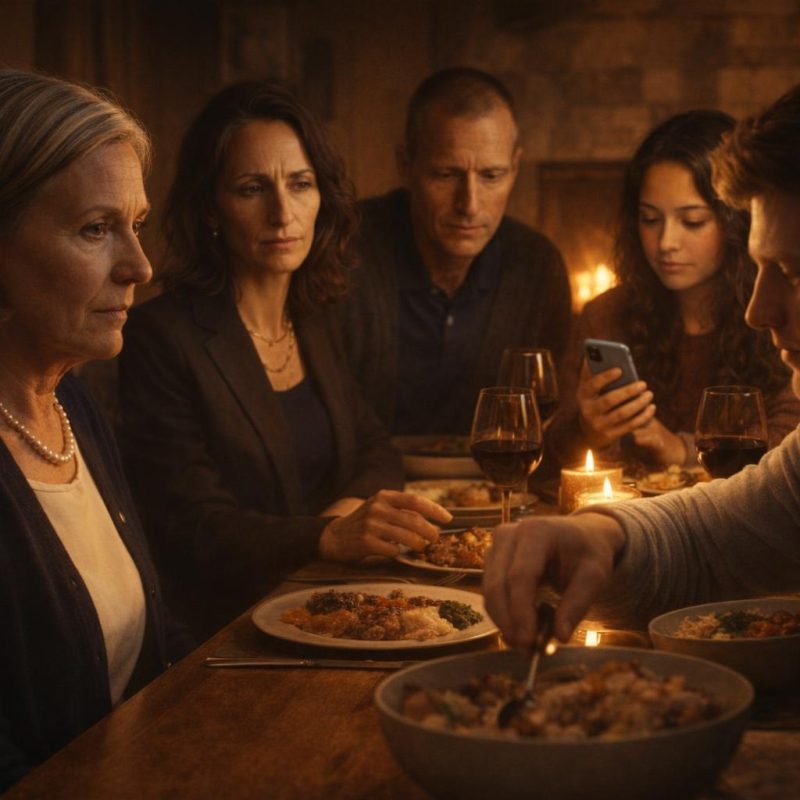 Image by RM AI
The Question That Changed Everything
The morning moved the way checkout mornings always do — a little chaotic, a little louder than necessary, everyone carrying bags and asking where things were and whether anyone had seen the phone charger. Mr. Thompson arrived right on time, pleasant and professional, clipboard in hand, and I was the one nearest the door when he came in so I ended up walking with him while the others shuttled luggage to the cars. He was perfectly polite. He asked how we'd enjoyed the stay, and I told him honestly that it had been one of the best weeks I could remember. He smiled at that, seemed genuinely pleased. And then, in the same easy tone, he asked whether I had given any more thought to the agreement, and whether I'd decided to move forward. I stopped walking. I looked at him. He was watching me with a calm, expectant expression, the way you look at someone when you're waiting for an answer to a question you've already asked once before. I had no idea what he was talking about. I didn't have a flicker of recognition — not a half-remembered conversation, not a document I'd skimmed and forgotten, nothing. I asked him what agreement he meant, and something shifted in his expression, just slightly, like a man who has just realized he may have stepped into something he didn't intend to. The word hung there between us, and I stood in the doorway of that beautiful house with the mountain air coming in cold around us, and I had absolutely no idea what was happening.
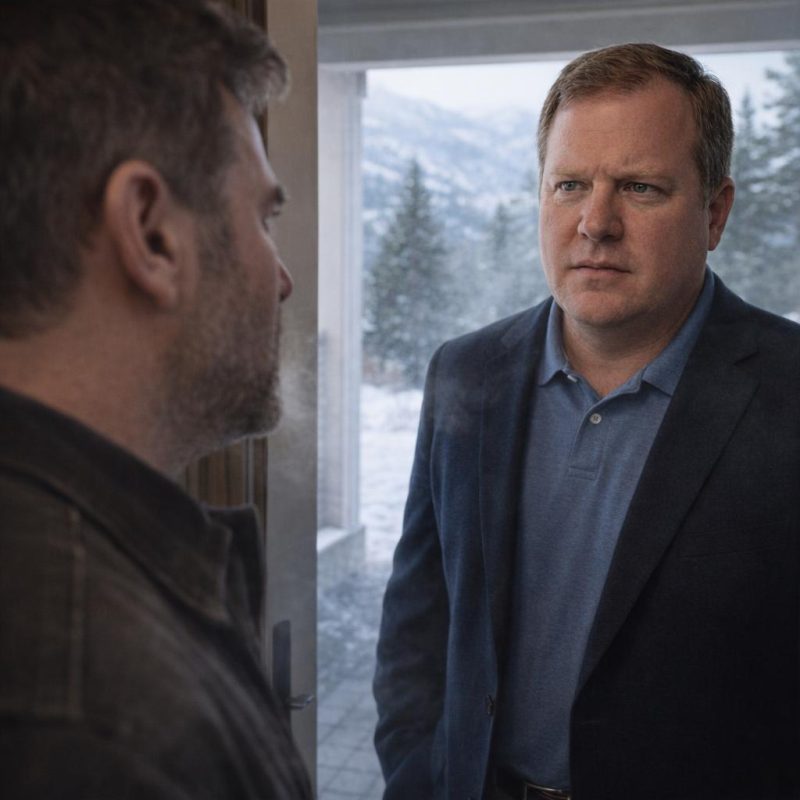 Image by RM AI
The Watching Family
I started to ask him again — what agreement, what was he referring to — but something made me turn my head first. Maybe it was instinct, or maybe it was the particular quality of silence that had fallen outside, the kind that only happens when people who were making noise have suddenly stopped. The cars were right there in the driveway, bags half-loaded, doors standing open. And every single one of them had gone still. Lisa was standing beside the rear of the car with a duffel bag in her hands, not moving. David had stopped on the front steps, one hand on the railing. Emily was near the trunk, and Josh was a few feet behind her, and none of them were doing anything. They were all looking at me. Not glancing over — looking. The kind of looking that has weight to it. Emily's face had gone careful in a way I recognized from when she was small and had broken something and was waiting to see if I'd noticed. David's expression was harder to read, but his shoulders had come up around his ears. Josh was staring at the ground. Lisa hadn't moved at all, and she wasn't looking at me the way a person looks when they're confused about what's happening. She was looking at me the way a person looks when they already know. I turned back to Mr. Thompson. He was watching me too, and the pleasant professional ease had gone out of his face, replaced by something more uncertain. My entire family stood frozen in the driveway, watching me and Mr. Thompson.
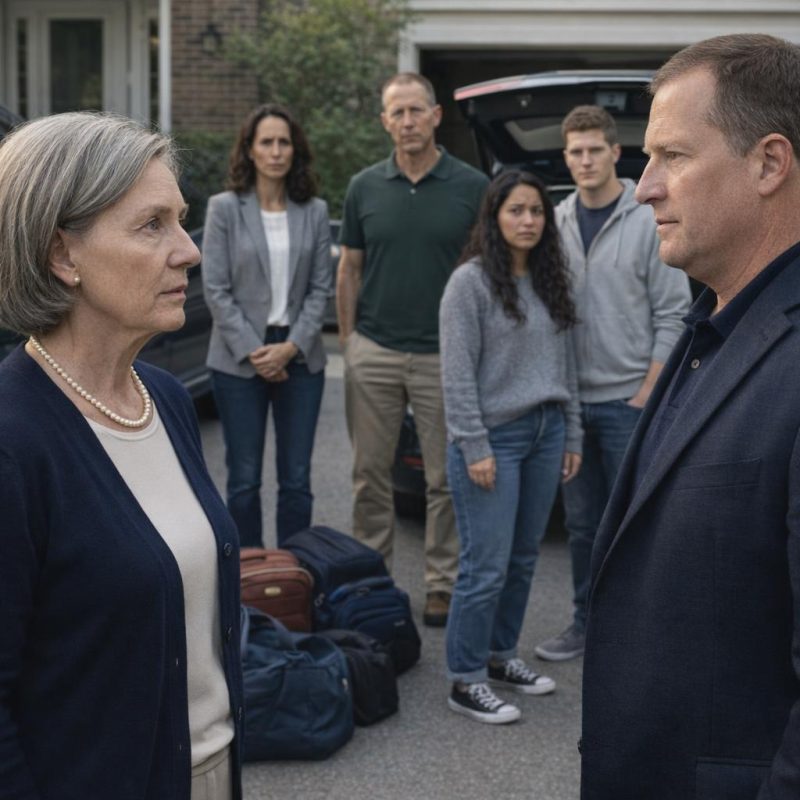 Image by RM AI
Paperwork With My Name
Mr. Thompson cleared his throat. He looked genuinely uncomfortable now, the clipboard held a little tighter than before, and when he spoke again his voice had lost its easy professional rhythm. He said he was sorry — he'd assumed, given the paperwork, that the family had already walked me through everything. He said my name was on the documents. He said it more than once, actually, as if repetition might help it land differently: that the paperwork specifically identified me, that the decision outlined in it was mine to make, that he had taken it as given that I'd been part of the conversation from the beginning. I asked him to slow down. I asked him what paperwork. He looked pained. He said there were documents that had been drawn up in connection with the rental — that my name appeared on them in a particular capacity — and that he had genuinely believed I was aware of all of it. He apologized again. He was clearly a man who did not enjoy being the source of confusion, and I could see him trying to figure out how to walk something back that he hadn't realized he'd walked into. I glanced toward the driveway. My family was still there, still quiet. Nobody offered anything. Nobody stepped forward to explain. I turned back to Mr. Thompson and asked him what paperwork he meant, and the words came out steadier than I felt. Those two words — paperwork, your decision — sat in my chest and wouldn't settle.
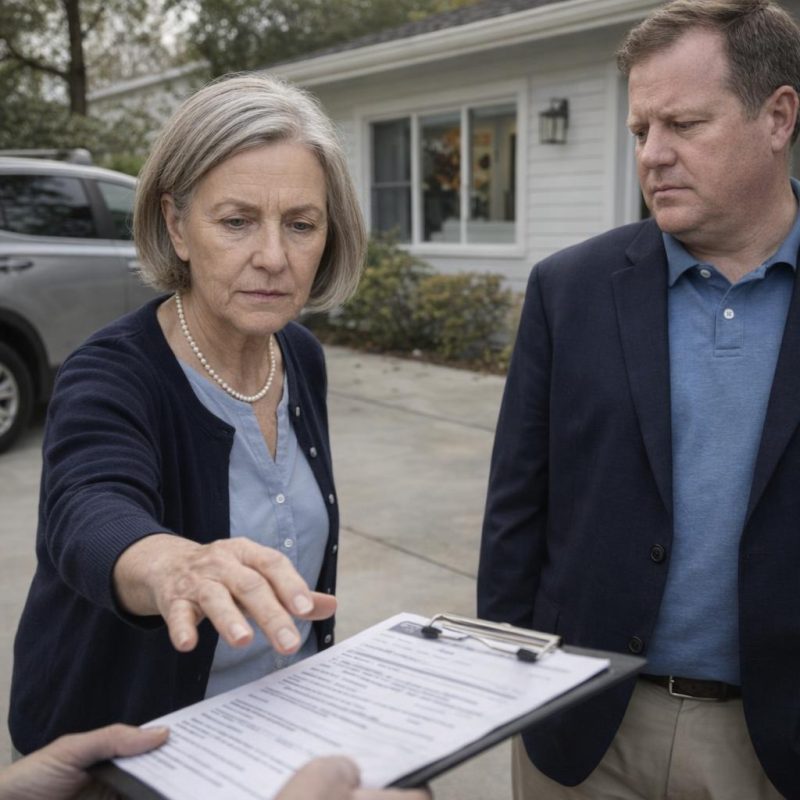 Image by RM AI
We'll Talk Later
Before Mr. Thompson could answer, Lisa was there. I hadn't heard her cross the driveway — one moment she wasn't beside me and then she was, her hand briefly on my arm, her voice smooth and certain in a way that felt practiced. She told Mr. Thompson that they could sort all of this out later, that there had clearly been some miscommunication on the company's end, and that right now they needed to finish loading up and get on the road. Her tone was pleasant but it had an edge underneath it, the kind that isn't quite a request. Mr. Thompson looked at her, then at me, then back at her. He nodded slowly and said of course, they could be in touch. He stepped back and made himself busy with his clipboard. Lisa turned to me and said something about the drive, about traffic, about getting ahead of it — words that were meant to move me forward without actually addressing anything. I let her guide me toward the car because I didn't know what else to do in that moment. David and the kids finished loading in near silence. Doors closed. Engines started. And then we were pulling away from that beautiful house, and nobody said a word, and the quiet in that car was not the comfortable kind we'd had all week. It was the kind that fills up a space when everyone in it is holding something back, and I sat in it and felt its weight pressing in from every direction.
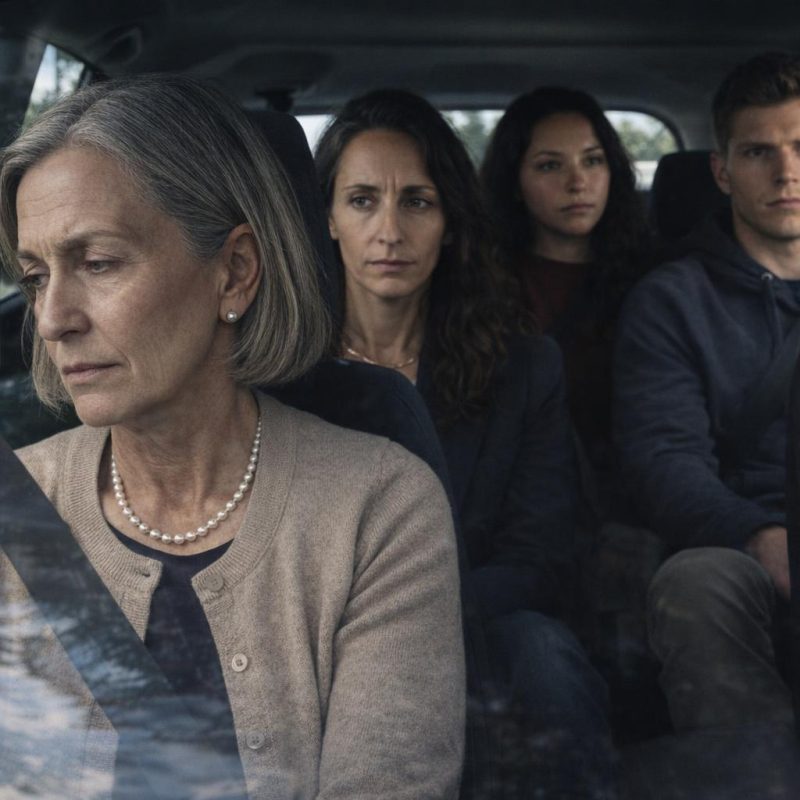 Image by RM AI
The Drive Home
I waited until we were on the highway before I asked. I kept my voice even — I've had a lot of practice keeping my voice even — and I asked Lisa what Mr. Thompson had been talking about. She said it was nothing, a mix-up with the rental company, some paperwork that had gotten confused between accounts. I asked what kind of paperwork. She said administrative stuff, the kind of thing that happens when you book through a third party, nothing that affected us or the trip. I asked why my name would be on administrative paperwork for a rental she had booked. She said she wasn't sure, maybe it was a standard thing, maybe they'd pulled it from a form somewhere. Each answer came a little too quickly and landed a little too flat, and the answers didn't quite connect to each other the way true things do. I pressed again. She asked me, with a patience that had gone thin at the edges, to please just let it go for now, that she would explain everything properly when they got home and settled. I looked at her profile — her eyes on the road, jaw set, hands at ten and two — and I thought about the way everyone had frozen in that driveway. I thought about Mr. Thompson's face when he realized I didn't know. I thought about a week of warmth and laughter and closeness, and something in my chest went very quiet and very still. Her explanation didn't hold together, and I knew it, and somewhere in the set of her shoulders, I think she knew I knew it too.
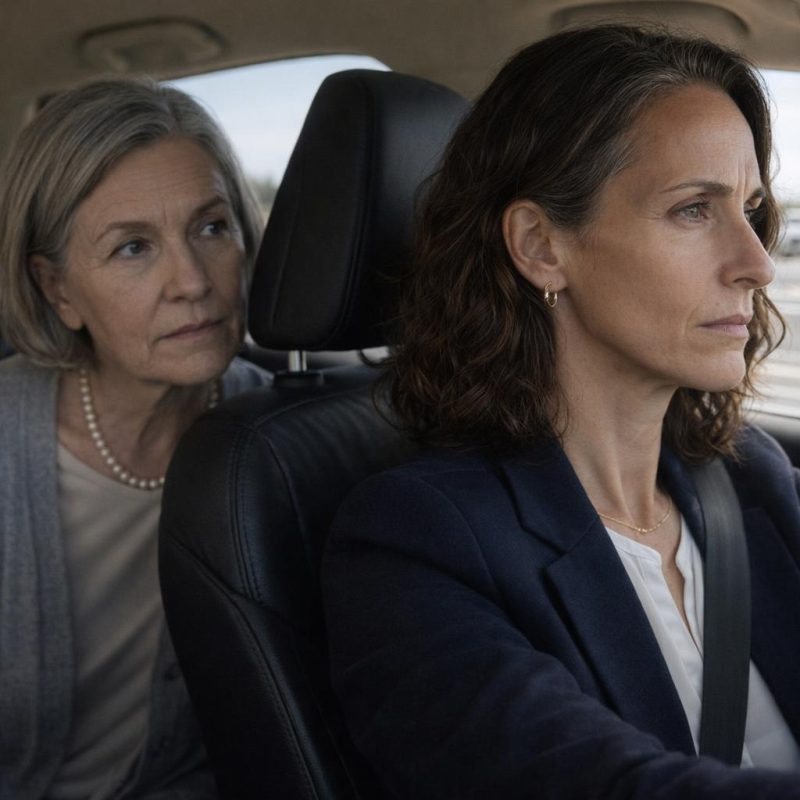 Image by RM AI
The Call I Had to Make
I gave it three days. I told myself I was being patient, giving Lisa the chance to come to me the way she'd promised, but by the third morning I was sitting at my kitchen table with my coffee going cold and the same thoughts circling that had been circling since we got home. Lisa hadn't called. She'd sent one text saying she was swamped with work and they'd talk soon. I'd looked at that text for a long time. I found the property management company's number without much trouble — it was on the rental confirmation email Lisa had forwarded me back in November, the one I'd printed out and kept in the folder on my desk the way Robert always said to do with travel documents. I sat with the phone in my hand for a few minutes. I'm not someone who goes around people. I was raised to handle things directly and I've tried to live that way. But I also knew that whatever was in that paperwork had my name on it, and that made it mine to understand. I dialed. It rang twice. Mr. Thompson answered in his professional voice, warm and practiced, and I could hear him shift slightly when I told him who I was. I said I was sorry to call out of the blue, and that I didn't want to cause any trouble, but that I needed him to explain to me what the agreement was really about and why my name was on it.
 Image by RM AI
Not About the Rental
Mr. Thompson went quiet for a moment when I pressed him. Then he said, carefully, that he wasn't in a position to discuss the specifics of any confidential arrangements without authorization from the renter of record. I told him I understood that, but that my name had appeared on paperwork I hadn't signed, and I thought that gave me some standing to ask questions. He apologized again — he was very good at apologizing — and said he wished he could be more helpful. I asked him directly: was this arrangement about the vacation rental? Another pause. Longer this time. He said something about how the rental itself was really just a — and then he stopped himself, like he'd already said more than he meant to. I waited. He cleared his throat and said that the rental property was, in his understanding, more of a courtesy arrangement. That the primary interest, as far as he knew, had to do with something I owned. I asked him what he meant by that. He said he wasn't sure he should say more. I told him, as calmly as I could manage, that I was a sixty-five-year-old woman who had just found her name on a document she knew nothing about, and that I deserved at least a general answer. He exhaled. He said the owner of the vacation property had expressed interest in acquiring something — a piece of land, he believed — that belonged to me.
 Image by RM AI
The Cabin Robert Left Behind
I asked him what land he meant, and he said he wasn't entirely certain of the details — he'd only been present for parts of the conversations, he said, and most of what he knew came from passing remarks rather than anything formal. But he remembered the property being described as a lakeside cabin. He said it had come up more than once, and that whoever was discussing it had mentioned it had been in my late husband's family for a long time. I knew immediately which cabin he meant. There was only one it could be. Robert's family had owned it for three generations — his grandfather had built the original structure himself, and Robert had spent summers there as a boy. It sat on a small lake about two hours north of the city, nothing fancy, just a weathered wood cabin with a screened porch and a dock that needed repainting every few years. We'd taken the kids up there when they were small. After Robert passed, I'd kept paying the taxes and the insurance without really thinking about it. It wasn't worth much, as far as I'd ever known. It was just a place that still felt like him. I thanked Mr. Thompson and told him I'd be in touch if I had more questions, and then I sat at the kitchen table with the phone face-down in front of me, thinking about that old screened porch and the way the light came off the water in the early morning, and the weight of what I'd just heard settled over me like something I couldn't quite name yet.
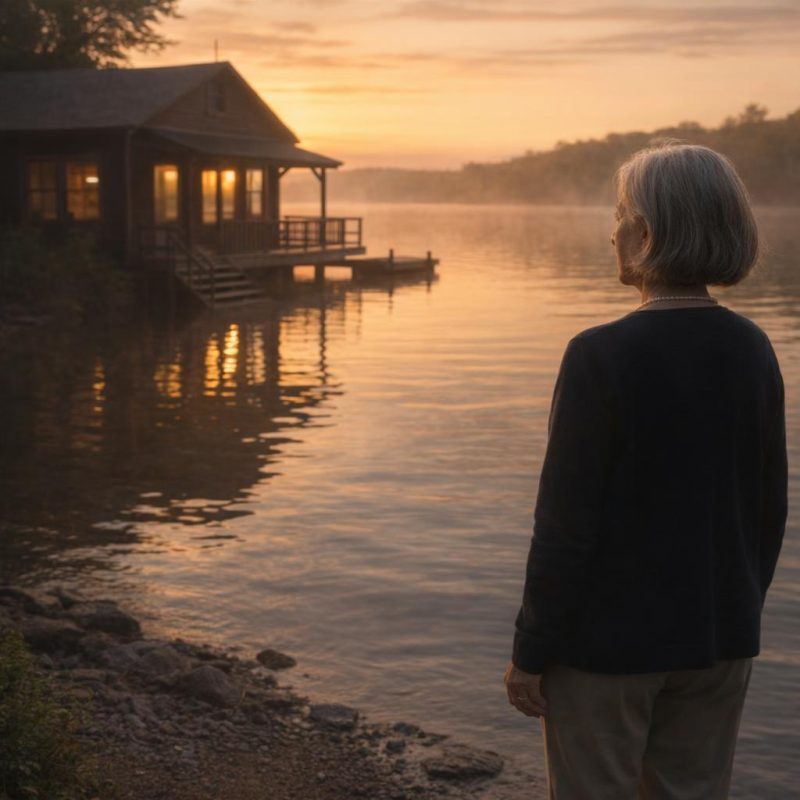 Image by RM AI
Between the Luxury Properties
I didn't sleep well that night. By the next morning I was at my laptop with a second cup of coffee, pulling up the county property records website for the area where the cabin sat. I'd never had much reason to look at those records before — Robert had handled all of that, and after he was gone I'd just kept up with the basics. But the search wasn't complicated once I figured out the interface. I typed in the parcel number from the tax documents I kept in my files and found the cabin listed exactly where it should be, still in my name. Then I started looking at the surrounding parcels. The first few I checked had transferred ownership in the last three years. Then more. I wrote the names down on a notepad — different company names, but when I searched each one, they kept connecting back to the same parent entity. A development group. I found a few news mentions, nothing detailed, just references to waterfront acquisitions in the region. I pulled up a satellite map and started marking what I was finding. The properties formed a rough ring around the lake — some on the north shore, some on the east, a stretch along the south. One by one, every parcel I checked had changed hands. Every one except mine. I sat back and looked at what I'd drawn on the notepad, and the quiet that settled over the kitchen felt different from ordinary quiet.
 Image by RM AI
The Letters I Ignored
I sat there looking at my notepad for a long time before something else started pulling at the back of my mind. Letters. I'd gotten letters over the past couple of years — envelopes from companies I didn't recognize, with return addresses I didn't know. I remembered setting them aside, maybe glancing at the first line or two, and deciding they were the kind of unsolicited mail that wasn't worth my time. Real estate inquiries, I'd assumed. The sort of thing that comes when your name is in a property database somewhere. I'd thrown most of them away without a second thought, and the ones I hadn't thrown away I'd probably filed without reading. I felt a slow frustration rising in my chest — not at anyone else, just at myself, for being so quick to dismiss things I didn't understand. Robert would have read every one of them. He was careful that way. I got up from the table and went to the hall closet where I keep my filing boxes, and then to the kitchen drawer where I'd been dropping loose mail for the better part of two years. I knew I hadn't been as organized since Robert passed. I pulled out the accordion folder I use for miscellaneous correspondence and carried it back to the table, and then I reached into the kitchen drawer and gathered up the loose stack of envelopes I'd been meaning to sort through for months, and I set it all in front of me and started looking.
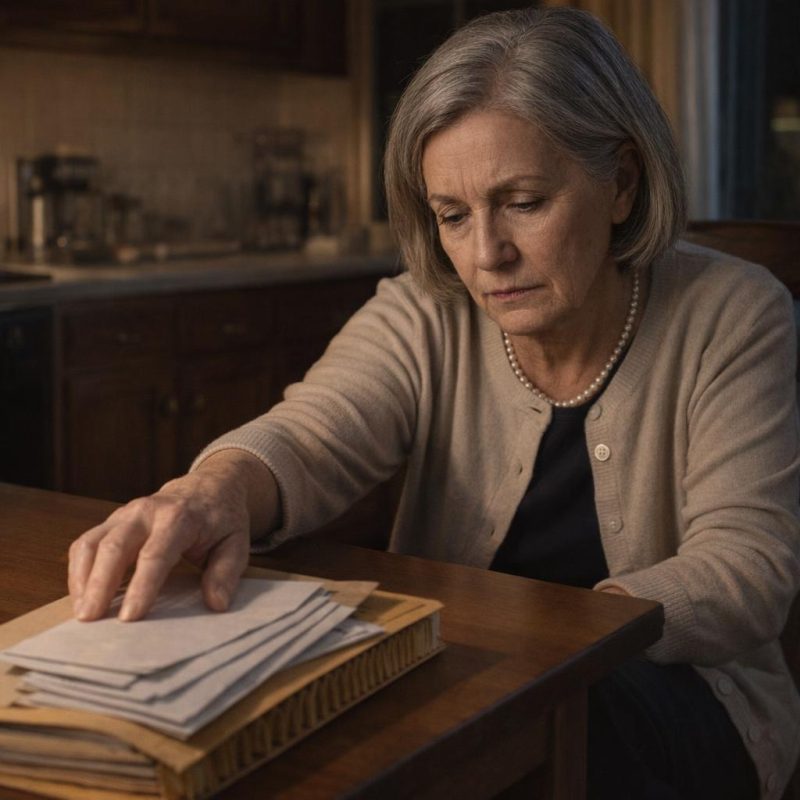 Image by RM AI
The Offers I Threw Away
I spread everything across the kitchen table and started going through it piece by piece. Most of it was what I'd expected — utility notices, insurance renewals, a few holiday cards I hadn't filed away. But mixed in among all of it were envelopes I didn't remember opening. Some I clearly hadn't. I set those aside and worked through the ones I had opened first. Two of them were letters from companies with names that sounded vaguely corporate and meant nothing to me — Lakeview Holdings, Northshore Property Partners. Both mentioned the cabin by its county parcel number. Both made offers to purchase. I'd apparently read the first few lines of each and set them down without finishing them. Then I started on the unopened ones. Another letter, different company name, same parcel number. Then another. I lined them up by postmark date and counted. Seven letters over roughly two and a half years, from what appeared to be four or five different companies. The wording in each was polite and unremarkable, the kind of language that sounds routine until you understand the context behind it. I sat there with the letters arranged in a row in front of me, and what struck me wasn't any single offer — it was the accumulation of them, the steady, patient persistence of it, and the fact that I had let every single one of them pass through my hands without understanding what I was holding.
 Image by RM AI
The Property Manager's Apology
I called Mr. Thompson again the following morning. I'd spent the evening organizing what I'd found and writing down the questions I wanted to ask, the way Robert used to do before any important conversation. Mr. Thompson answered on the second ring and I could hear the slight hesitation when he recognized my voice. I told him I wasn't calling to cause trouble, but that I'd done some research and I needed him to confirm a few things for me. He said he'd try his best. I asked him whether the owner of the vacation property was connected to a development group that had been acquiring waterfront land in the area where my cabin sits. A long pause. Then he said yes, that was his understanding. He apologized — again — and said he hadn't realized, when the arrangement was first proposed to him, that I wasn't aware of the broader context. I asked him to tell me what he did know. He said the owner represented an investment group that had been putting together a collection of waterfront properties over the past several years. He said the vacation home itself was part of that portfolio. He said he was sorry, more than once, and I believed that he meant it. I thanked him and ended the call, and then I sat with my notepad and my row of letters and the satellite map I'd printed out, and the feeling that settled over me wasn't panic — it was something quieter and heavier, the slow understanding that the Christmas trip I'd been so grateful for had been threaded through with something I hadn't been invited to see.
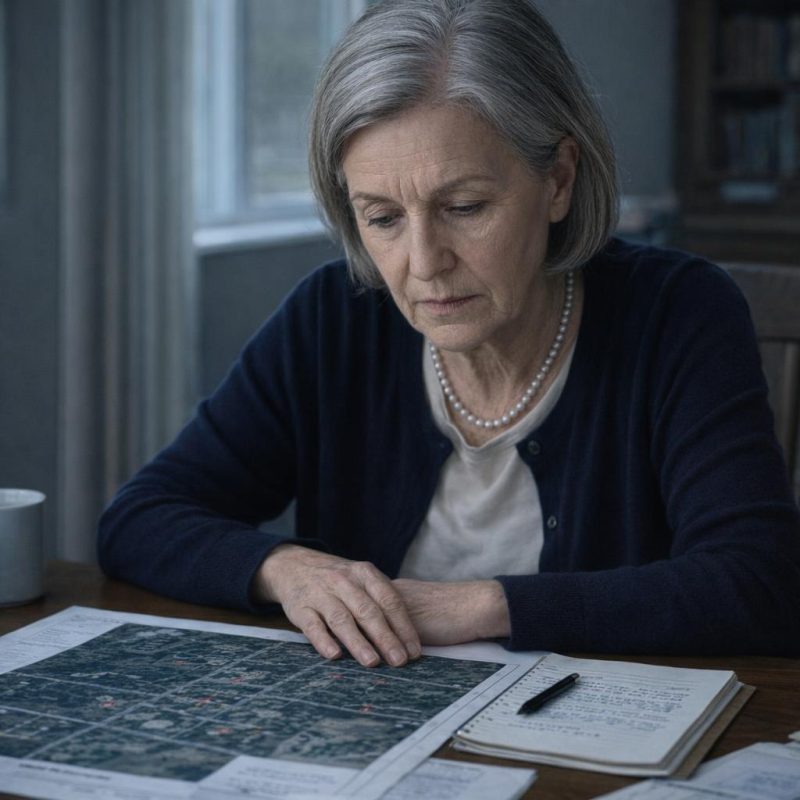 Image by RM AI
The Resort Project
I found the investment group's name in one of the letters — Meridian Waterfront Development — and I typed it into the search bar that evening. Their website came up immediately, clean and expensive-looking, the kind of site that uses words like curated and legacy and exclusive without explaining what any of them mean. I read through it carefully. They specialized in private resort communities, members-only properties on lakes and coastlines. There was a section labeled Current Projects, and when I clicked it, I found renderings for something called The Meridian Lake Reserve. The images were beautiful in that glossy, aspirational way — a marina with wooden docks, a main lodge with floor-to-ceiling windows, clusters of member cottages set back among the trees, a spa building, a dining terrace overlooking the water. I recognized the shape of the shoreline in the renderings before I found the map. It was the same lake. Our lake. Robert's family's lake. I sat forward and looked more carefully at the property map they'd included, showing the assembled parcels shaded in a soft gray. Most of the shoreline was covered. But there was one section left unshaded, a gap sitting right in the middle of the plan, and the shape of it — the way it interrupted the otherwise continuous stretch of gray — was unmistakable.
 Image by RM AI
The Only Holdout
I went back to the county property records and spent the better part of the next morning going through every parcel that bordered the lake. I wrote each one down — owner name, transfer date, sale price where it was listed. It took a while. Some of the subsidiary company names were different from Meridian's, but when I searched them individually, they all traced back to the same parent entity. The earliest sale I found was about three years ago. The most recent was eight months back. I counted twelve separate parcels in total, spread around the lake in a near-complete ring. Some had sold quickly — a single transaction, no apparent back-and-forth. Others showed multiple deed amendments, which I took to mean the negotiations had taken longer. I cross-referenced each one against the map I'd printed from the Meridian website. Every shaded parcel on their rendering matched a property that had transferred to their group or one of its subsidiaries. Every single one. I set my pen down and looked at what I'd assembled on the table — the letters, the map, the list of parcel numbers with their transfer dates — and the only property on that lake still listed in its original owner's name was the one Robert's grandfather had built with his own hands, and it sat at the center of everything they needed.
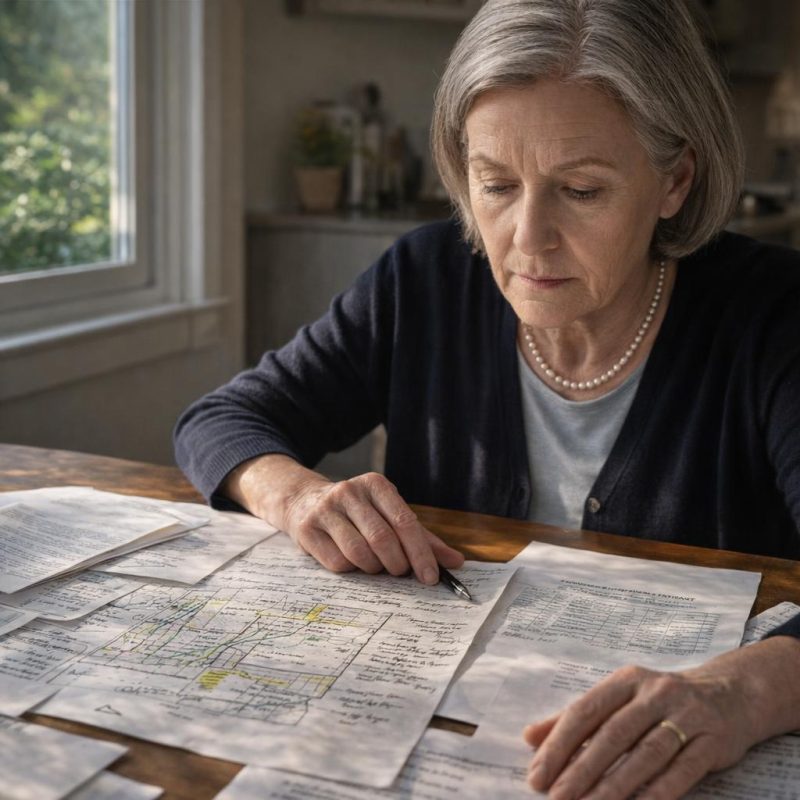 Image by RM AI
The Approach Through Lisa
I sat at the kitchen table with all of it spread out in front of me — the parcel records, the Meridian map, the letters — and I started walking backward through the timeline. The vacation had been Lisa's idea. She'd presented it as a gift, something generous and out of nowhere, and at the time I'd been so touched I hadn't thought to ask what prompted it. But now I kept turning that over. The property manager's question hadn't been a slip. It had felt like something that was supposed to happen after some groundwork had already been laid. It seemed possible that someone had reached out to Lisa before any of this started — that someone had explained the situation and asked whether she might help create an opportunity, a setting, a moment when I might be more open to a conversation. A week in a beautiful house on the lake, the whole family together — it would have softened anyone. It would have softened me. I thought about how the timing seemed to line up, how each piece connected to the next, and something in my chest pulled tight in a way I hadn't expected. I wasn't angry yet. I was something quieter than that, something that felt more like grief. I loved my daughter. I still did. But the more I looked at the pieces on that table, the harder it was to find an explanation that didn't put her somewhere in the middle of all of it. I was still sitting there, turning it over, when my phone lit up on the counter with Lisa's name on the screen.
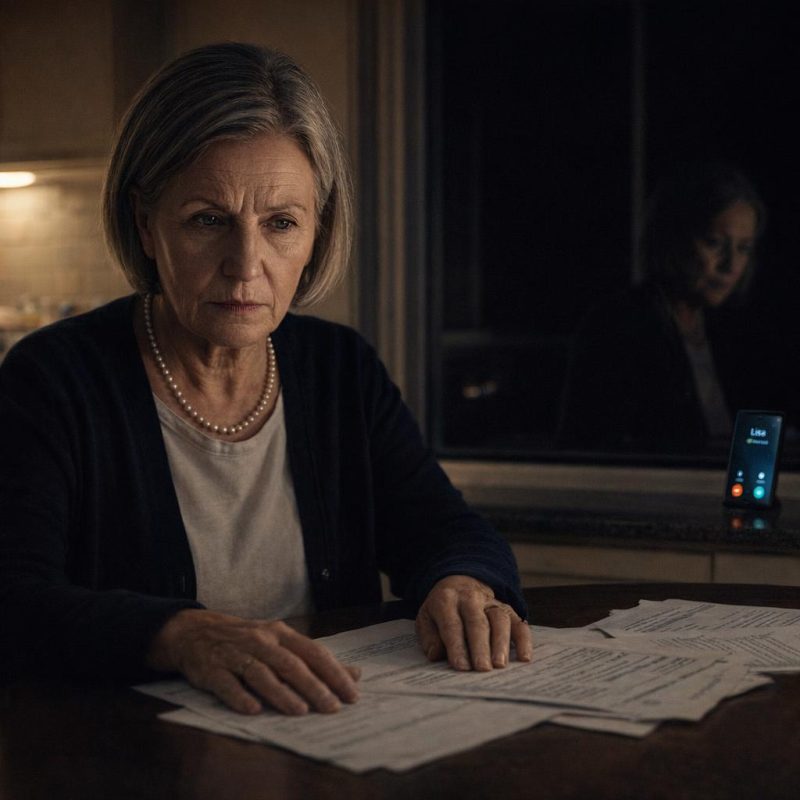 Image by RM AI
The Uncomfortable Conversation
I picked it up. I don't know why — maybe because I needed to hear her voice, or maybe because I'd been sitting with questions long enough that I wanted at least one answer. She asked if everything was okay, her tone careful in that way she gets when she already suspects something is wrong. I told her I'd been going through some things related to the cabin. There was a pause. I asked her directly: had someone approached her before she booked the vacation? Had anyone offered her something in exchange for arranging a meeting with me? The silence that followed lasted long enough that I counted it. Four, maybe five seconds. Then she said no, of course not, that I was reading too much into things. Her voice had gone a little flat, a little careful. I told her I'd been looking into the investment group — that I'd found the property records, that I knew about the parcels around the lake. She said I was overreacting, that the property manager had probably just been doing his job, that there was nothing unusual about any of it. I asked her why the property manager had mentioned an agreement by name if there was nothing to it. She said it must have been a misunderstanding. We went back and forth like that for a few more minutes, neither of us saying the thing that was actually sitting between us. When we hung up, I set the phone down on the table and didn't move for a long time. The silence that followed felt heavier than anything she'd actually said.
 Image by RM AI
The Neighbors Who Sold
I spent the next day tracking down contact information for the families who had sold their properties around the lake. A few names I already knew from years of summers out there. Others I found through the county records I'd already pulled. I called four people over the course of the afternoon. Each conversation was different in its details but the same in its shape. A representative from the investment group had contacted them directly — by phone or by letter, sometimes both. The offer had been straightforward. Fair market value, they each said, sometimes a little above. The process had been professional. No pressure, no unusual conditions. One woman told me the closing had taken less than three weeks. Another said the representative had been pleasant and answered every question she had. None of them mentioned anything unusual. No third parties. No family members involved. No arrangements made through someone else. They had all been approached the same way: directly, honestly, and by name. I thanked each of them and wrote down what they'd told me. When I set my pen down after the last call, I sat with the contrast of it for a while. Every one of those families had been dealt with plainly. Whatever had happened with me had gone through a different door entirely, and I couldn't stop wondering why. The difference in how I'd been approached sat with me long after I'd put the notes away.
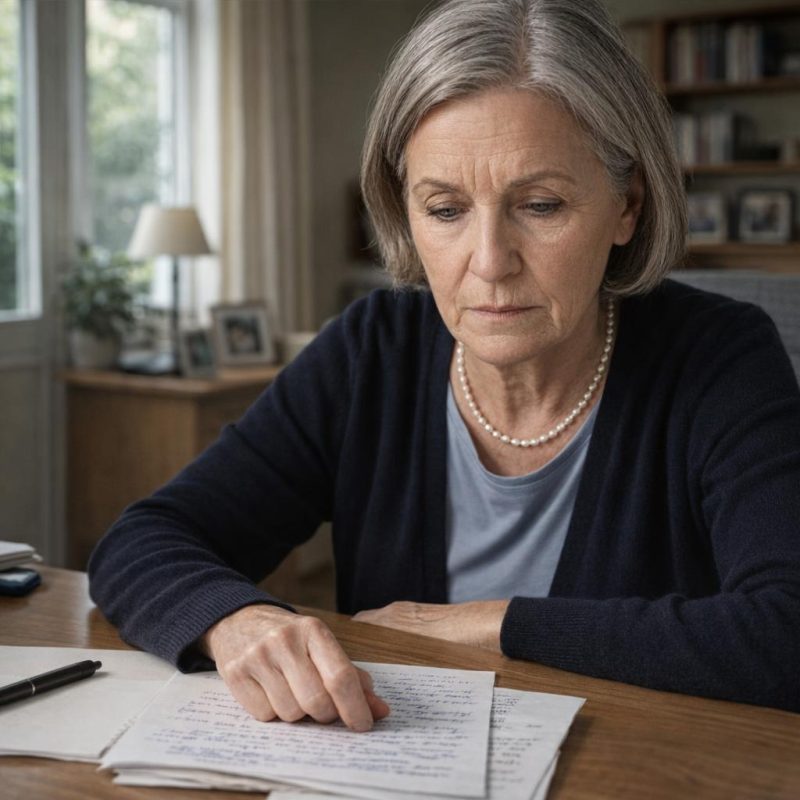 Image by RM AI
Robert's Warning
There was something Robert had said to me once, years ago, that I hadn't thought about in a long time. We'd been sitting on the cabin porch after dinner, watching the light go off the water, and he'd said it almost offhandedly — that if anyone ever came wanting to buy that land, I should find out exactly why before I said a single word either way. At the time I'd smiled and told him he was being sentimental. He'd shaken his head a little and said it wasn't sentiment, that the property had things attached to it that weren't obvious from the outside, and that someone who understood those things would want it for reasons that went beyond the view. I'd let it go. I'd thought he meant the history of it, the family connection, the way his grandfather had built the place by hand. Now I kept coming back to the way he'd said it — careful, deliberate, like he was leaving me something to find later. I went to the closet where I'd kept a box of his papers after he passed. Survey documents, old correspondence, folders he'd organized and labeled in his careful handwriting. Near the bottom of the box, I found a worn green notebook I didn't remember seeing before. I opened it to the first page. His handwriting filled the margins alongside what looked like property sketches and legal references. Then I turned to a section he'd marked with a folded piece of paper, and I saw the words water and access and rights running down the page in his careful hand.
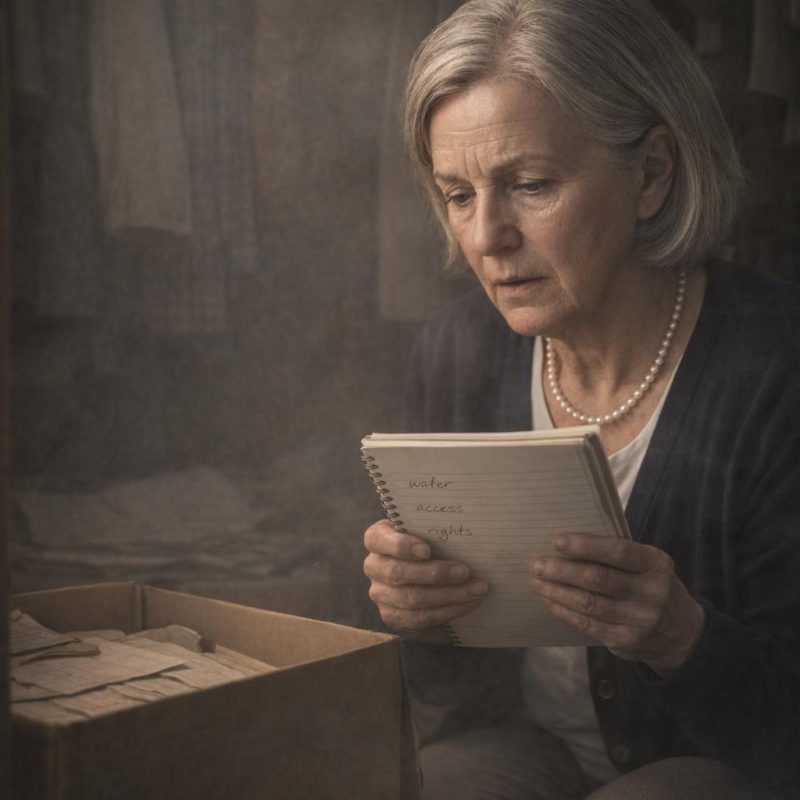 Image by RM AI
The Spring Beneath
I sat down at the table with the notebook open and read through Robert's notes slowly, going back over sections when I didn't follow his shorthand. He'd been thorough in the way he was thorough about everything — dates, reference numbers, names of the surveyors who had come out over the years. What emerged from the pages, piece by piece, was something I hadn't known existed. There were references to something beneath the cabin's northeast corner — a natural feature Robert had noted carefully, with survey maps and legal descriptions I didn't fully understand but could see were detailed and specific. He had documented certain rights attached to the property over many years, renewing and updating the paperwork with the same quiet care he brought to everything. There were notes about what those rights permitted, passages he had highlighted in yellow marker — the kind of careful emphasis he used when he wanted something to be easy to find later. I thought about the investment group's assembled parcels ringing the lake. I thought about what a development of that scale would need that land alone might not provide. I turned back to the notebook and looked at the location marked on Robert's hand-drawn sketch, and something shifted in how I was seeing the whole picture — because the cabin wasn't sitting at the center of their map by coincidence.
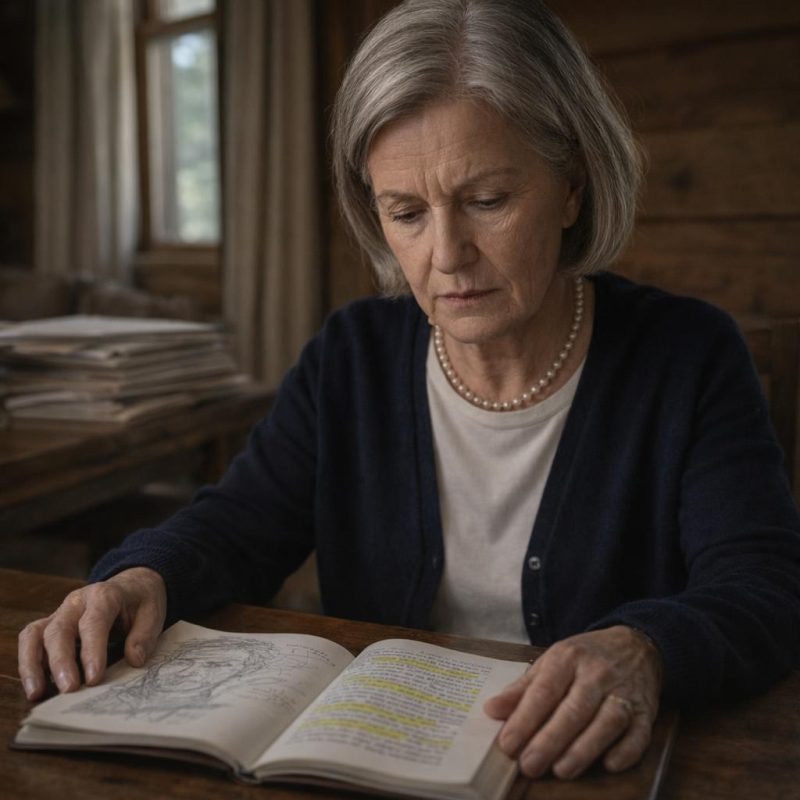 Image by RM AI
The Piece That Completes the Puzzle
I spent the better part of the next morning looking into what large-scale resort developments actually require in terms of water access. I'm not someone who knows that world, but the information wasn't hard to find once I knew what to look for. Properties of the scale Meridian was planning — the kind with multiple buildings, amenities, landscaping, year-round operations — need reliable, legally secured water sources. Municipal connections aren't always available in rural lake areas. Wells have limitations. Certain natural sources with established legal rights are a different category entirely. I looked at the parcels Robert had documented, then at the ones I'd mapped from the county records. The assembled land around the lake was substantial, but the water rights attached to those parcels were limited. I cross-referenced what I could find. The cabin's location — at the center of the development footprint, with the particular rights Robert had documented so carefully — began to suggest why the property mattered in a way that went beyond its size or its view. I sat back and looked at Robert's notebook lying open on the table beside my notes. He had kept this information carefully, renewed the documentation, made sure it was findable. He had known, in the way he knew things, that it mattered. The full weight of what I was holding — those papers, those rights, that land — settled over me slowly, the way heavy things do when you finally stop moving long enough to feel them.
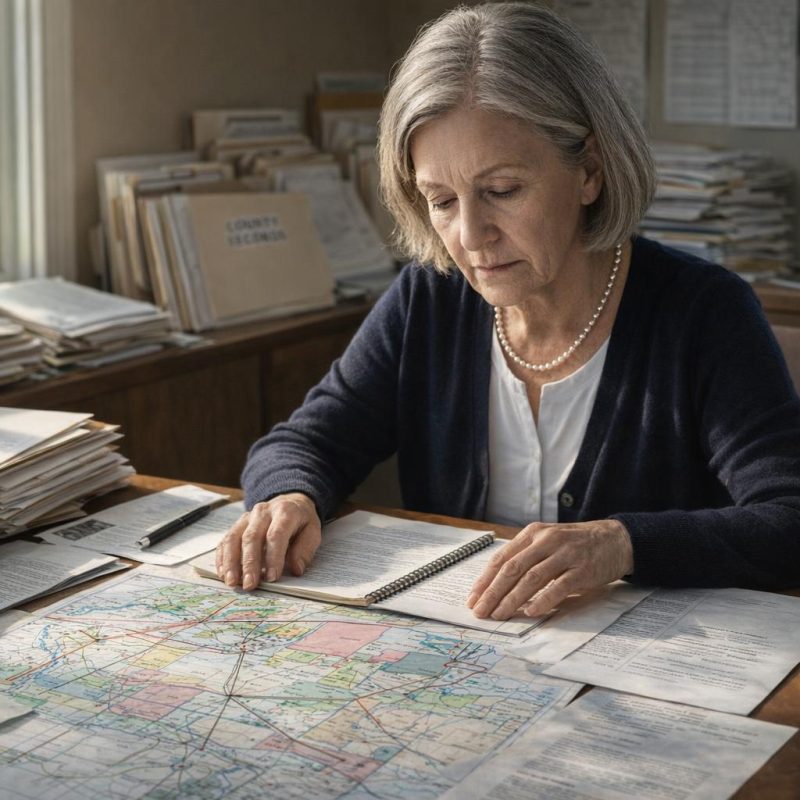 Image by RM AI
The Referral Payment
I called Mr. Thompson one more time. I hadn't planned a long conversation. I just had one question I needed answered by someone who would tell me the truth, even if it cost him something to do it. He picked up on the third ring and greeted me with that careful politeness he always used, the kind that told me he'd been expecting to hear from me again. I told him I wasn't calling about the property. I asked him directly whether Lisa had been promised anything — any kind of payment or compensation — for arranging the introduction. He went quiet. I could hear him breathing on the other end of the line. He said he wasn't sure he was the right person to speak to that. I told him I wasn't asking for a legal opinion, I was asking him as a person whether there had been an agreement. Another pause. Then he said yes, there had been a referral arrangement in place. He said it quietly, like he was setting something down carefully. He apologized. I asked if the arrangement had been made before the vacation was booked, and he said yes, it had been in place before any of that. I thanked him and ended the call. I sat at the kitchen table with the phone face-down in front of me and the afternoon light coming through the window at a low angle. My daughter had stood to receive payment for bringing me to the table, and that fact settled into the room around me and stayed.
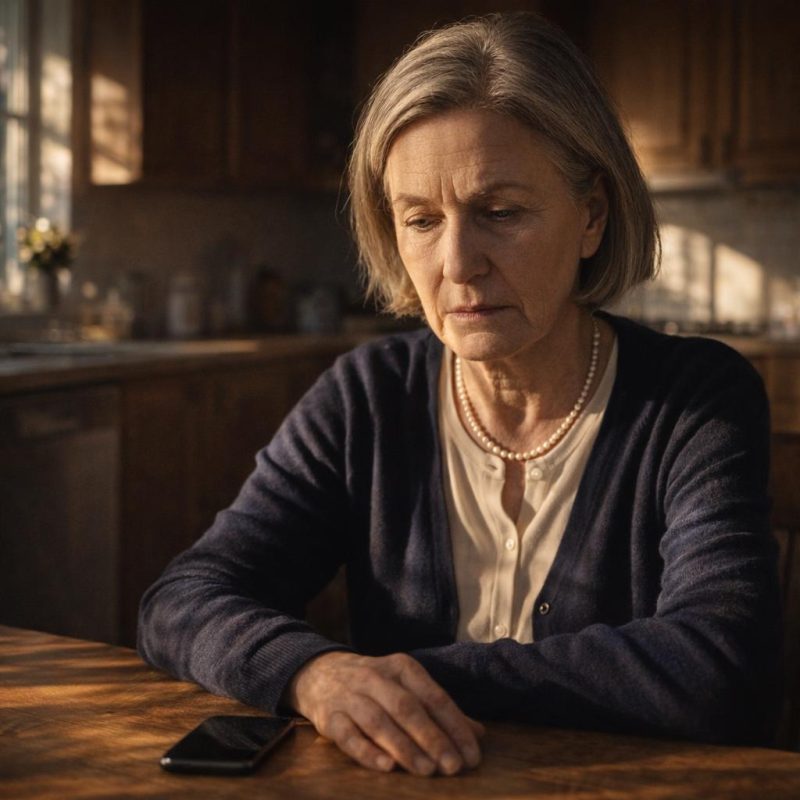 Image by RM AI
The Cost of the Vacation
I looked up rental rates for luxury lake properties in that area the next morning. I wasn't sure what I expected to find, but I needed to see the numbers. Properties comparable to the one Lisa had booked — the square footage, the amenities, the private dock — were listed in a range that made me set my coffee cup down. A week in a house like that ran anywhere from eight to twelve thousand dollars, sometimes more in peak season. I wrote the number down and looked at it for a while. Then I thought about referral arrangements — what they typically look like in real estate transactions of significant value. I didn't know the specific figure Mr. Thompson had confirmed, but I knew enough now to understand the shape of it. A referral payment tied to a property sale of that magnitude would have been substantial. Substantial enough, almost certainly, to cover the cost of a week-long family vacation with room to spare. Lisa had stood at the door of that beautiful house and handed me a key and called it her gift to the family. She'd said she wanted us all to have something special together. I had believed her completely. I had been grateful in the way you're grateful when someone you love does something unexpectedly generous. I sat at the table with my notes and the rental listings and Robert's notebook still open beside them, and the understanding settled into me quietly: the vacation had never been Lisa's gift at all.
 Image by RM AI
The Daughter's Justification
The phone rang just after eight in the morning, and I knew from the number it was Lisa before I even picked up. Her voice was strained in a way I hadn't heard since the kids were small and she'd done something she knew was wrong. She said she'd been thinking about everything, that she needed to explain. I told her I was listening. She admitted it then — that someone from the investment group had reached out to her months before the vacation. She said they'd explained the property situation, that there was a land assembly happening, that my cabin was the last piece they needed. They offered to cover the cost of the vacation rental if she could arrange for the family to be there and create an opportunity for a conversation. She said she'd thought about it for weeks before agreeing. She kept saying she thought I would want to sell eventually anyway — that the cabin was too much for me to manage alone, that the money would help everyone, that she was trying to create something good out of it. She said she didn't tell me because she was afraid I'd refuse to come if I knew. I listened to all of it without interrupting. I didn't agree with any of it, and I didn't say so either. There was a long silence, and then her voice broke, and she said she was only trying to help.
 Image by RM AI
What Lisa Didn't Know
I let the silence sit for a moment after she said it. Then I told her there was something she needed to know — something I hadn't told her yet. I told her about the freshwater spring beneath the cabin. I explained that Robert had documented it carefully, that there were legal water rights attached to the property going back decades, and that those rights transferred with the land. I told her the resort development couldn't proceed the way they'd planned without access to that water source. Lisa went quiet in a way that felt different from before. Not the quiet of someone gathering their next argument, but the quiet of someone recalculating everything they thought they knew. She said slowly that the people who contacted her had told her it was just about completing a waterfront land assembly — that my cabin was the last parcel they needed to connect the properties. She said they never mentioned water. They never mentioned a spring. I told her I didn't think they would have. She was quiet again for a long stretch, and when she spoke her voice had changed — flatter, more careful. She said she hadn't known. She said she hadn't understood what she was actually helping them get. I believed her. That didn't make what she'd done acceptable, but I believed she hadn't known the full picture. Her voice came through the phone pulled tight and thin.
 Image by RM AI
The Direct Contact
Two days after my conversation with Lisa, my phone rang with a number I didn't recognize — a local area code but not one I knew. I answered, and the voice on the other end was smooth and unhurried, the kind of voice that's been trained to put people at ease. He introduced himself as Michael Harrison, said he represented the investment group that had been in contact regarding my lakeside property. He was polite, almost warm, and he spoke as though we were already acquainted, as though this call were simply a formality in a process we'd both agreed to. He said he understood there may have been some confusion during the family vacation and that he hoped I hadn't been made to feel any pressure. He said his group was genuinely interested in the property and believed they could offer something that would be very beneficial for me. He asked if I would be willing to sit down with him and discuss it properly. I kept my voice even. I told him I was open to hearing what they had to say. I didn't tell him what I knew about the spring, or the water rights, or the conversation I'd already had with Lisa. I just said I'd be willing to meet. He sounded pleased — confident in the easy, practiced way of someone who doesn't expect complications. Then he asked when would be convenient for me.
 Image by RM AI
Preparing for Battle
I spent the next three days at the kitchen table with Robert's documents spread out in front of me. I pulled everything I had — the original property deed, the water rights filing, the survey maps Robert had kept in a manila folder at the back of the filing cabinet, the notes he'd written in his careful, deliberate handwriting. I printed the resort development plans I'd found online and laid them alongside the property maps so I could see exactly how my land fit into what they were building. I went through the purchase offer letters I'd received and made notes about the language, the terms, what was emphasized and what was mentioned only briefly. I wrote out a timeline — when the investment group first approached Lisa, when the vacation was booked, when Mr. Thompson had let something slip at checkout, when I'd started putting the pieces together. I prepared questions I wanted to ask in the meeting, and then I practiced not asking them too soon. I thought about Robert while I worked. He had been methodical in a way I'd always admired — the kind of man who filed things properly and wrote things down because he believed in being prepared. Sitting there with his handwriting in front of me, I felt steadied by it. I went to bed the night before the meeting with the documents stacked neatly beside my bag, and something in me had gone quiet and certain.
 Image by RM AI
The Meeting
Mr. Harrison had suggested a coffee shop near the center of town, neutral ground, the kind of place with soft background noise and no one paying attention to anyone else. He was already seated when I arrived, and there was a second man with him — younger, with a laptop open and a folder on the table. They both stood when I approached, which I noted. Mr. Harrison shook my hand and thanked me for coming, and his smile was the kind that arrives exactly on cue. He explained the resort project in broad, pleasant terms — the waterfront development, the hospitality vision, the way the assembled properties would create something the region didn't currently have. He said my cabin sat at a critical point in the waterfront line and that completing the assembly would allow the project to move forward. He described the offer as fair and forward-thinking. The second man slid a printed summary across the table while Mr. Harrison talked, and I read it while he spoke. The figure was higher than I'd expected for the cabin itself. The water rights were listed in the document, but only in a single clause near the bottom, described in general terms, with no separate valuation attached. I asked a few questions — about the timeline, about the development scope — and Mr. Harrison answered each one smoothly. I told him I'd need time to review everything carefully before making any decisions. He said of course, completely understandable, though he mentioned the project timeline was moving quickly. Then he slid the full purchase agreement across the table toward me.
 Image by RM AI
Robert's Wisdom
I drove home with the purchase agreement on the passenger seat, still in its folder, and I didn't open it again until I was sitting at the kitchen table with a cup of tea. Then I set it aside and reached for Robert's notebook instead. I read through his notes slowly, the way you read something when you're not looking for new information but for steadiness. He had written about the spring the way he wrote about everything — plainly, without drama, just the facts and why they mattered. He'd noted the original filing date, the legal description, the renewal he'd completed eight years before he got sick. He'd written a single line near the bottom of one page that I'd read before but that landed differently now: *Someone will want this water eventually. Make sure you know what it's worth before they ask.* He had known. Not the specifics, not the names or the resort plans, but the shape of it — that the land held something valuable and that someone would come for it someday. He had left me everything I needed to meet that moment without being caught off guard. I sat there with his handwriting under my fingers for a long time. I wished I could tell him that I'd found it, that I'd understood, that I was going to handle it the way he would have wanted. The kitchen was quiet around me, and I felt the full, aching weight of how much he had loved me.
 Image by RM AI
The Search for an Attorney
The next morning I opened my laptop and started searching. I knew I couldn't walk into whatever came next without someone in my corner who understood the legal side of what I was holding. I searched for property attorneys first, then narrowed it to those who listed water rights and development disputes in their practice areas. I found several in the region with relevant credentials — one who had handled a water rights case involving a resort development two counties over, another who specialized in rural property transactions and had written articles about easement law that I actually understood when I read them. I made a list with notes beside each name. I read through their reviews carefully, looking for the ones where clients said they felt informed rather than just represented. I wrote out the questions I'd want to ask in a consultation — about the water rights documentation, about how a separate valuation might work, about what leverage looked like in a negotiation like this one. I wasn't ready to call anyone yet. I wanted to go into those conversations knowing enough to evaluate what I was hearing. But sitting there with my list and my notes and Robert's folder beside the laptop, something had shifted in how I was holding all of it. The property wasn't a burden or a memory or a problem to be managed. It was something worth protecting, and I was going to make sure it was protected properly.
 Image by RM AI
The Water Access Problem
I couldn't stop thinking about the water. After everything I'd learned, I kept coming back to the same question — why did they need it so badly? The offer had been generous for the cabin, but the way Mr. Harrison had glossed over the water rights clause nagged at me. So I started searching. I looked up water infrastructure in the resort development corridor, then broadened the search to the wider region. What I found made me sit back in my chair. There were articles going back several years — local news pieces, a regional planning report, a piece from a state environmental publication — all describing the same problem. The area had been dealing with water supply constraints that were getting worse, not better. Several luxury developments had faced construction delays because they couldn't demonstrate adequate long-term water access. One resort project two counties over had stalled entirely after its water source failed an environmental review. New development permits in the region now required documented proof of a sustainable water supply before construction could begin. I read through article after article, and the picture kept getting clearer. Then I found a cluster of news items from the past eighteen months about water shortages affecting several developments within twenty miles of my cabin.
 Image by RM AI
The Pressure Increases
He called on a Tuesday afternoon, and this time the warmth in his voice had a different quality to it — thinner, somehow, like it was being stretched over something harder underneath. Mr. Harrison said the development timeline had moved up. He said the investment group had other partners waiting on decisions, that delays created complications for everyone involved, and that the offer on the table was genuinely generous given current market conditions. He used the word 'generous' twice. He mentioned that opportunities like this had a way of closing when people waited too long, and that he'd hate to see me miss out on something that could really benefit my family. I told him I still needed more time. There was a pause — brief, but I noticed it. He said he understood, of course, but that he hoped I'd have something for him by the end of the week. His tone when he said goodbye was polite, but the friendliness had gone somewhere else. After I set the phone down, I sat at the kitchen table and didn't move for a while. The pressure he was applying had a shape to it now — something I could feel pressing from all sides. But underneath that pressure, something else was holding steady, and I wasn't ready to give that up.
 Image by RM AI
The Memory of Robert's Voice
That evening I made myself a cup of tea and sat in the chair by the window — Robert's chair, the one I still thought of as his even three years on. I'd been turning his words over in my mind all day, but sitting there in the quiet, they came back to me with a clarity that almost startled me. It had been maybe two years before he passed, one of those slow Sunday afternoons when we'd been going through the property paperwork together. He'd set down the deed and looked at me with that steady, deliberate way he had, and he said: 'If anyone ever comes to you wanting this land, Cheryl, your first question isn't what they're offering. It's why they want it.' He'd said it like it mattered. Like he was filing it somewhere he hoped I'd find later. I remembered thinking at the time that he was being a little overcautious, the way he sometimes was about things he cared about protecting. But sitting in his chair with Mr. Harrison's voice still fresh in my ears, I understood what he'd been doing. He hadn't been worrying. He'd been preparing me. Every survey he'd kept, every document he'd filed away in that careful hand of his — it wasn't just record-keeping. It was foresight wrapped in love, left behind for exactly this kind of moment.
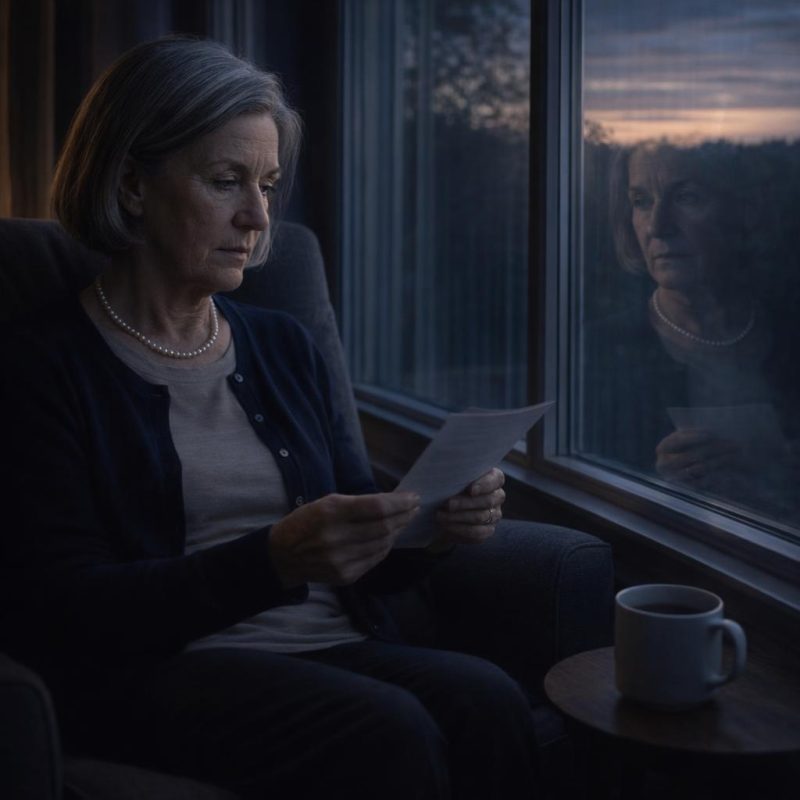 Image by RM AI
The Spring's True Value
I went back to Robert's files the next morning with fresh eyes. I'd been through most of the papers already, but there was a manila envelope near the bottom of the second box that I'd set aside without opening — it was thicker than the others and labeled in Robert's handwriting: 'Spring Survey — Engineering, 1987 & Updated 2009.' Inside was a formal engineering survey, the kind with technical diagrams and flow rate measurements and legal annotations in the margins. I spread it out on the kitchen table and read through it slowly. The spring on the property wasn't just a water source for the cabin. According to the survey, its average annual flow rate was consistent year-round, unaffected by seasonal drought conditions that impacted surface water in the region. The 1987 assessment had noted it as 'commercially viable,' and the 2009 update had expanded on that, calculating that the flow rate was sufficient to supply water infrastructure for a development of considerable scale — the surveyor's language was careful, but the numbers weren't. I read the figures twice to make sure I was understanding them correctly. The legal rights attached to the spring, documented separately in a water rights certificate Robert had filed decades ago, permitted commercial extraction. I sat back and looked at the ceiling for a moment. Then I picked up the survey again and read the final page, where the updated assessment listed the spring's estimated supply capacity — enough to service an entire resort complex.
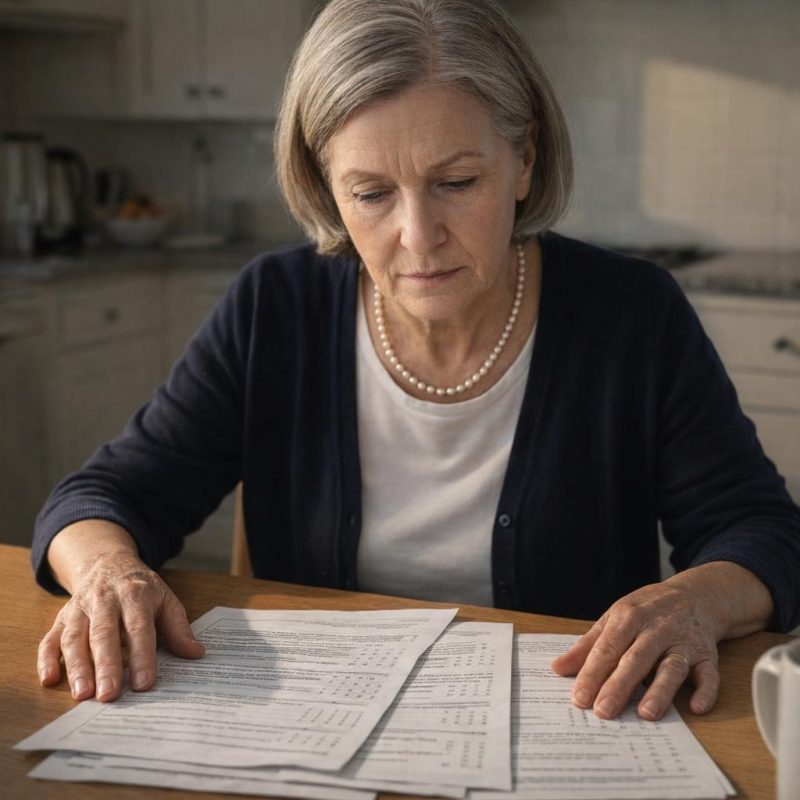 Image by RM AI
The Documentation Robert Left
I spent the better part of that afternoon organizing everything into a single file. I found a large accordion folder in the hall closet and started from the beginning — the original deed, the water rights certificate, the 1987 engineering survey, the 2009 update, the legal filings Robert had made over the years to maintain and renew the rights. Each document was in better condition than it had any right to be. Robert had kept them in protective sleeves, organized by date, with handwritten notes on small index cards tucked alongside the ones that needed context. He'd even made photocopies of the most important pages and stored them separately, as if he'd anticipated that originals could be lost. I made my own copies of everything and labeled them clearly. As I worked, I kept thinking about how deliberate he'd been — not paranoid, just thorough in the way that people are when they understand the value of what they're protecting. By the time I finished, the folder was thick and complete. I set it on the desk in the corner of the living room and stood back and looked at it. Every survey, every legal filing, every water rights certificate — all of it preserved and organized and ready. The file sat on the desk, a complete record of everything the investment group didn't know I had.
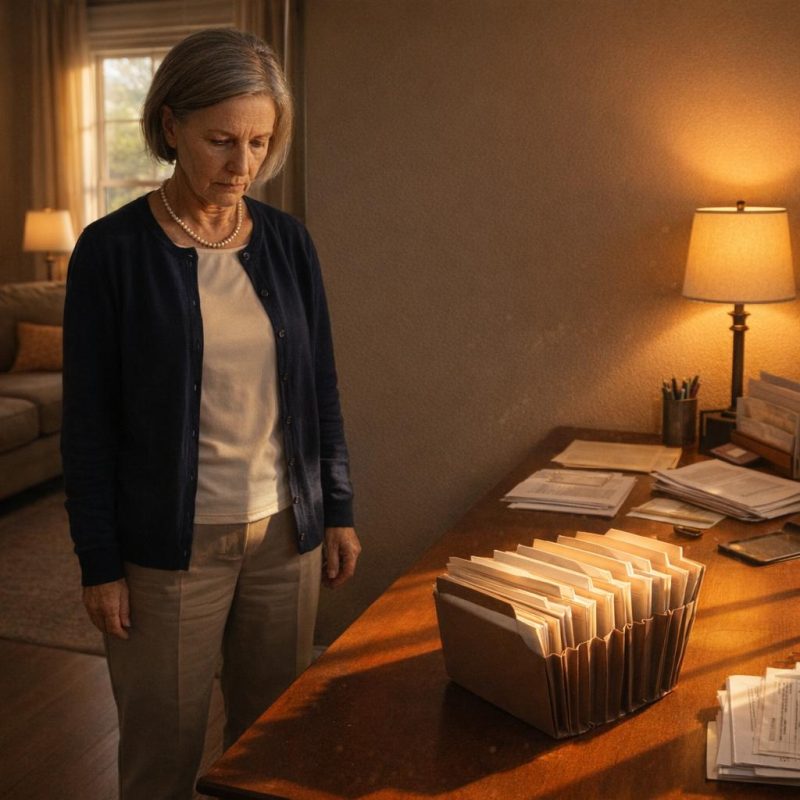 Image by RM AI
The Water They Desperately Need
I couldn't let it go. That evening I went back to my laptop and pulled up the regional water authority's website, following a link I'd bookmarked from one of the earlier news articles. I found their most recent annual report and started reading. It took me about twenty minutes to get to the section I needed, and when I did, I had to read it twice. The authority had formally suspended the issuance of new commercial water extraction permits across the entire development corridor — effective eighteen months ago, with no projected end date. The language was bureaucratic but the meaning was plain: no new resort or large-scale development in the region could obtain an independent water supply through the authority. Existing permits were grandfathered. New ones were not being issued. I sat very still. I thought about the articles I'd read about stalled developments, about the resort two counties over that had failed its environmental review. I thought about Mr. Harrison's urgency, the way he'd called twice in a week, the way he'd said 'generous' like he was trying to convince himself as much as me. And then I thought about the spring — its year-round flow, its commercial-use rights, its capacity to supply an entire resort complex. I opened the report again and found the line I was looking for, the one I needed to see in plain language: no new commercial water permits would be issued in the region for the foreseeable future.
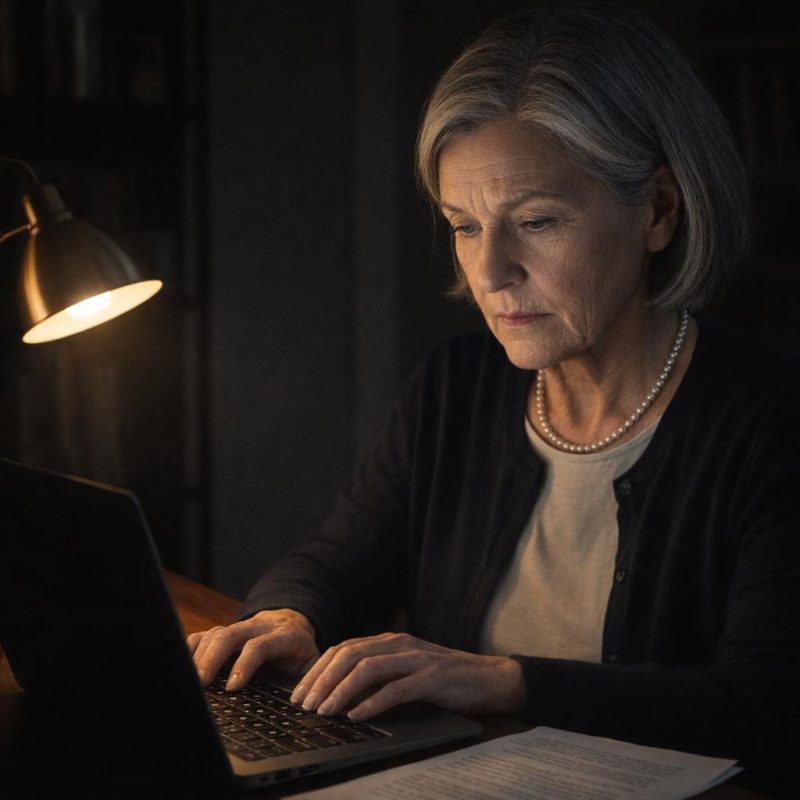 Image by RM AI
The Attorney's Name
I called the next morning, right after breakfast, before I could talk myself into waiting another day. Ms. Patterson's office picked up on the second ring — a calm, professional voice that asked how she could help. I explained that I needed a consultation about a property matter involving water rights and what I believed was significant pressure from a development investment group. The assistant asked a few brief questions and then put me on hold. I wasn't on hold long. When the line clicked back, the voice that came through was different — direct and unhurried, with the kind of steadiness that comes from having navigated difficult rooms. Ms. Patterson asked me to give her a brief overview. I told her about the cabin, the spring, the engineering surveys, the water rights certificate, and the calls from Mr. Harrison. I kept it factual and as concise as I could manage. She listened without interrupting. When I finished, she asked two sharp questions about the age of the water rights filing and whether the commercial-use designation had ever been challenged. I told her it hadn't, as far as I could tell from Robert's records. There was a brief pause, and then she said to bring everything — every document, every survey, every piece of correspondence — to her office the following morning. I wrote down the address with a steadier hand than I'd had in days, and when she said she'd handled cases exactly like this before, something in my chest finally loosened.
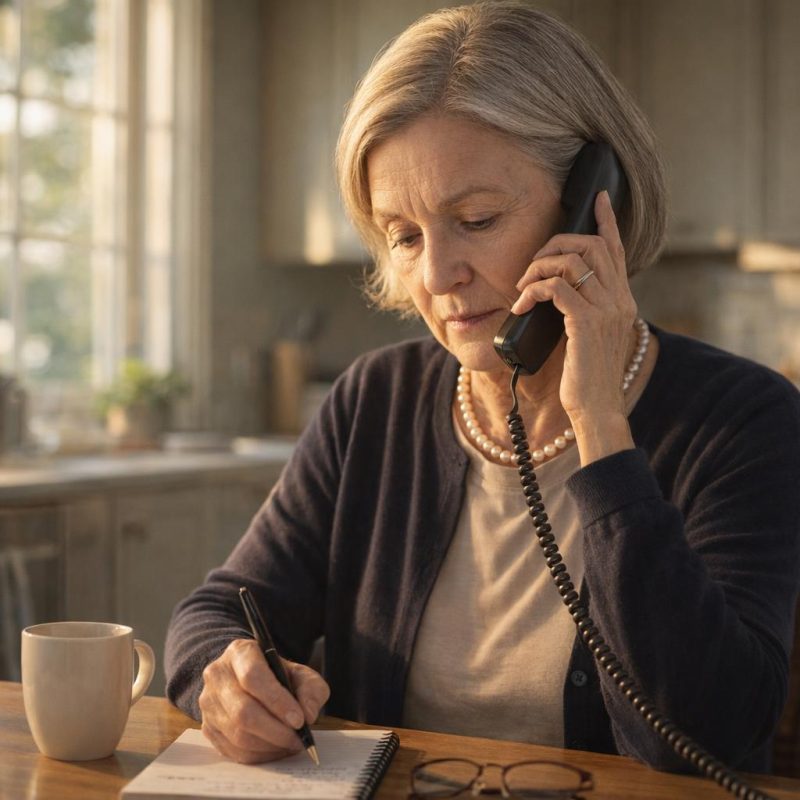 Image by RM AI
The Night Before
That evening I spread everything out across the dining room table — the deed, the water rights certificate, the engineering surveys, the water authority report I'd printed, the notes I'd made during Mr. Harrison's calls, the copies I'd made of Robert's index cards. I went through each piece slowly, in order, the way Robert would have. The 1987 survey. The 2009 update. The legal filings. The renewal notices he'd kept without fail, year after year, never letting the rights lapse. I thought about him sitting at this same table, going through these same papers, making sure everything was in order. He hadn't known exactly what he was preparing for. But he'd prepared anyway, because that was who he was — someone who understood that the right documentation, kept carefully and completely, was a form of protection that outlasted the person doing the keeping. I stacked everything back into the accordion folder in the order Ms. Patterson would likely want to see it. I set it by the front door so I wouldn't forget it in the morning. Then I turned off the dining room light and stood in the quiet for a moment. The house felt settled around me, the way it sometimes did late at night when the day's noise had finally gone still, and I felt something steady and unhurried settle into me alongside it.
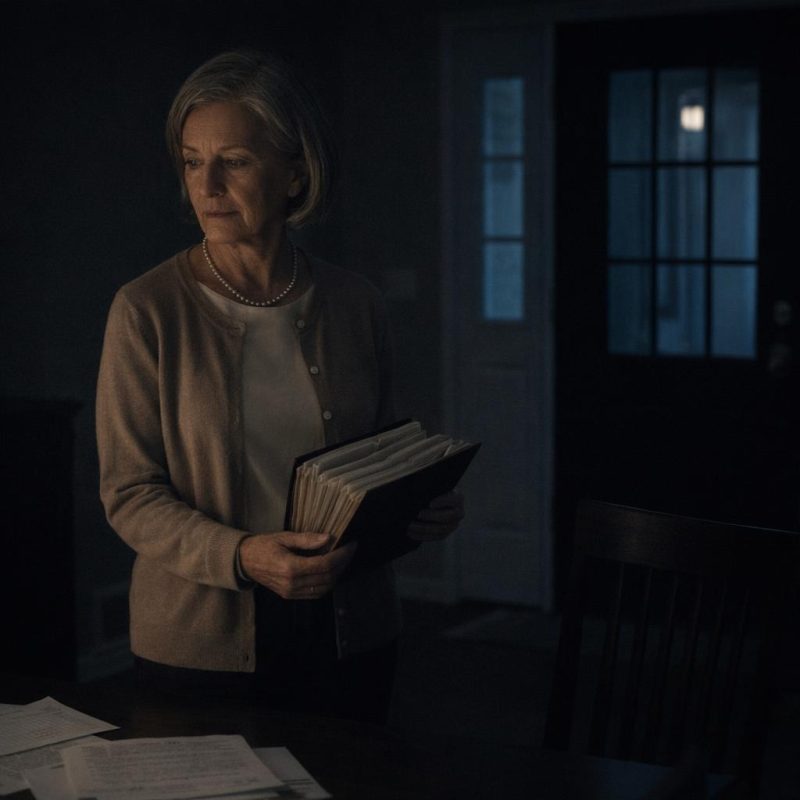 Image by RM AI
Meeting Ms. Patterson
Ms. Patterson's office was on the fourth floor of a building downtown, clean and spare, with a long conference table and afternoon light coming through tall windows. She stood when I came in — short grey-streaked hair, a tailored jacket, a handshake that was firm without being performative. I set the accordion folder on the table and she sat down across from me and opened it without preamble. She worked through the documents methodically, reading in silence, occasionally setting one page aside and returning to it. When she reached the water rights certificate, she paused. When she reached the 2009 engineering survey with the flow rate figures, she paused again, longer this time. She asked me to walk her through the timeline of Mr. Harrison's contact — the first call, the offer, the escalating urgency. I told her everything, including the vacation, including my daughter Lisa's involvement, including the checkout question from Mr. Thompson that had started all of this. She listened without expression, making notes in a small leather notebook. Then she asked about the regional water authority report. I slid my printed copy across the table and she read it carefully. When she looked up, she set her pen down. 'This changes everything,' she said.
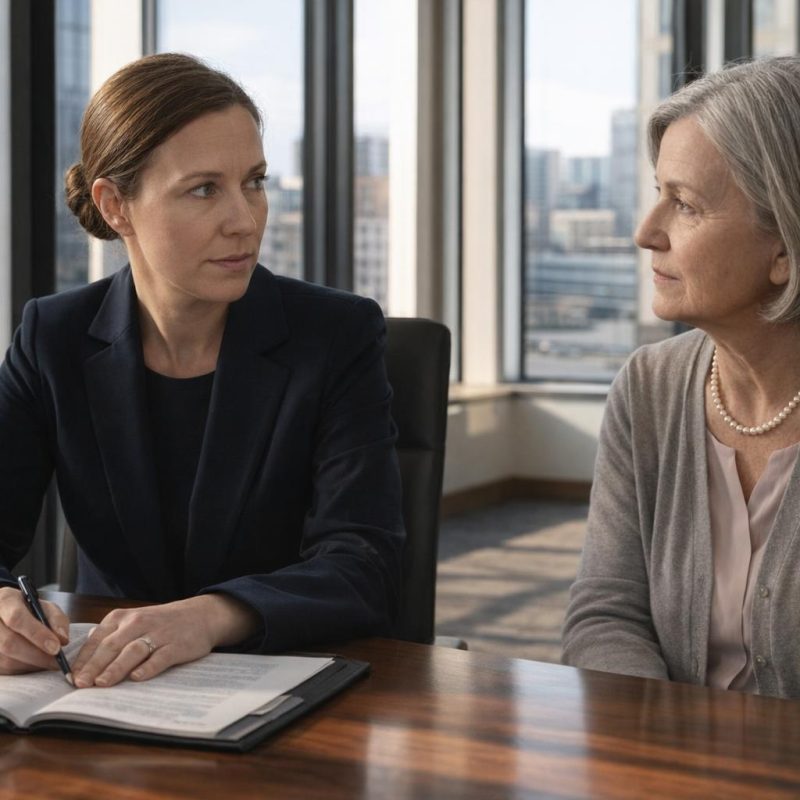 Image by RM AI
The Strategic Importance
Ms. Patterson didn't rush. She set the regional water authority report down flat on the table and folded her hands over it, and I could tell she was choosing her words carefully — not because she was uncertain, but because she wanted me to understand every piece of what she was about to say. She explained that the water rights certificate attached to my property wasn't just a legal formality. It was the only viable source of water access for the entire northern parcel of the proposed resort development. Without it, the investment group couldn't connect to municipal supply — the regional restrictions I'd printed out made that impossible. They'd have to drill, redesign the infrastructure, resubmit environmental impact assessments, and fight regulatory approvals that could take three to five years minimum. She said the financing they'd already secured was structured around a completion timeline that didn't allow for that kind of delay. Investors would walk. The whole project would collapse or have to be rebuilt from scratch at a cost that would dwarf anything they'd offered me. She slid a single page across the table — her own calculations, clean and annotated. I looked at the number at the bottom and felt the air go out of me. It was more than four times what Mr. Harrison had called his best offer. I looked up at her. She was already watching me, calm and steady. 'They haven't been negotiating with you,' she said. 'They've been hoping you wouldn't find out what it's actually worth. Now they'll have to pay what it is.'
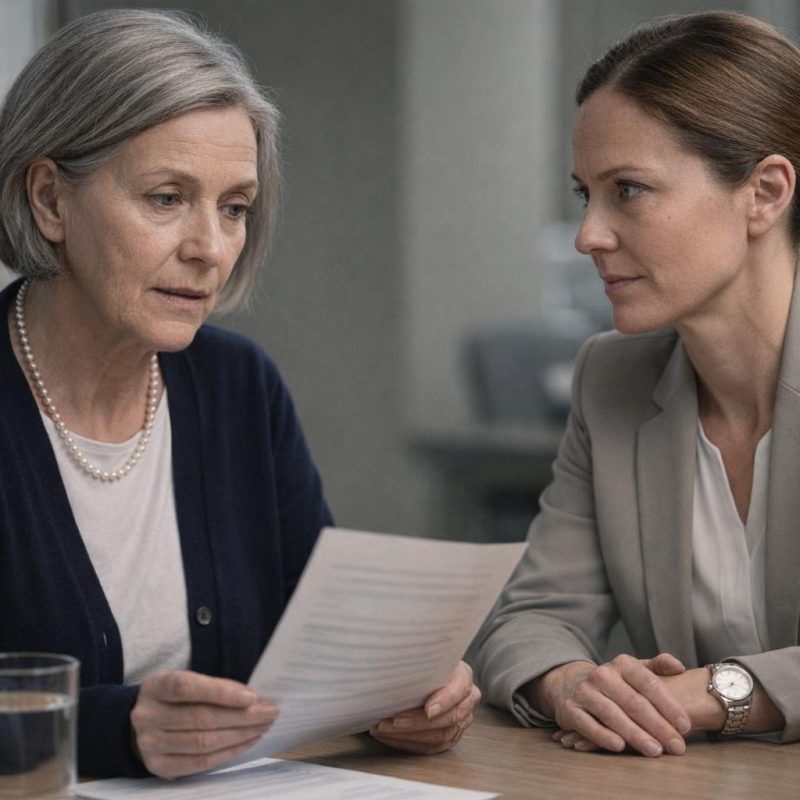 Image by RM AI
The Leverage I Hold
We spent the better part of two hours in that conference room, and by the end of it the table was covered in organized stacks of paper that Ms. Patterson had assembled with the kind of quiet precision that made me feel, for the first time in weeks, like someone was genuinely in my corner. She walked me through the counter-proposal section by section. The water rights valuation, supported by the engineering survey and the flow capacity data. The regional restriction documentation that eliminated any alternative source. A timeline analysis showing exactly how my property sat at the critical path of their financing schedule. And then, near the back, a section I hadn't expected — a summary of the contact history, the escalating offers, the vacation arrangement, and what it all suggested about how long they'd known the property's true importance. She didn't use inflammatory language. She didn't have to. The facts were inflammatory enough on their own. She said the counter-proposal would be delivered formally, with a request for a meeting within ten business days. She said they would respond quickly. She was certain of that. I asked her what she thought they'd do. She said they'd try to negotiate down, but that we had the stronger position and she intended to hold it. I signed the authorization for her to proceed and she gathered everything into a neat portfolio. The counter-proposal sat on the edge of her desk, sealed and ready to send.
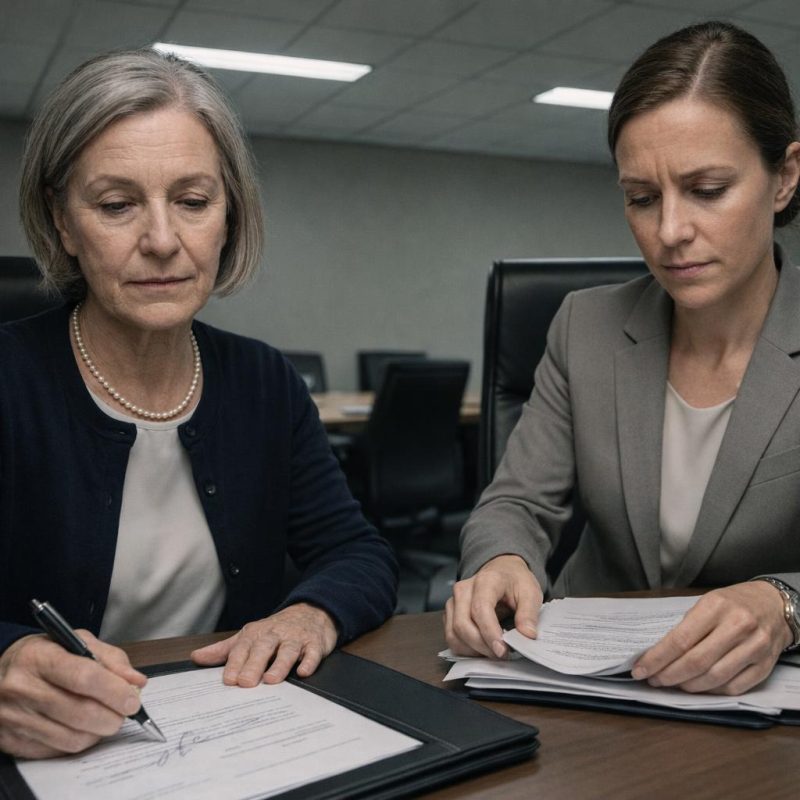 Image by RM AI
The Day of Reckoning
The investment group's offices were in a glass tower downtown, the kind of building designed to make you feel small before you even walked through the door. Ms. Patterson didn't seem to notice. She walked in like she'd been there a hundred times, signed us in at the front desk without breaking stride, and I followed her into an elevator that smelled like expensive carpet and recycled air. We were shown to a conference room on the fourteenth floor — long table, leather chairs, a view of the city that probably cost someone a great deal of money to arrange. Mr. Harrison was already seated when we came in, flanked by two men I didn't recognize, both in dark suits, both with the careful, neutral expressions of people who'd been in rooms like this before. He stood when we entered and extended his hand, and his smile was exactly what I remembered — practiced, warm, landing just a half-second too late to be genuine. I shook it. I didn't smile back. Ms. Patterson introduced herself and set her portfolio on the table, and we all took our seats. Mr. Harrison said something about appreciating the opportunity to meet, and one of the other men nodded along. I kept my hands folded in my lap and thought of Robert — his steadiness, the way he used to say that the person who talks first in a negotiation has already given something away. The room settled into a brief, formal quiet, and the weight of everything I'd carried to get to that table pressed down around me like something I could finally set down.
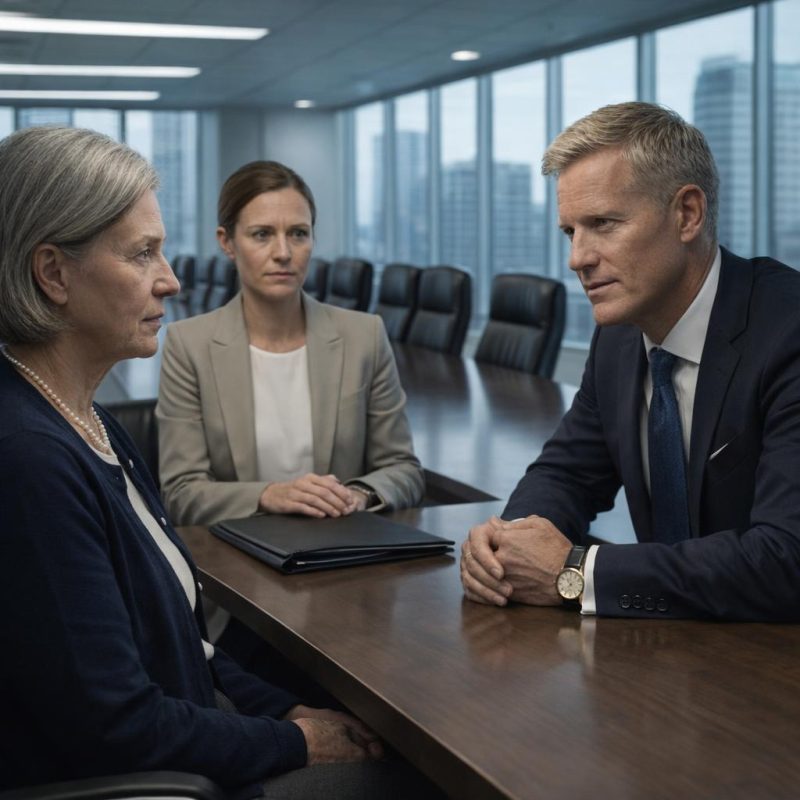 Image by RM AI
The Presentation of Evidence
Ms. Patterson opened her portfolio and began without preamble. She presented the water rights certificate first, walking through its legal standing and the specific acreage it covered. Then the 2009 engineering survey, with the flow rate figures highlighted in yellow. Then the regional water authority restrictions — the ones that made alternative sourcing not just difficult but effectively prohibited under current environmental code. She laid each document flat on the table as she finished with it, building a row of evidence that stretched toward the center of the room. She showed the timeline of purchase offers — the first one two years ago, the second eight months later, the third just before the Christmas vacation, each one incrementally higher but still, as she put it, representing a fraction of the property's documented strategic value. She noted the vacation arrangement with my daughter Lisa without editorializing, simply stating the dates, the referral structure, and the sequence of events that followed. One of the men in dark suits shifted in his chair. The other picked up the engineering survey and set it back down without looking at it. Mr. Harrison's expression didn't break, exactly, but something behind it did — a slight tightening around the jaw, a stillness that hadn't been there when we walked in. Ms. Patterson finished, capped her pen, and folded her hands. She didn't ask a question. She didn't need to. The silence that followed settled over the room like something none of them had been prepared to sit inside.
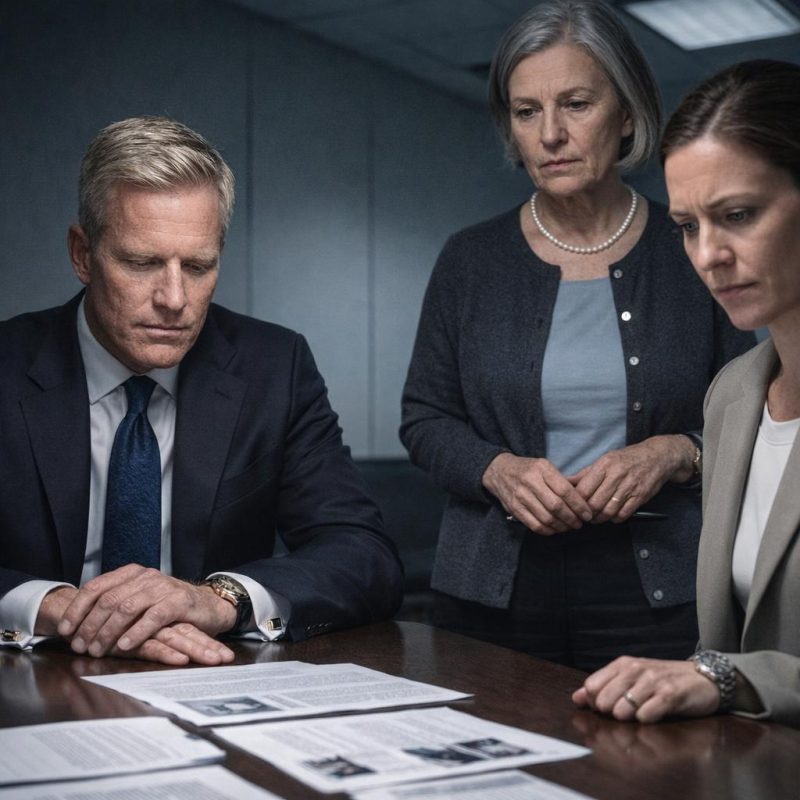 Image by RM AI
The Confrontation
I'd told myself I would let Ms. Patterson do the talking. That had been the plan. But when Mr. Harrison opened his mouth to say something about market conditions and good-faith efforts, I found I wasn't willing to sit quietly through it. I looked at him directly and I said his name, and he stopped. I told him I knew about the arrangement he'd made with my daughter Lisa. I told him I knew she'd been promised a referral payment contingent on my agreeing to sell. I told him that the Christmas vacation — the house she'd rented, the gathering she'd organized, the conversations that had happened over those few days — had been structured around getting me to a place where I'd feel grateful enough, or pressured enough, or simply tired enough to say yes. I said it plainly, without raising my voice, because I didn't need to. The facts were enough. He started to say something about mischaracterizing the relationship, and I said I wasn't mischaracterizing anything — I was describing what had happened. Ms. Patterson slid a document across the table without comment, and one of the other executives picked it up and read it and set it down carefully. Mr. Harrison looked at the document. Then he looked at me. Whatever composure he'd carried into that room had pulled back from his face like a tide going out, and what was left underneath it was something quieter and much less certain.
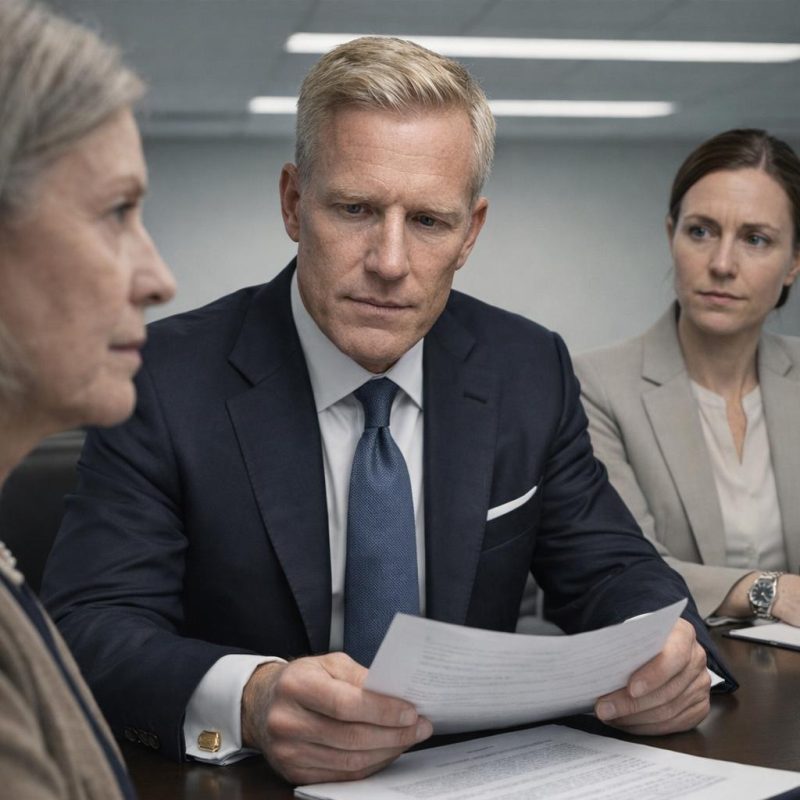 Image by RM AI
The Desperation Revealed
Mr. Harrison didn't answer me. He sat back in his chair and looked at the table, and for a moment the room was very still. Then the man to his left — the younger of the two executives, the one who'd shifted in his chair during Ms. Patterson's presentation — leaned forward and set his forearms on the table. He said his name was Garrett and that he thought it was time to be straightforward. He said the project timeline was not flexible. He said the financing had been structured around a specific completion date and that the lenders had already been told the land acquisition was essentially resolved. He said that if the deal fell through or stalled significantly, the financing would be pulled and the entire development would have to be restructured from the ground up, which would take years and cost more than the project could absorb. He said they had looked at every alternative. They had brought in consultants. They had reviewed the regional maps and the water authority records and the environmental assessments. He paused and looked at his hands. Ms. Patterson didn't move. I didn't move. I watched Mr. Harrison's jaw tighten as Garrett kept talking, and I understood that this was not what Mr. Harrison had wanted said out loud in this room. Garrett looked up at me and said it plainly, without apology, like a man who had decided that honesty was the only card he had left to play. 'There is no alternative water source,' he said.
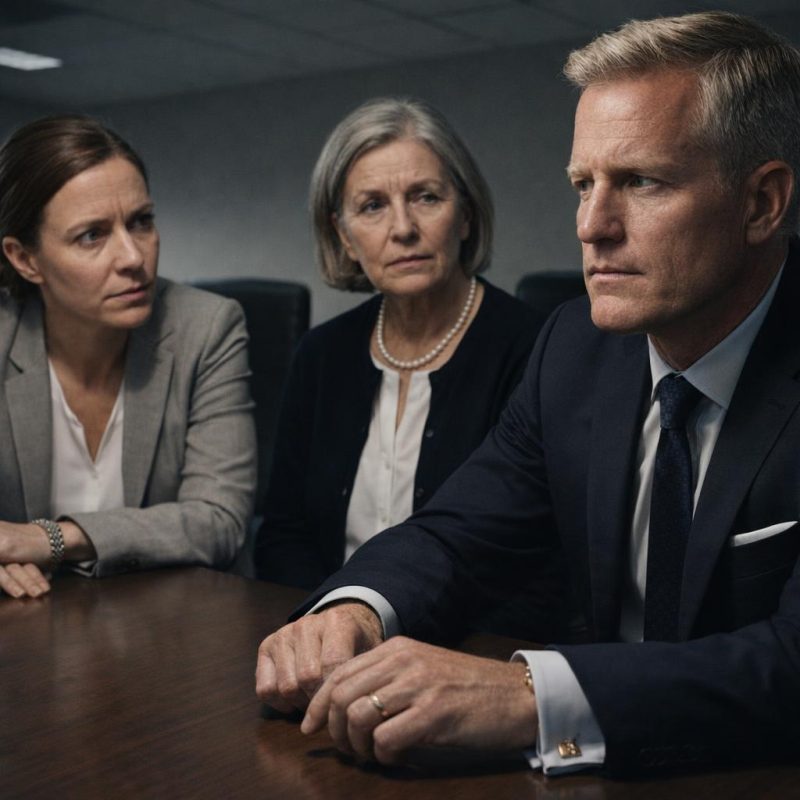 Image by RM AI
The Real Offer
Mr. Harrison asked for a ten-minute recess. He and the two executives stepped out into the hallway, and through the glass wall I could see him on his phone, pacing in a short, tight line. Ms. Patterson poured herself a glass of water from the carafe on the table and didn't say anything, which I appreciated. I didn't want to talk. I wanted to sit with what had just happened in that room — the admission, the shift, the way Garrett's honesty had changed the air. They came back in after twelve minutes. Mr. Harrison sat down and straightened his jacket and said that after consulting with their principal investors, they were prepared to revise their offer substantially to reflect what he called the full strategic value of the property and water rights. He slid a single sheet across the table to Ms. Patterson. She read it without expression, made two small notes in the margin, and passed it to me. I looked at the number. I read it twice to make sure I was reading it correctly. It was more than ten times what they had offered me the first time Mr. Harrison had called, back when I'd thought he was simply a developer interested in a piece of land my late husband had loved. Ms. Patterson said she had two additional points she wanted addressed before her client would consider the offer, and she walked through them calmly while I sat with the paper in my hands. The revised offer sat on the table between us, and it said, in plain numbers, exactly what they had known all along and hoped I never would.
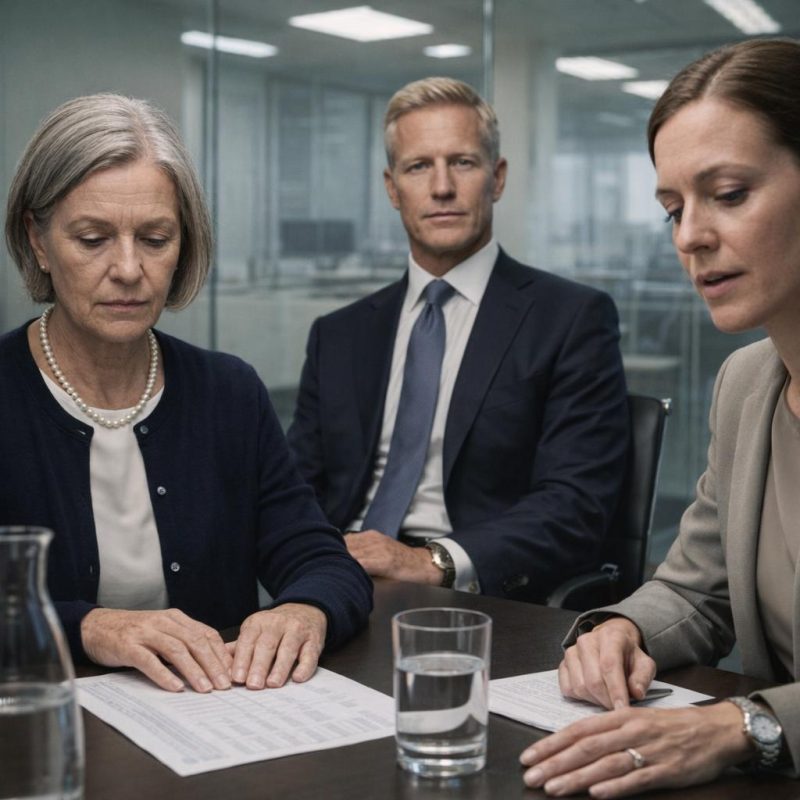 Image by RM AI
The Agreement Signed
Ms. Patterson spent another forty minutes going through the contract line by line, and I was grateful for every minute of it. She flagged two clauses she wanted reworded — one around the payment timeline, one around the transfer of the water rights documentation — and the executives agreed to both without much resistance. The fight had gone out of the room. When she was satisfied, she turned the contract toward me and set a pen beside it. I picked it up. I thought about Robert. I thought about the afternoon he'd had that water rights certificate framed and hung in the study, and how I'd teased him about it, and how he'd said, completely seriously, that someday it would matter. I thought about the Christmas vacation and the checkout question and the long drive home and the accordion folder and every step that had led me to this chair, in this room, with this pen in my hand. I thought about how close I had come to signing the first offer without ever knowing what I was giving away. I signed my name on the line. The pen came down and I set it on the table beside the contract, and somewhere in the quiet of that room I felt something settle — steady and certain, like Robert had been watching the whole time and was finally satisfied.
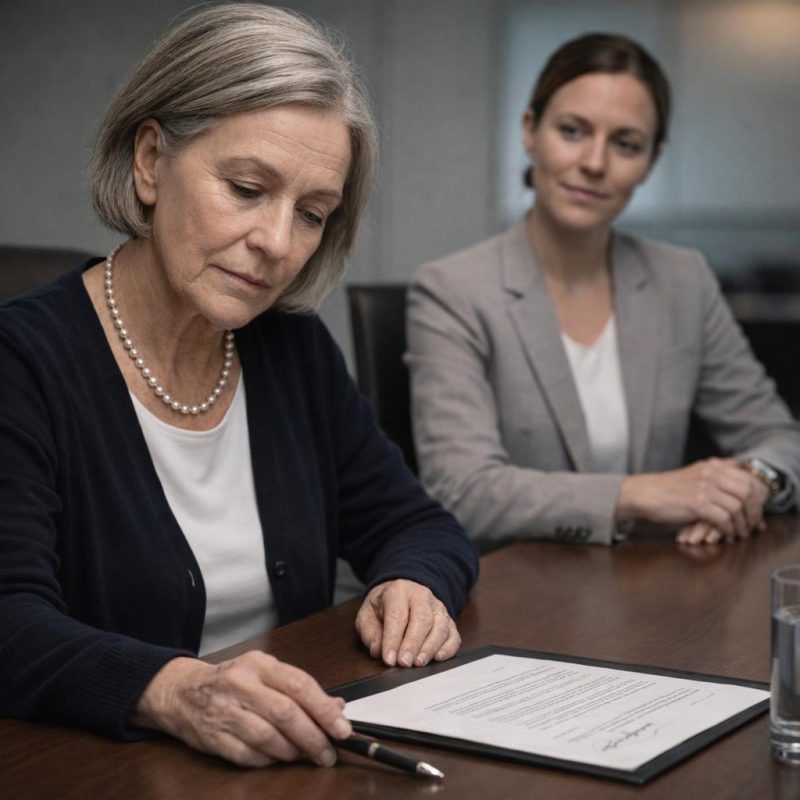 Image by RM AI
The Call to Lisa
I called Lisa from the parking garage, still sitting in the car with the signed contract in a folder on the passenger seat. She picked up on the second ring, her voice bright and expectant, and I didn't ease into it. I told her everything — the water rights, what they were actually worth, what the property had sold for, and what the investment group had known from the beginning. There was a long silence on her end. I could hear her breathing. I told her how the vacation had been structured, how Mr. Thompson's checkout question had cracked the whole thing open, how I had nearly signed the first offer without ever understanding what I was giving away. Another silence. Then she said, very quietly, that she hadn't known. I told her I believed her. I also told her that believing her didn't make it hurt any less — that she had been used to put pressure on me, and that I needed her to understand that, really understand it, not just apologize and move past it. That's when she broke. Not a polite cry — a real one, the kind that comes from somewhere deep. She kept saying she was so sorry, over and over, and her voice came through the phone cracked and raw. I sat with the phone pressed to my ear and let her say it.
 Image by RM AI
The Plan for the Money
I got home late that afternoon and sat down at the kitchen table with a yellow legal pad and a cup of tea that went cold before I touched it. I wrote Robert's name at the top of the page, the way I used to when I needed to think something through and he wasn't there to think it through with me. Then I started the list. College funds first — one for Emily, one for Josh, and I left room on the page for any grandchildren who might come later. I wanted the money to reach forward, into futures Robert never got to see. Below that I wrote Lisa's name and the number I'd already calculated — enough to clear the debt that had been quietly strangling her family for years, given as a gift with no strings and no lecture. I drew a line under that and wrote the name of the county where Robert's family had settled three generations back. There was a historical preservation society there I'd found online, and a community center that needed a new roof. Robert had talked about that place like it was still part of him. I thought it deserved to be part of this. I set the pen down and looked at the page. The house was quiet around me, the kind of quiet that used to feel like absence and now felt something closer to company.
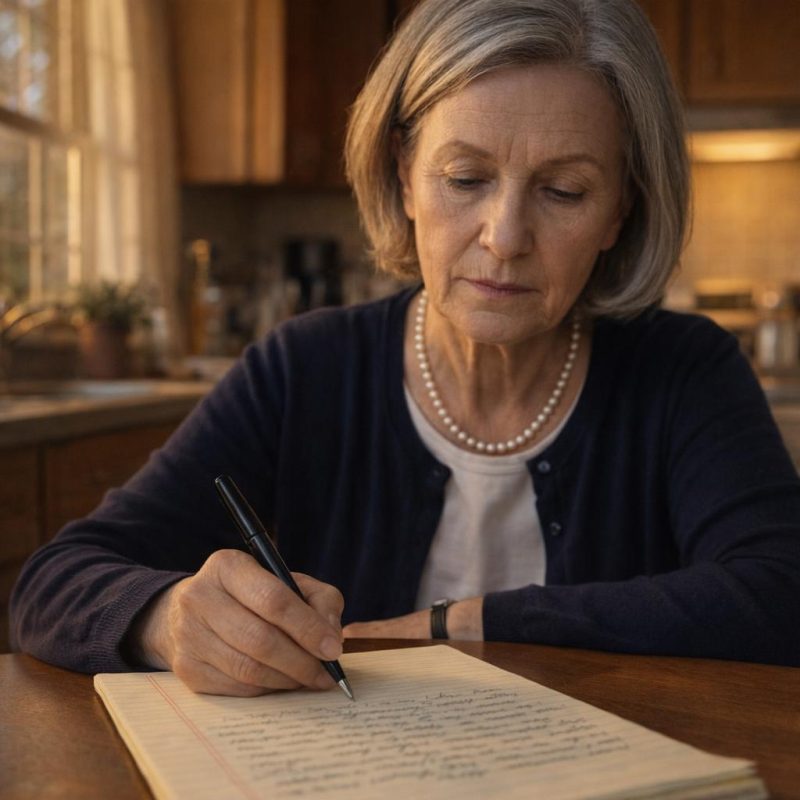 Image by RM AI
The Conversation with Lisa
I invited Lisa over on a Saturday morning, and she arrived with her hair pulled back and no makeup, which told me she wasn't trying to manage anything. We sat at the same kitchen table where I'd made my list, and I had the legal pad in front of me. I walked her through each decision slowly. The college funds for Emily and Josh — her eyes filled when I said their names. The debt relief, given cleanly, without conditions. And then I told her, just as plainly, that the referral payment she had almost accepted from the investment group would not be coming from me. I wasn't angry when I said it. I just needed her to know that particular door was closed. She nodded and looked down at her hands. She said she understood, and that she deserved that boundary, and I believed her because she didn't try to explain it away. She said she was sorry in a way that didn't ask me to do anything with the apology — just set it on the table between us. I told her I loved her. I told her that love wasn't the question. The question was trust, and that trust was going to take time, and she said she knew that and she would wait. We hugged at the door when she left, careful and a little tentative, and after her car pulled away I stood in the doorway for a moment, holding the weight of everything that still needed to grow back.
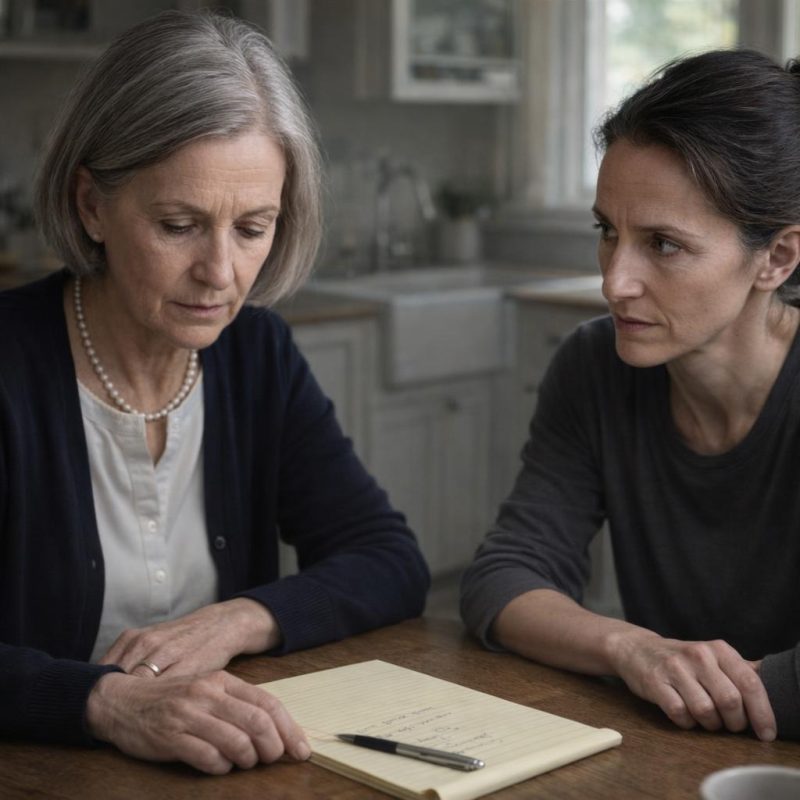 Image by RM AI
The Gift That Changed Everything
I've thought a lot about how it all started — a Christmas vacation, a luxury cabin, a family gathered around a fireplace while snow came down outside. Lisa had meant it as a gift, and in the ways that mattered most, it was one. We had those mornings together, the grandchildren loud in the kitchen, Robert's absence sitting quietly among us the way it always does now. I don't think I'll ever stop feeling that. But I've also thought about Mr. Thompson standing at the door on checkout morning with his clipboard and his apologetic smile, asking his careful question about the referral arrangement — the question he clearly assumed I already knew the answer to. He had no idea what he was handing me. Neither did I, not yet. I thought about the accordion folder in Robert's study, the water rights certificate in its plastic sleeve, the afternoon he'd had it framed and I'd teased him about it. He had known, in the way he always seemed to know, that careful attention to the right things at the right time was its own kind of protection. The investment group had built their plan around a woman they assumed wouldn't look closely. Robert had spent thirty years making sure I could. I sat with that for a long time. The vacation had been a sales presentation dressed up as a gift — and it had handed me back something I didn't know I was missing.
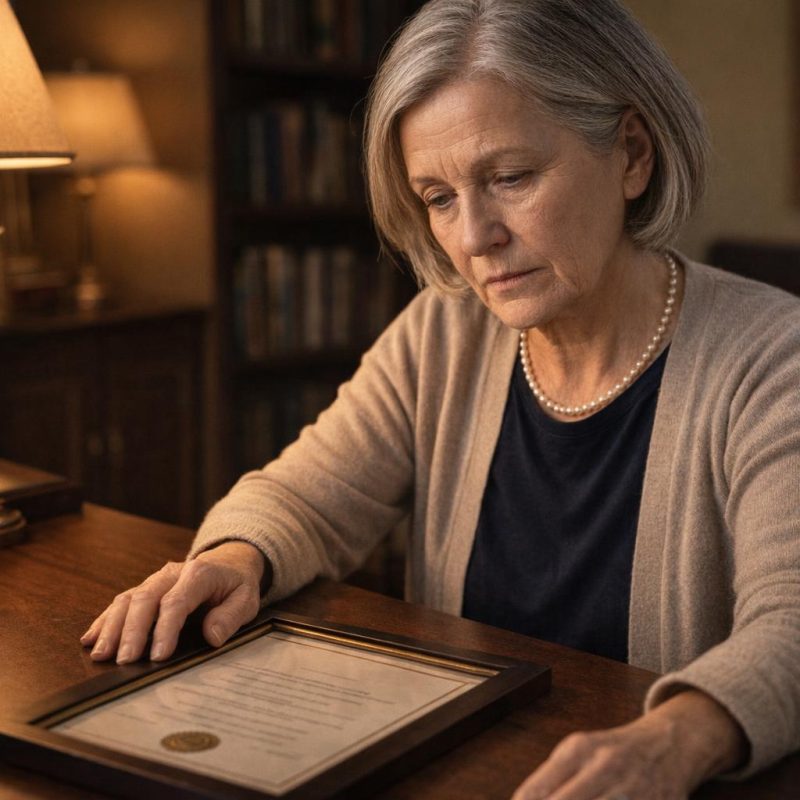 Image by RM AI