The Day Everything Changed
The call came on a Tuesday evening in October, while I was cataloging a new shipment of reference books at the library. My son and his wife had been driving back from a weekend trip when a truck ran a red light on Route 9. They were gone before the ambulance arrived. I remember setting the phone down on the circulation desk very carefully, as though it might shatter, and then standing there for a long moment while the fluorescent lights hummed above me. Someone drove me to the hospital. I cannot tell you who. The social worker met me in a corridor that smelled of antiseptic and floor wax, and she led me to a small room where a nurse was holding a baby wrapped in a yellow blanket. Leo. He was eight months old, and he had his father's dark hair, and he was looking up at the ceiling with the calm, unfocused gaze of someone who had not yet learned to be afraid. The nurse placed him in my arms and said something I did not hear. I was too busy counting his fingers. Ten perfect fingers. I carried him out to the parking lot, and then I carried him home, and I set up the spare bedroom with a borrowed crib and a lamp with a soft bulb, and I sat in the rocking chair beside him until morning. The grief was enormous. But so was the weight of that tiny bundle in my arms.
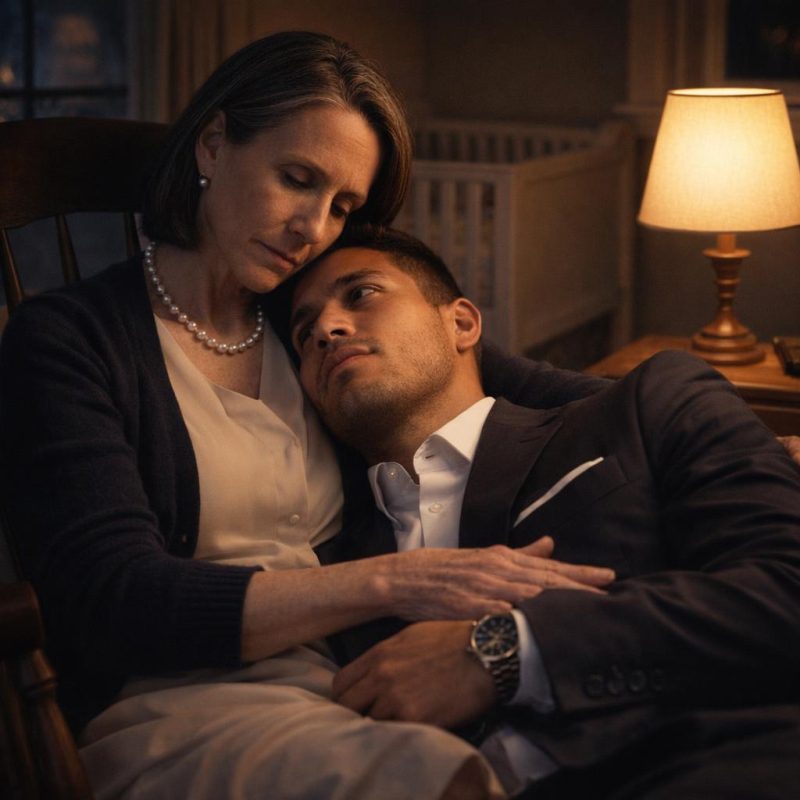 Image by RM AI
Extra Shifts and Empty Cupboards
The first year was a lesson in arithmetic I had never expected to study at sixty-two. Formula cost more than I had budgeted. Diapers disappeared faster than seemed physically possible. My neighbor Mrs. Calloway agreed to watch Leo during my morning shifts at the main branch, and I was grateful beyond what words could properly express. But the morning shifts alone were not enough, so I spoke to my supervisor and picked up evening cataloging work three nights a week. I would come home at nine o'clock, relieve Mrs. Calloway, feed Leo his last bottle, and sit at the kitchen table with a cup of tea that went cold while I balanced the week's figures in a small spiral notebook. Leo was thriving, which was the only number that truly mattered. He had round cheeks and a laugh that sounded like water over stones, and he was beginning to pull himself upright against the furniture. I told myself the tight months would not last forever. I told myself that every time I opened the cupboard and found it barer than I would have liked. I was rearranging my budget one Thursday evening, Leo asleep in the next room, when I noticed the folded paper someone had tucked beneath my front door — and my stomach dropped the moment I read the word eviction printed across the top.
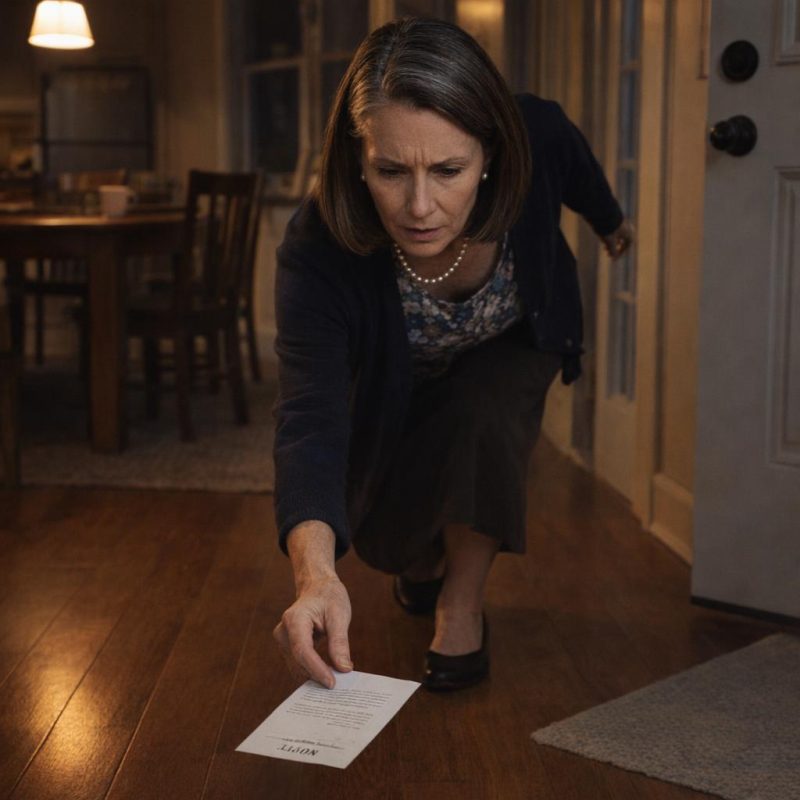 Image by RM AI
The First Steps
The eviction notice turned out to be a clerical error — the landlord's office had misfiled a letter meant for the apartment downstairs — and once that was sorted, life settled back into its careful rhythm. Leo grew the way children do when they are loved: steadily, and with great enthusiasm. By the time he was twelve months old, he had developed strong opinions about which stuffed animals belonged in his crib and which did not. I had been encouraging him to walk for several weeks, holding out my hands from across the room, watching him rock on his feet and consider the distance with an expression of profound seriousness. One Saturday morning in late spring, I was kneeling on the living room rug with my arms open, and he let go of the coffee table leg, and he walked. Four steps, then five, then six, before he sat down hard on the rug and looked up at me with an expression of pure astonishment. I laughed until my eyes watered. I scooped him up and held him against my shoulder and told him he was the bravest boy I had ever known. Later that afternoon, I wrote the date in his baby book in my best handwriting, and pressed a small drawing of footprints beside the entry. The house was quiet around us, and the afternoon light came through the curtains in long warm bars, and the quiet pride settling in my chest felt like something I had earned.
 Image by RM AI
Kitchen Table Mornings
By the time Leo was two and a half, we had a morning routine as fixed and reliable as the library's opening hours. I would wake before him, put the kettle on, and slice a banana into a small bowl while the oatmeal cooked. He would appear in the kitchen doorway in his pajamas, hair standing up on one side, dragging his stuffed rabbit by one ear. He called the rabbit Gerald, for reasons he could not explain and I never pressed. He would climb into his booster seat with great ceremony, and we would eat together at the kitchen table while the radio played softly in the background. He asked questions constantly — why was the sky that color, why did oatmeal need to be stirred, why did Gerald not eat breakfast. I answered every one as seriously as I could manage. When the meal was done, I would wash his face with a warm cloth while he protested, and then we would walk together to Mrs. Calloway's house two doors down, his small hand wrapped around two of my fingers. He would kiss my cheek at her door, a firm, deliberate press of his lips, and then he would disappear inside without looking back, already calling for her cat. I would stand on the step for a moment before turning toward the library, still feeling the warmth of his small hand in mine.
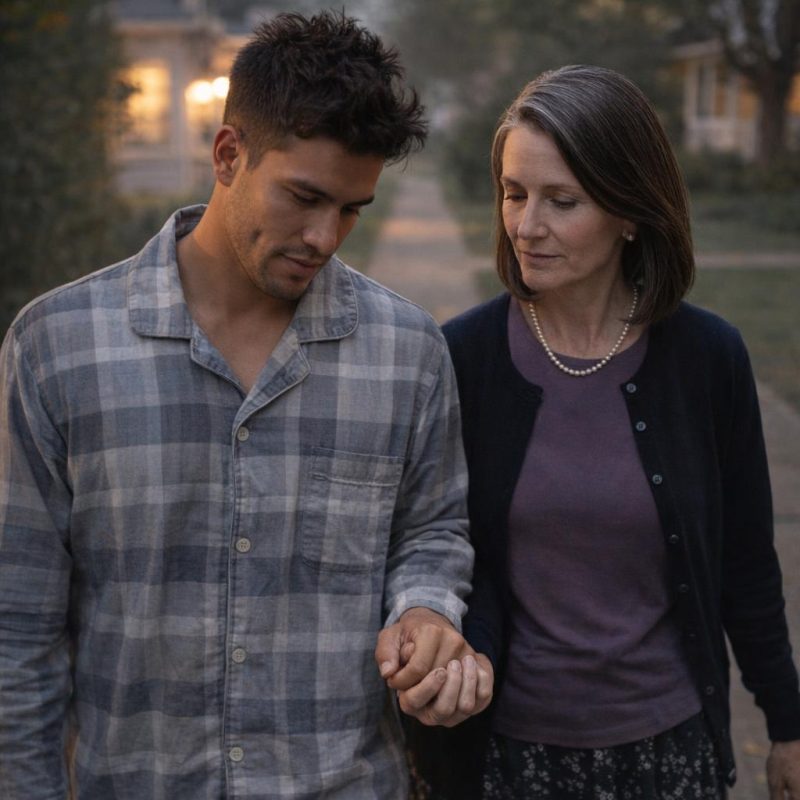 Image by RM AI
The Boy Next Door
Leo was three years and four months old the first time Ethan appeared at our door. It was a Saturday afternoon in early summer, and I was deadheading the roses along the front walk when I heard the gate latch. I looked up to find a small boy standing at the edge of the path, hands clasped behind his back, wearing a striped shirt that was slightly too large for him. He had sandy brown hair and the careful posture of a child who had been taught to mind his manners. He told me his name was Ethan, that he had just moved in next door with his grandmother, and that he had seen Leo playing in the yard the day before and wondered if Leo might like to come outside. I studied him for a moment. He held my gaze without fidgeting, which I found encouraging. I called Leo to the door, and the two of them regarded each other with the solemn gravity that small children bring to first meetings. Within four minutes they were sitting in the grass with Leo's collection of toy trucks, conducting what appeared to be a very serious excavation project near the hydrangea. I went back to my roses but kept them in the corner of my eye. They played without argument for two full hours. When Ethan's grandmother called him home for supper, he stopped at the gate, turned back, and asked in a small, hopeful voice if he could come back tomorrow.
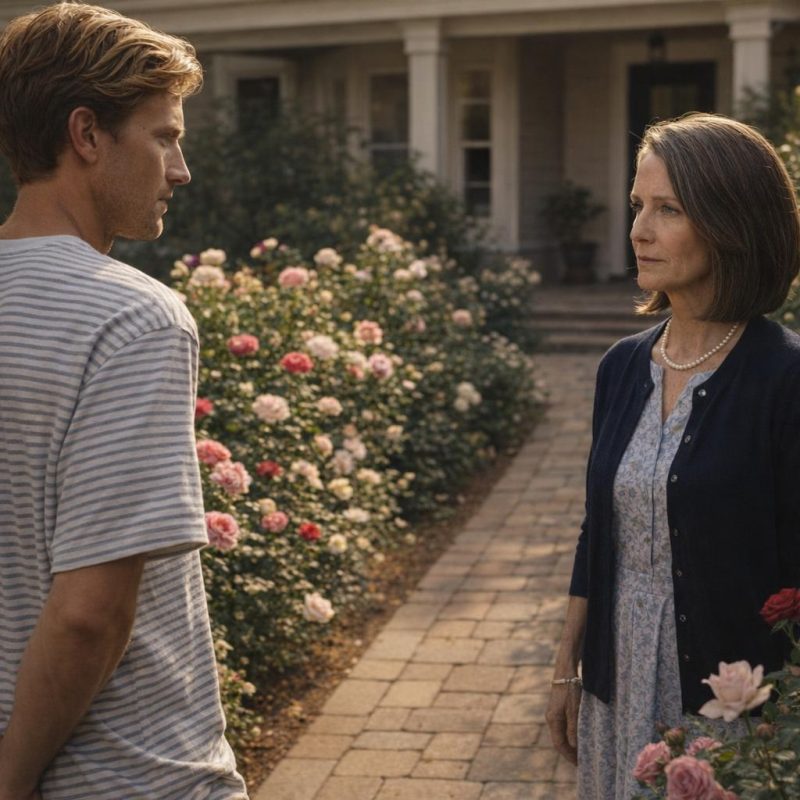 Image by RM AI
The Kitchen That Raised Two Boys
After that first Saturday, Ethan became a fixture of our afternoons the way the kitchen table itself was a fixture — simply there, solid and expected. Once the boys started school, they would arrive together through the back door at half past three, dropping their backpacks on the floor with identical thuds, already talking over each other about whatever had happened that day. I kept a tin of oatmeal cookies on the counter and a pitcher of cold milk in the refrigerator, and they would sit across from each other at the kitchen table and eat while I started supper. Then the homework would come out. Leo was quick with numbers and impatient with spelling. Ethan was the opposite — careful with words, slower with figures — and they balanced each other in a way that was pleasant to watch. I would sit nearby with my mending or a book, available if they needed help sounding out a word or checking a sum, and they would argue cheerfully about answers and then agree and move on. Some evenings I helped them with their reading assignments, and we would take turns with the pages, their voices going up at the ends of sentences the way children's voices do. The kitchen smelled of warm cookies and pencil shavings and whatever was on the stove. On one particular Tuesday in November, I came back from checking on the pot to find both boys with their heads resting on their folded arms, fast asleep over their open workbooks.
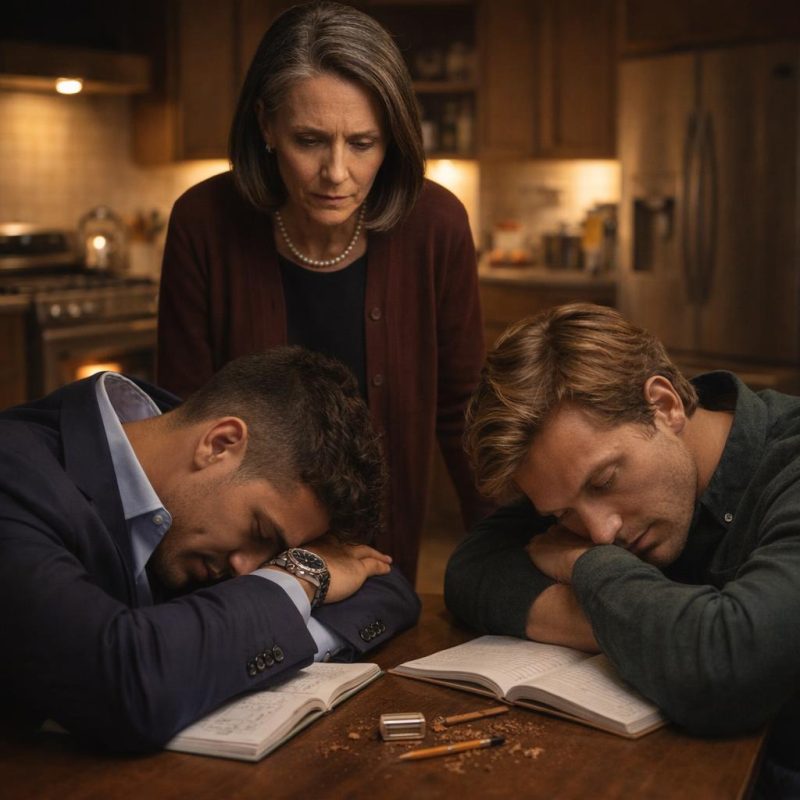 Image by RM AI
Report Card Day
I had been nervous about the parent-teacher conference in a way I had not anticipated. I was not Leo's mother, and I was aware of that distinction every time I sat in a small plastic chair across from a teacher half my age. But I put on my good wool coat and went, because that was what Leo needed, and what Leo needed had always been reason enough. His teacher was a young woman with an organized desk and a warm handshake, and she spread Leo's work samples across the table between us with evident pleasure. His reading scores were strong. His writing was improving. But it was the mathematics section that made her lean forward. She showed me a series of problem sets that Leo had completed not only correctly but with methods she said she had not taught — approaches he had apparently worked out on his own. She said he had a genuine gift for pattern recognition, that he was working well above grade level, and that she believed he would benefit from a more challenging environment. She spoke carefully and kindly, the way people do when they are delivering good news they want to be sure lands properly. I thanked her and shook her hand again at the door. On the walk back to my car, I unfolded the sheet she had pressed into my hand — a formal written recommendation, on school letterhead, for Leo's placement in the district's advanced program.
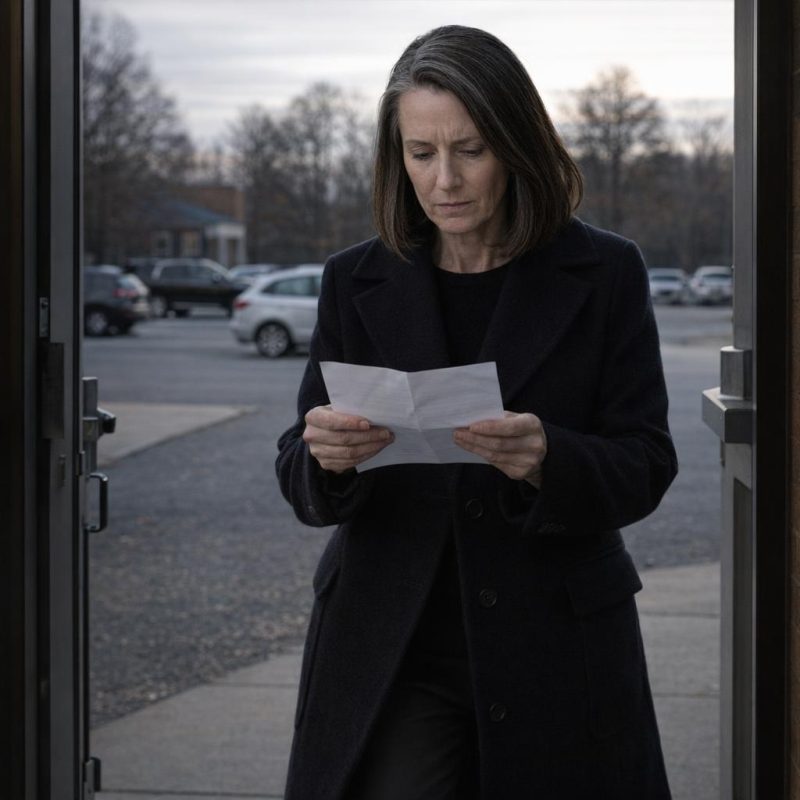 Image by RM AI
Sunday Afternoons in the Park
Sunday afternoons belonged to the park, and had for as long as the boys could remember. I would pack a canvas bag with a library book, a small thermos of tea, and whatever snacks seemed appropriate for the season — apple slices in autumn, lemonade and crackers in summer — and the three of us would drive the six blocks to Riverside Park in my old Buick. The boys would be out of the car before I had properly set the brake, racing each other to the climbing structure at the far end of the playground. I would find my bench — the one near the oak tree, with the good view of the equipment — settle my bag beside me, and open my book. I did not read very quickly on those afternoons. There was too much worth watching. Leo had grown into a confident, physical child who climbed without hesitation and invented rules for games that Ethan would follow with loyal good humor. Ethan had grown quieter and steadier, the kind of boy who noticed when someone was left out and went to stand beside them. I was proud of both of them in different ways. I would read a paragraph, look up, read another paragraph, look up again. The tea would go lukewarm in the thermos. The afternoon would stretch and soften around us, and the sound of their laughter carried across the playground like something I wanted to hold onto.
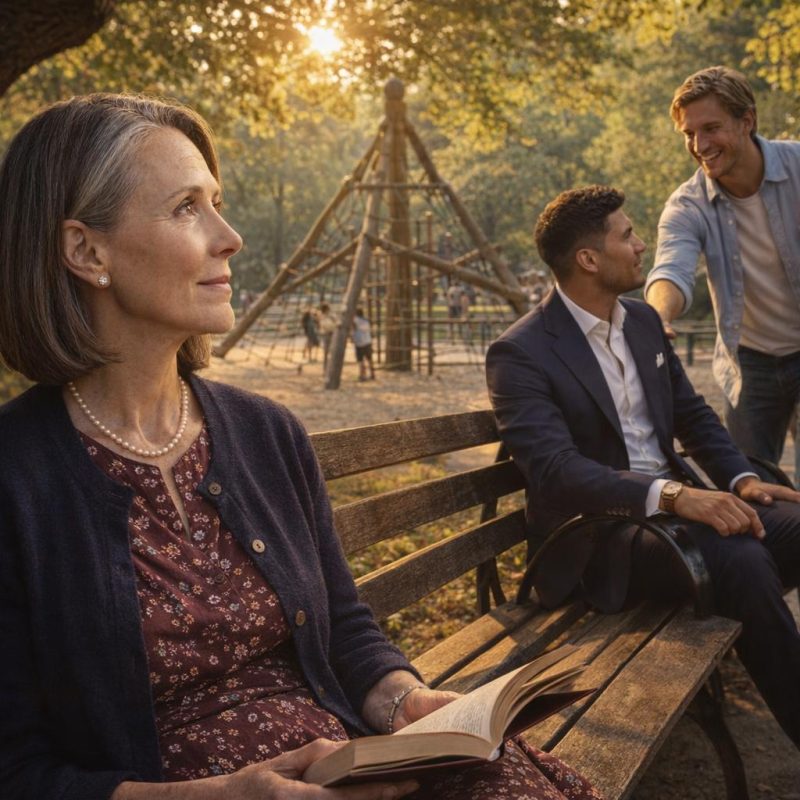 Image by RM AI
Caps and Gowns
I arrived at the high school auditorium forty minutes early, which was perhaps excessive, but I wanted a seat with a clear sightline to the stage. The folding chairs filled quickly around me — parents with cameras, younger siblings who couldn't sit still, grandparents fanning themselves with the printed programs. I held my own program in both hands and read Leo's name in the list of honor graduates three times, as though it might disappear if I looked away. Ethan's name was there too, a few lines below, and I felt a quiet swell of pride for both of them. When the processional music began and the graduates filed in wearing their caps and gowns, I had to press my lips together to keep my composure. I had raised Leo from the age of seven. I had packed his lunches and helped with his science projects and sat beside him at the kitchen table through every difficult homework assignment. And here he was, eighteen years old, walking across a stage to collect something he had genuinely earned. When his name was called and he crossed to accept his diploma, the applause around me seemed to come from very far away. He paused at the edge of the stage, diploma in hand, and turned to scan the crowd. When his eyes found mine, he smiled — not the performed smile of a boy aware of an audience, but something quieter and more private, meant only for me. I sat with that for a long time after the auditorium had filled with noise again.
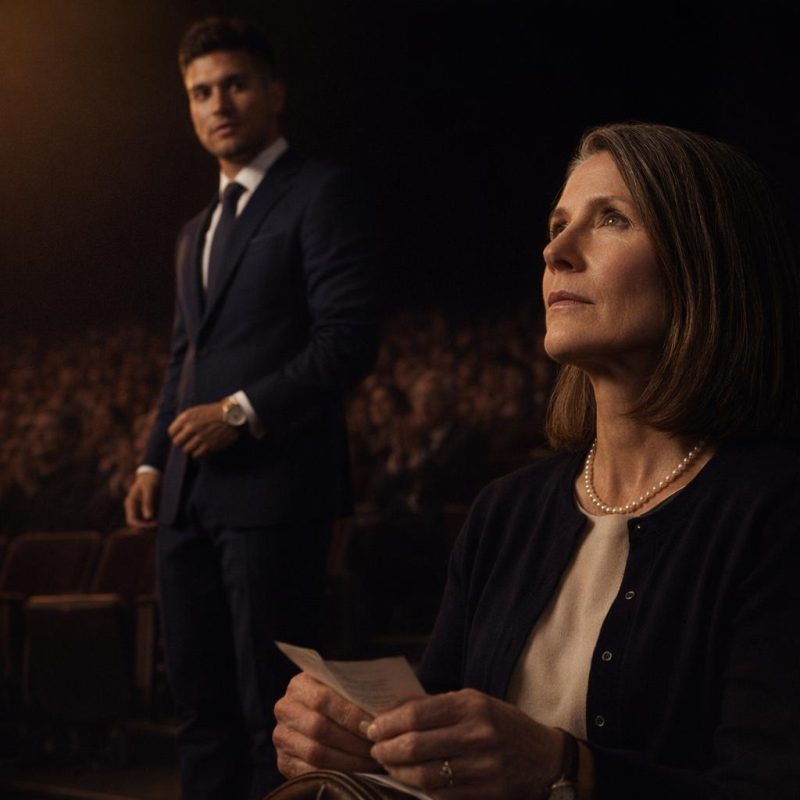 Image by RM AI
The Acceptance Letter
The letter arrived on a Tuesday, which felt appropriately significant for something we had been waiting on for weeks. Leo was at the kitchen table when I brought it in from the mailbox, and he stood up so quickly his chair scraped against the linoleum. We opened it together — he held one side of the envelope and I held the other, which was perhaps a little ceremonial, but it felt right. The acceptance notification was on the first page, and Leo let out a sound that was half-laugh, half-exhale, and I hugged him tightly and told him I had never doubted it for a moment, which was mostly true. We read through the letter together at the table, and I made sure to keep my expression steady and warm. The scholarship award was on the second page — a partial merit scholarship, which was genuinely impressive and something he had worked hard to earn. I told him so, and I meant it. But while he went to call Ethan with the news, I sat back down at the table and did the arithmetic quietly in my head. The scholarship covered roughly half of the annual tuition. Room, board, and fees were listed separately on an enclosed sheet. I set the papers down in a neat stack and looked at the numbers again, and the gap between what we had and what we needed was not small.
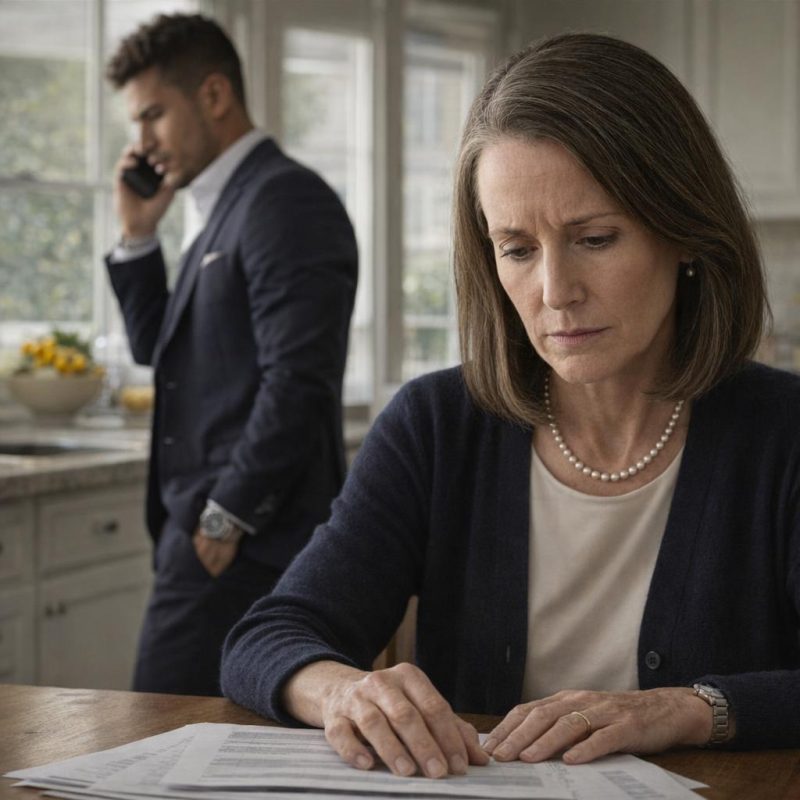 Image by RM AI
Extra Shifts Again
I did not tell Leo about the extra shifts, not in any direct way. When he asked why I seemed tired on the evenings he came home for visits, I told him the library had been busy, which was true enough. What I did not mention was that I had volunteered for every available Saturday shift since August, or that I had taken on a cataloging project for the county archive that paid a modest hourly rate and required me to stay two hours past closing twice a week. I was in my late sixties, and my feet made their opinions known by the time I reached the parking lot each evening. The drive home felt longer than it used to. I would fix myself a simple supper — soup from a can, or toast with an egg — and sit at the kitchen table with my ledger, moving small amounts from one column to another, watching the savings figure grow by increments that felt both meaningful and insufficient. Leo, for his part, was busy and happy. He talked about his roommate and his economics professor and a coffee shop near campus where he liked to study. He was building a life, exactly as I had hoped he would. I was glad of it. On the evenings he called, I made sure my voice carried nothing heavier than ordinary tiredness. I would hang up the phone and sit for a moment in the quiet kitchen, the day's weariness settled deep into my bones.
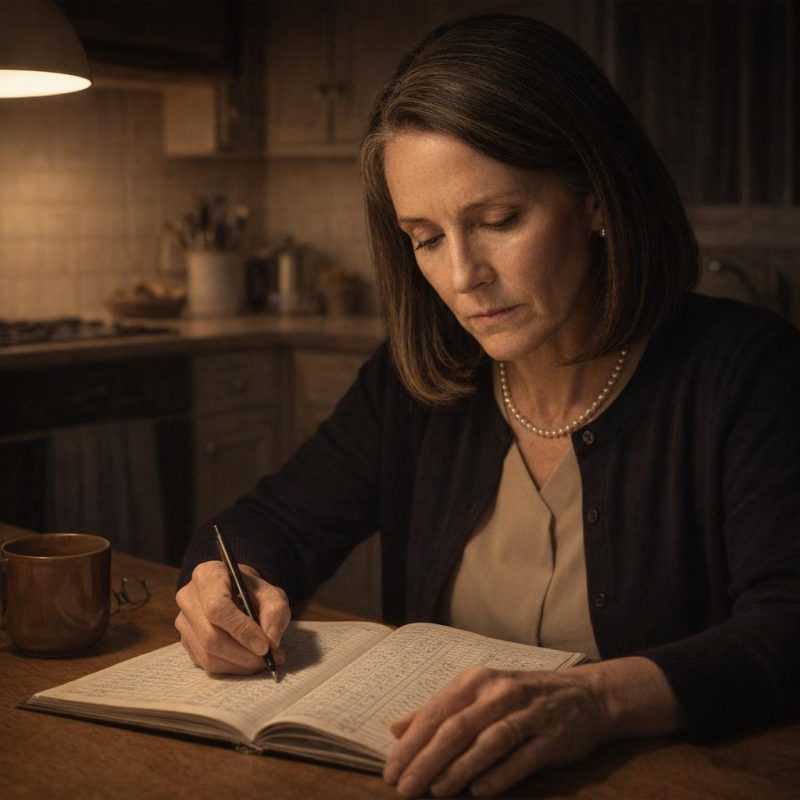 Image by RM AI
Move-In Day
We made three trips up the dormitory staircase, which was narrower than it had any right to be, and by the second trip Leo had taken to carrying two boxes at once while I managed the lighter bags. His room was small and smelled of fresh paint and someone else's laundry detergent. I made his bed with the sheets I had washed and folded at home, and I arranged his desk the way he liked it — lamp on the left, notebooks stacked by size. He hung his one good jacket on the back of the door and stood back to look at the room with an expression of pure, uncomplicated satisfaction that I found almost unbearable to witness, in the best possible way. When the announcement came over the hallway speaker that freshman orientation was beginning in the quad, he grabbed his lanyard and his folder and turned to hug me at the door. He said he would call that evening. I told him to go, that I was fine, that this was exactly what was supposed to happen. I watched him disappear down the corridor with his lanyard swinging, and then I carried the empty bags back down to the car by myself. The drive home took forty minutes. I let myself in through the back door, set my keys on the hook, and stood in the kitchen for a moment. The house held the particular quality of silence that belongs only to rooms that have recently been full.
 Image by RM AI
Sunday Brunch Tradition
We settled into the routine without much discussion, the way good habits tend to form — one Sunday it simply happened, and then it happened again the following week, and by the third week the booth in the back corner of Millard's Diner had become ours by unspoken agreement. Leo always ordered the same thing: two eggs over easy, wheat toast, orange juice. I had the oatmeal with brown sugar and a pot of tea. The waitress, a cheerful woman named Pat, stopped asking us after the first month. Those Sunday mornings were among the things I looked forward to most. Leo would tell me about his coursework and the people he was meeting, and I would share whatever small news the library or the neighborhood had produced that week. It was ordinary conversation, and I valued it enormously. He was doing well — genuinely well, not just performing wellness for my benefit. I could tell the difference. One morning in his second semester, he lingered over his coffee after the plates had been cleared, turning his mug in slow circles on the table. He said college was going well, that he was keeping his grades up, that there was nothing to worry about. And then, almost as an afterthought, he looked up and said he had something he wanted to tell me — but that he'd rather wait until next week, when he had it sorted out properly in his head.
 Image by RM AI
The Girlfriend Announcement
He was already at the booth when I arrived the following Sunday, which was unusual — Leo had always been the one to run a few minutes behind. He had ordered my tea without being asked, which I noticed and appreciated. We went through the ordinary rhythms of the meal, and I waited, because I had learned over eighteen years that pressing Leo for information before he was ready produced nothing useful. It was only after Pat had refilled his coffee that he set his mug down and said he had been seeing someone. A few weeks, he said. Someone from his political theory class. Her name was Vanessa. He described her in the careful, slightly formal way people use when they are still deciding how much to reveal — that she was sharp, that she had strong opinions, that she was unlike anyone he had met before. I asked the questions a grandmother asks: where was she from, what was she studying, did she make him happy. He answered each one, but his answers had a quality I couldn't quite name — not evasive, exactly, but measured in a way that was new. He asked if he could bring her to dinner the following week. I said of course, that I would make a proper meal. When he talked about her, something moved across his face — a brightness, yes, but also something that pulled his expression slightly inward, away from me, in a way I had not seen before.
 Image by RM AI
Preparing for Company
I started cleaning after breakfast and did not stop until mid-afternoon. The front room got dusted and vacuumed, the bathroom scrubbed, the kitchen floor mopped twice because the first pass left streaks. I had taken the roast chicken out of the freezer the night before, and by two o'clock it was in the oven with carrots and potatoes arranged around it the way my mother used to do. I set the dining room table with the good dishes — the cream-colored ones with the small blue border that I only brought out for company — and folded the napkins into neat rectangles beside each plate. I changed into my blue wool dress, the one I wore to church and to the library's annual donor reception, and checked my reflection briefly in the hallway mirror. I wanted the evening to go well. I wanted this young woman to walk into a home that felt warm and cared for, and I wanted her to understand, without my having to say it, that Leo came from somewhere good. By five o'clock the chicken was browning nicely and the house smelled of rosemary and roasted vegetables. I had done everything I could think to do. I moved to the front window and stood there with the curtain held slightly aside, watching the empty street for the familiar shape of Leo's car turning the corner.
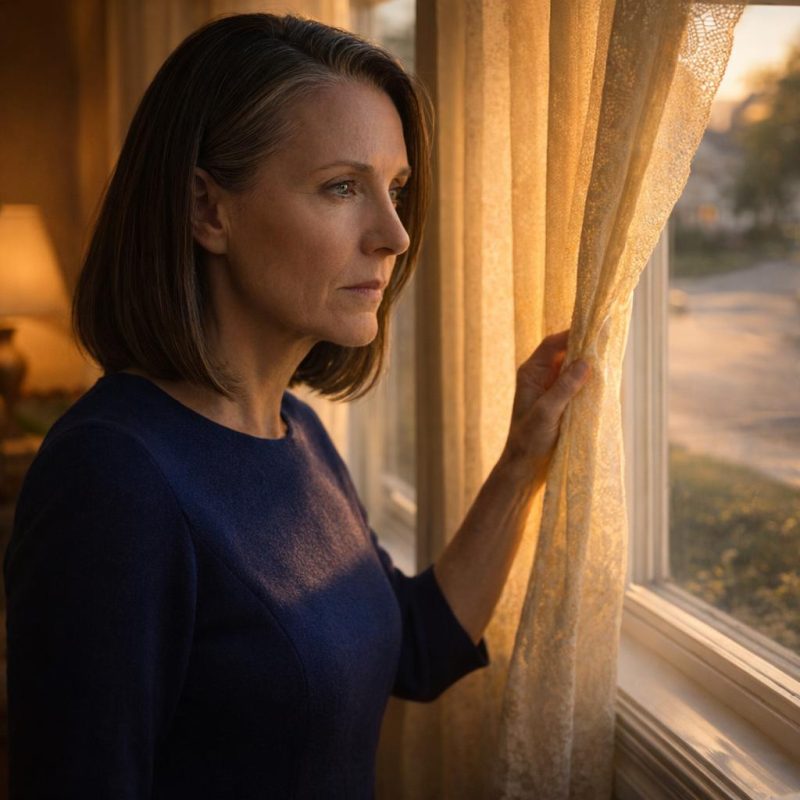 Image by RM AI
The First Dinner
Leo arrived twelve minutes late, which I noted only because I had been watching the clock. He came through the door first, and Vanessa followed a half-step behind him — tall, dark-haired, immaculately dressed in a way that seemed slightly formal for a Sunday dinner at someone's home. I shook her hand at the door and told her I was glad she had come, and she said thank you in a voice that was perfectly pleasant and gave nothing away. We sat down to dinner, and I asked her about her studies — she was in political science, pre-law — and she answered in complete, correct sentences that contained very little. I asked about her family, where she had grown up, whether she had siblings. Each question received a brief, polished response, and then the conversation would pause, and I would find another question to fill the space. Leo watched the table more than he watched either of us. The chicken was good; I knew it was good. Vanessa moved it around her plate with careful attention and ate very little. I told myself there were any number of reasons a young woman might eat lightly at a stranger's table, and I believed that, mostly. Near the end of the meal, I asked about her family in a slightly different way — whether they were nearby, whether she was close with them. The silence that followed settled over the table like something with weight.
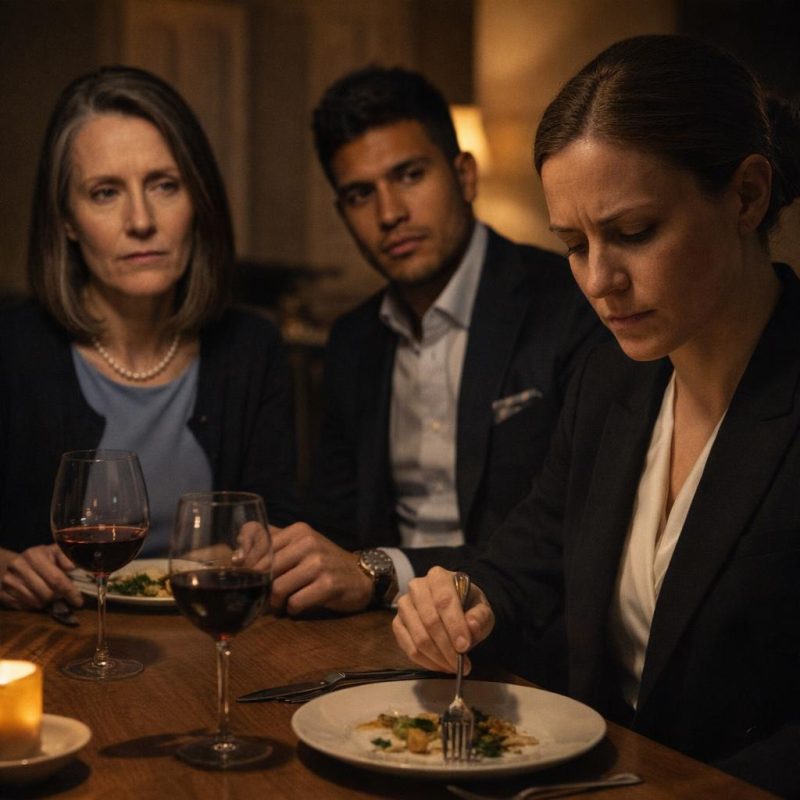 Image by RM AI
The Second Invitation
Two weeks later I invited them back, and I told myself I was simply giving it more time. I made Leo's favorite — pot roast with the small potatoes he had loved since he was nine years old — and I set the table with the good cloth napkins. Vanessa arrived looking as polished as before, and she thanked me for the invitation in that same pleasant, contained way she had. I tried a different approach this time. I asked about her interests rather than her background, whether she enjoyed cooking or reading or anything she did just for herself. She said she liked documentaries, and I asked which kind, and she said political ones mostly, and I said that was interesting, and she agreed that it was. Leo was quieter than I had ever known him to be at my table. He ate well enough, but there was a tightness around his eyes that I could not account for. I thought perhaps he was tired from his coursework, or that the two of them had argued on the drive over. I was reaching for something to say about the documentary she had mentioned when Leo's phone buzzed against the table. He reached for it automatically, the way young people do, and then Vanessa's hand came down over his — gently, but without hesitation.
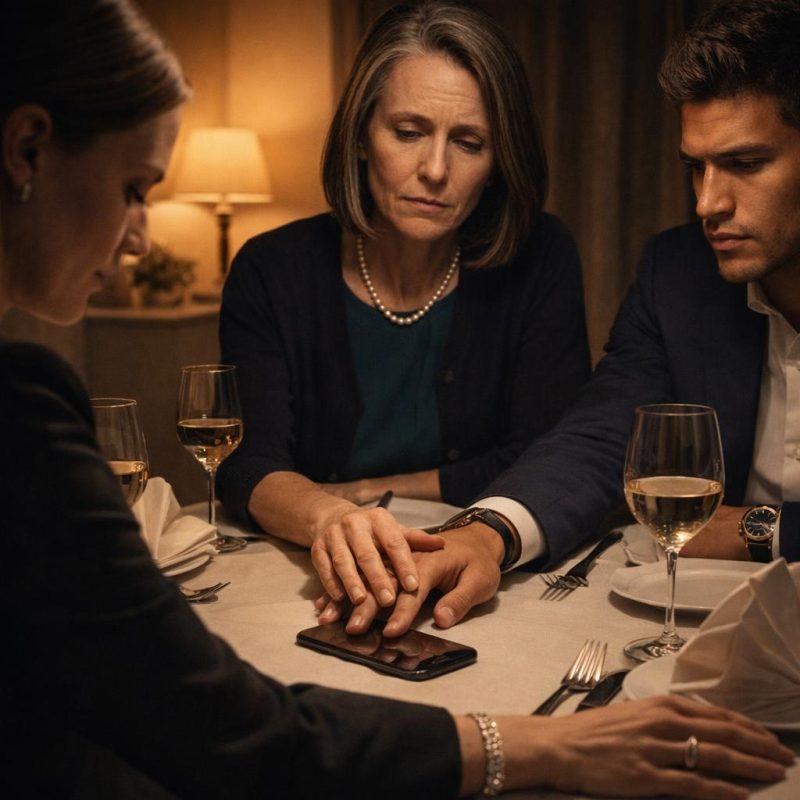 Image by RM AI
The Cancelled Brunch
I had the table set by eight o'clock Saturday evening, the way I always did the night before our Sunday brunch. The good jam was already out. I had bought the kind of orange juice Leo preferred, the kind with extra pulp that I personally found unpleasant but kept in the house for him. The phone rang just after nine, and I knew from the hour that something had changed before I even picked it up. Leo's voice was quick and a little breathless, the way it sounds when someone is already moving while they talk. He said he was sorry, that he and Vanessa had plans they hadn't been able to get out of, that he hoped I understood. I told him of course I did, that we could find another Sunday, and he said yes, definitely, and that he would call soon. I asked if everything was all right, and he said yes, fine, just busy. I believed him, or I tried to. I stood in the kitchen for a moment after we hung up, looking at the table I had set. The jam jar caught the light from the overhead fixture. I put the orange juice back in the refrigerator and turned off the kitchen light, and the silence that followed was the particular kind that comes after a phone has gone quiet in your hand.
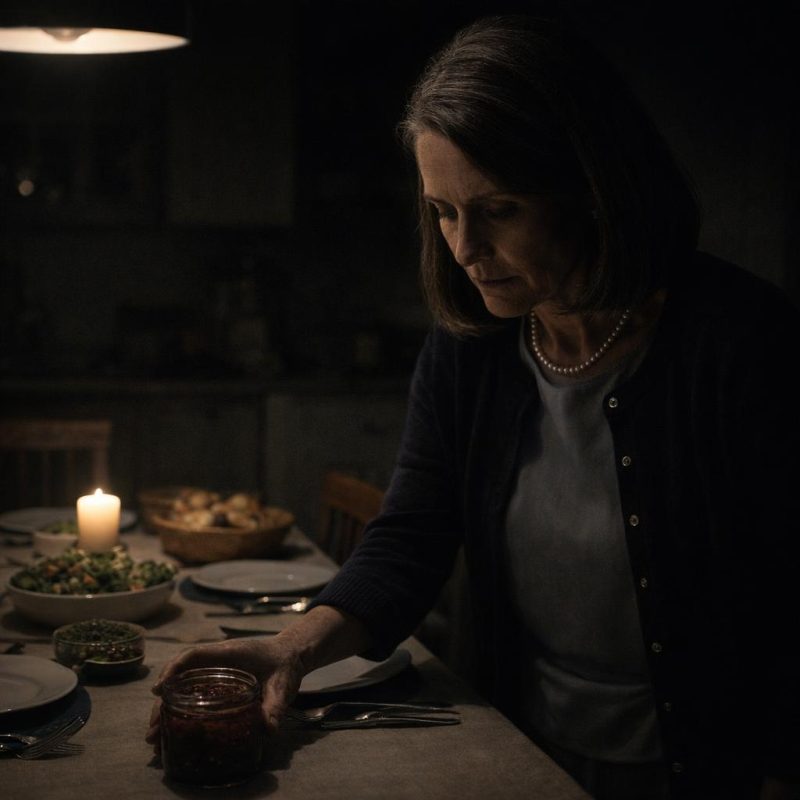 Image by RM AI
The Birthday Visit
I had made his favorites again — I seemed to keep doing that, as though the right meal might close whatever distance had opened between us. The reservation I had made at the restaurant he liked fell through, so I cooked at home instead, which I preferred anyway. He was supposed to arrive at six. At six-thirty I turned the oven down. At seven I heard his car in the drive, and I smoothed my dress and went to the door and told him I was glad he had come, and I meant it. He apologized for the delay without explaining it, and I said it was no matter, and we sat down to eat. The conversation moved, but it moved the way furniture moves when you push it — with effort, and not naturally. He checked his phone twice during the salad course and once more during the main. I asked about his classes, about a professor he had mentioned in the fall, about whether he had seen the film that had been playing at the Rialto. He answered each question, but his answers were shorter than they used to be, and his eyes kept drifting somewhere past my shoulder. I told myself he was tired. I told myself that young men in their twenties had a great deal on their minds. But when he looked at me directly, just once, near the end of the meal, there was something behind his eyes I did not recognize and could not name.
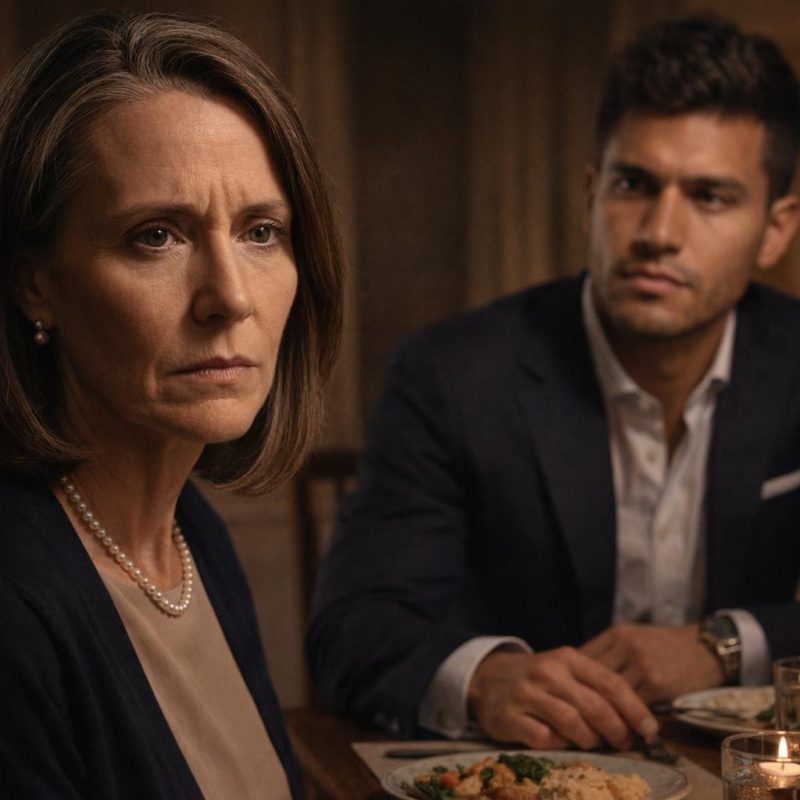 Image by RM AI
The Early Departure
He announced it between the cake and the coffee, in the careful tone people use when they have already decided something and are only now informing you of it. He said he had an early study session in the morning, that he really ought to get back to campus, that he was sorry. I told him I understood, and I cut him a piece of cake to take with him, wrapped in foil the way I always had since he was small. He accepted it and gave me a hug at the door — quick, the kind that ends before it fully begins — and then he was down the porch steps and across the drive. I stood in the doorway for a moment, watching the back of his coat. I told myself that graduate students kept strange hours, that the semester was demanding, that there was nothing unusual about a young man needing to study. I went back inside and sat down at the table with my half-eaten slice of birthday cake and the two coffee cups I had already set out. The candles on the remaining cake had burned down to small waxy stubs. I was still sitting there, trying to decide whether to clear the table or simply leave it, when I heard his car engine turn over in the drive — before I had even crossed to the window to watch him go.
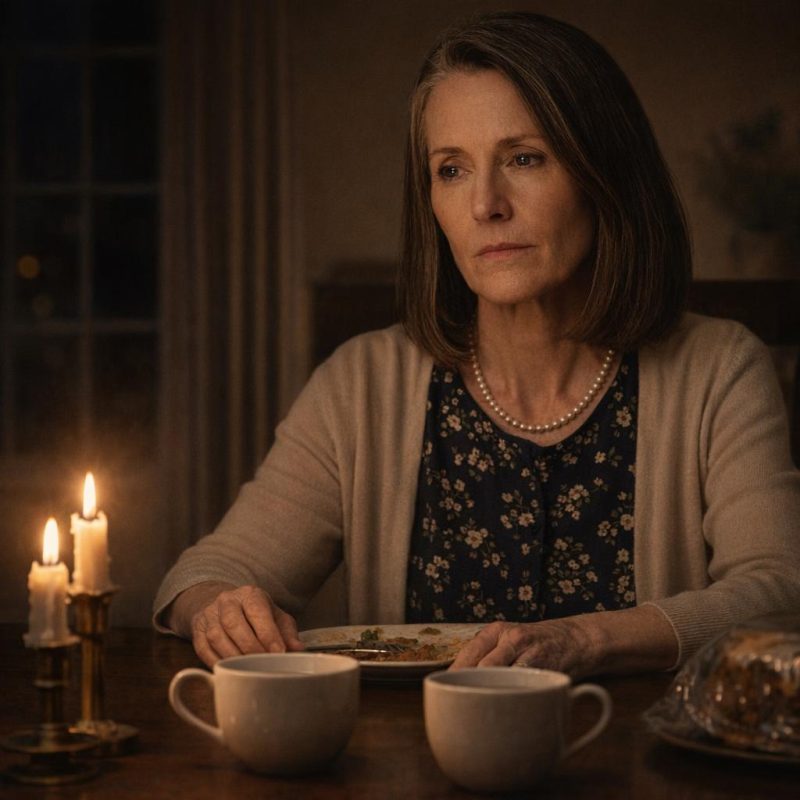 Image by RM AI
Three Weeks of Silence
The first message I sent was casual — just a how are you, the kind of thing that requires nothing. I sent it on a Tuesday and checked my phone that evening, and then again before bed, and then again in the morning. Nothing. I waited four days and sent another, asking if he was well, saying I had been thinking of him. I kept the tone light because I did not want him to feel pressured, and because I was not yet sure there was anything to feel pressured about. A week passed. I sent a third message, shorter than the others, just his name and a question mark and a small note that I was here if he needed anything. I began carrying my phone from room to room in a way I never had before, setting it on the counter while I washed dishes, on the end table while I read. I was not a woman who had ever been attached to the device, but I found myself glancing at it the way you glance at a door you are waiting for someone to come through. Three weeks went by. My messages sat in the thread marked as unread, each one a small blue line of text that had gone nowhere. I sat in the armchair by the window one evening with the phone in my lap, the screen dark, and the weight of it felt heavier than it had any right to.
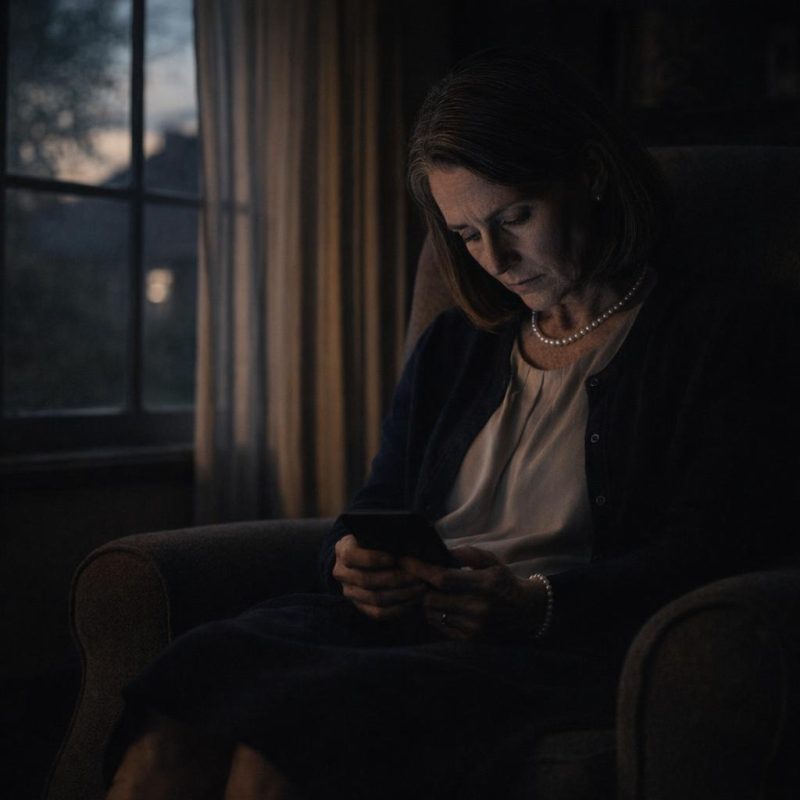 Image by RM AI
The Unopened Gift
Leo's birthday fell on a Thursday that year, and I had wrapped the gift two days before — a first edition I had found at the estate sale in Millbrook, a history of cartography that I knew he would appreciate because he had always loved maps, even as a boy. I drove to his apartment building on the afternoon of his birthday, which I had never done before. I had his address from a card he had sent me the previous Christmas, and I found the building without difficulty. It was a plain brick building near the university, with a row of buzzers by the front door. I found his number and pressed it and waited. Nothing. I pressed it again and said his name into the small metal speaker, feeling slightly foolish. A young woman came out of the building and held the door, and I thanked her and went up to the third floor and knocked on his door directly. I knocked twice. I called his name once, quietly, because the hallway was narrow and I did not want to disturb his neighbors. No one came to the door. I stood there for a moment longer than was necessary, and then I went back down to my car. The gift sat on the passenger seat beside me the whole drive home, still wrapped in the brown paper I had tied with a length of green ribbon.
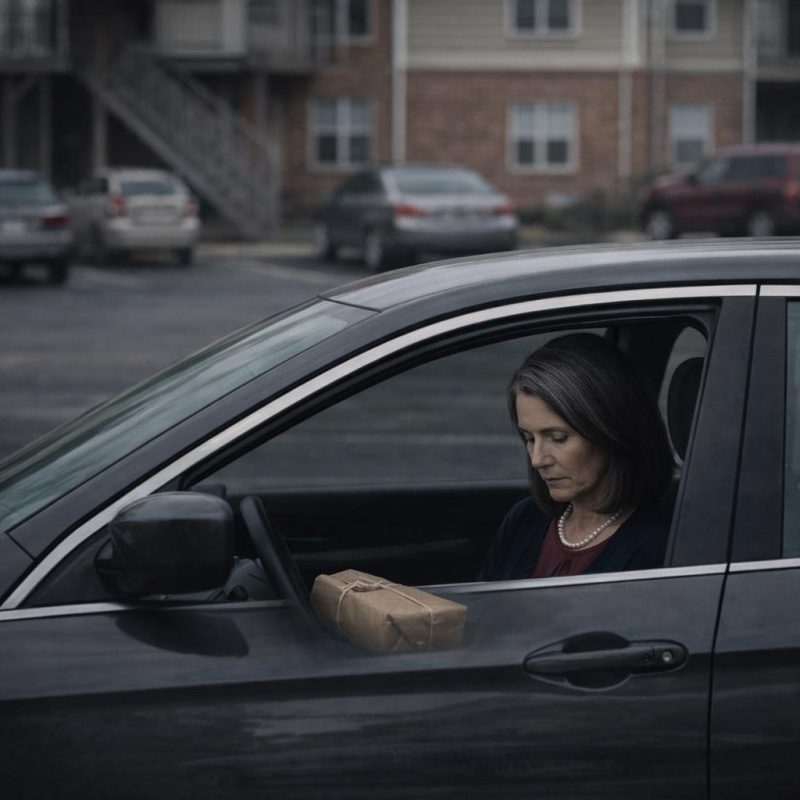 Image by RM AI
The Library Volunteer
I had been volunteering at the Millbrook Public Library for eleven years, and it had always been the kind of work that settled me. The smell of the place alone — old paper and wood polish and something faintly metallic from the card catalog drawers we still kept, though no one used them — had a way of putting things in their proper order. I arrived for my Tuesday shift and began shelving the returns cart in the 900s, which is history and geography, and I found I could not keep my mind on the call numbers. I would read the spine, find the correct shelf, and then stand there with the book in my hand, thinking about Leo. Whether he was eating properly. Whether I had said something at the birthday dinner that had landed wrong. Whether the distance I felt was real or something I had constructed out of loneliness and too much quiet. I shelved the same volume twice before I noticed. I moved to the front of the library to help at the circulation desk, which usually required enough attention to crowd out other thoughts. I was checking in a stack of picture books when I heard laughter near the checkout counter — easy, unguarded laughter, the kind that doesn't know it's being heard. I looked up, and there at the checkout desk stood a young man of perhaps twenty beside an older woman with white hair and a canvas tote bag — her grandson, by the easy way they stood together.
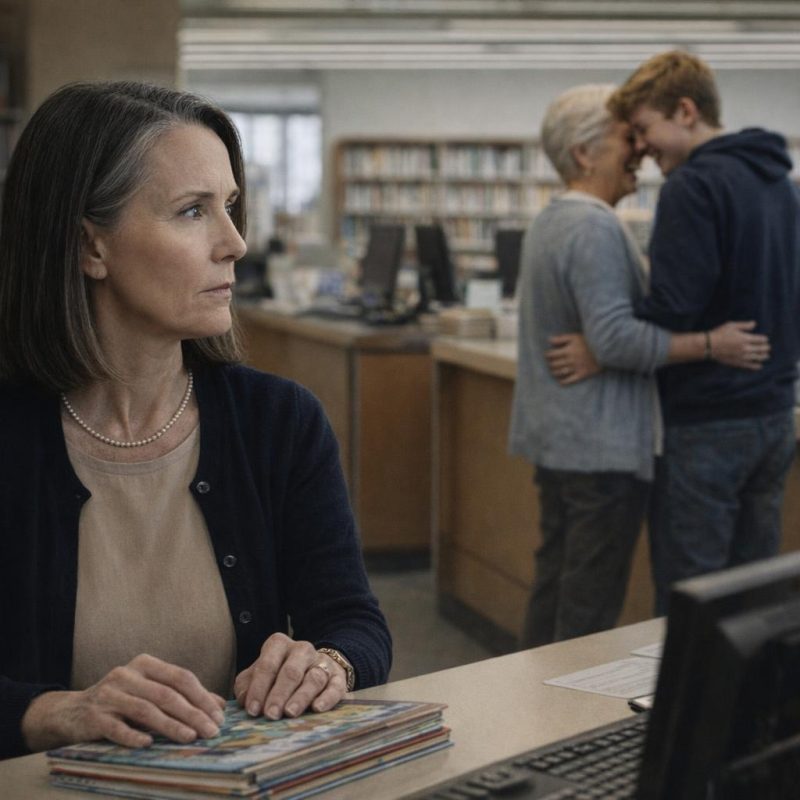 Image by RM AI
Four Months Gone
I sat at the kitchen table on a Wednesday morning in November with my calendar open in front of me. I had always kept a paper calendar — one of those large desk-style ones with a square for each day — and I had a habit of marking small things in it, appointments and phone calls and visits, so that the weeks had a kind of shape to them. I turned back through the pages to July, to the evening of my birthday, and I counted forward. Four months. Four months since I had sat across from Leo at this same table and watched him check his phone and try to seem present when he was not. I turned the pages back to the present and sat with that number for a while. Then I did what I had been doing for weeks, which was to go back through the birthday dinner in my mind, sentence by sentence, looking for the thing I had said that had caused this. I had asked about his classes. I had mentioned the film at the Rialto. I had told him about the Hendersons' dog, which had gotten into my garden again. I had not said anything unkind. I had not pried. I had not asked about Vanessa, which I had been careful about. And yet here I was, four months later, with no answer that I could find. I turned to the current month and then forward, page after page, each square empty and waiting.
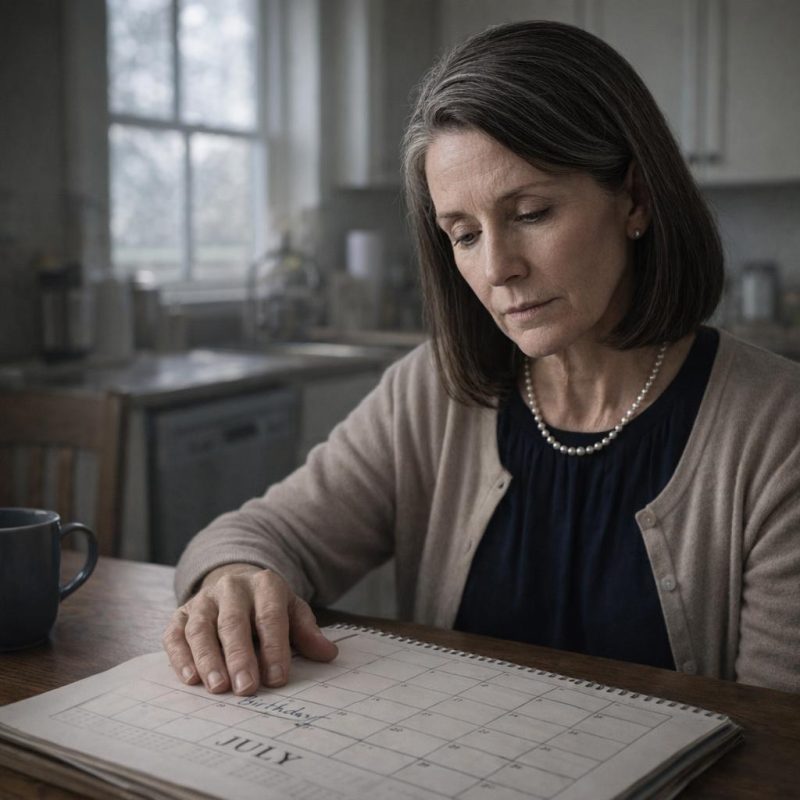 Image by RM AI
The Neighbor's Question
I had gone out to collect the mail on a Thursday afternoon, nothing unusual about it — a few bills, a circular from the pharmacy, the usual thin stack of November correspondence. The air had that particular cold to it that settles in just before the first real freeze, and I was standing at the mailbox sorting through the envelopes when my neighbor from two houses down came up the sidewalk with her little terrier on its leash. She was a pleasant woman, the kind who always remembered to ask after people, and she stopped to say hello the way she always did. We talked about the cold for a moment, and then she asked how Leo was getting on at the university. She said she had always thought he was such a bright young man, and that graduate school suited him. I stood there with the mail in my hands and felt something go very still inside me. I did not know if Leo was still in graduate school. I did not know if he was well or struggling or somewhere in between. I did not know anything about his life at that moment, and the gap of it opened up in a way I had not quite let myself feel before. She was looking at me with a kind, expectant expression. And I smiled and told her he was doing wonderfully.
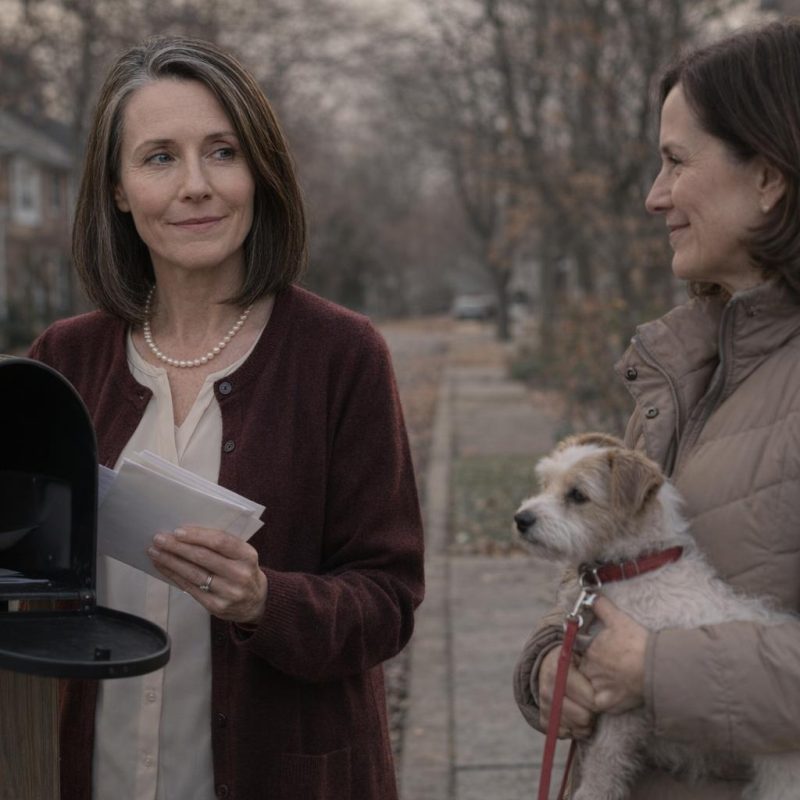 Image by RM AI
Thanksgiving Preparations
I had always made a proper Thanksgiving — not because I needed the occasion, but because Leo had grown up expecting it, and some habits become their own kind of love. I roasted a small turkey in my oven that Wednesday night and prepared the sweet potato casserole and the green beans with almonds and the cranberry sauce from scratch, all the things he had asked for every year since he was old enough to have preferences. I set the table for two. I put out the good cloth napkins and the candlesticks his mother had left behind, and I set his place across from mine as though he had simply stepped out and would be back shortly. I had sent the invitation three weeks earlier, a proper written note, and I had not heard back. But I told myself that young people were busy, that he might simply show up the way he used to when he was in college, a little late and apologetic and hungry. I waited past six o'clock. I waited until the food had gone from hot to warm. Then I sat down, said grace quietly to myself, and ate alone. The turkey was good. The house smelled the way it always had on that day. I kept my eyes on my plate and tried not to look at the empty chair across from me.
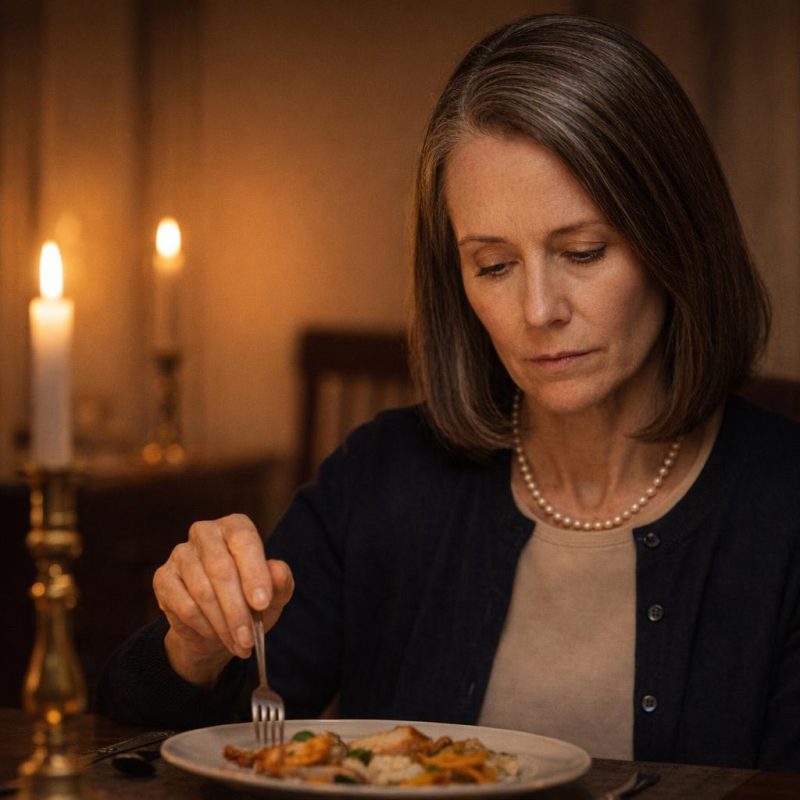 Image by RM AI
Christmas Lights
I brought the Christmas boxes down from the hall closet the first Saturday of December, the same way I had done every year for as long as I could remember. There were four of them — lights, ornaments, the garland for the mantle, and the small artificial tree that Leo had helped me pick out at the hardware store when he was eleven years old. He had been very particular about it, insisting on the one with the slightly uneven branches because it looked more like a real tree. I remembered that as I lifted it out of the box. I hung the lights along the porch railing in the cold, working slowly, and then I set up the tree in the corner of the living room where it had always stood. I placed the ornaments one by one — the painted wooden ones he had made in grade school, the little brass bell from his first Christmas with me, the paper star he had folded himself at age seven and which had never quite held its shape. I plugged in the lights and stepped back. The room looked exactly as it always had. It looked like a home that was waiting for someone. I sat down in my chair and did not turn on any other lamp, and the decorated room held its brightness around me, and the house was perfectly, completely quiet.
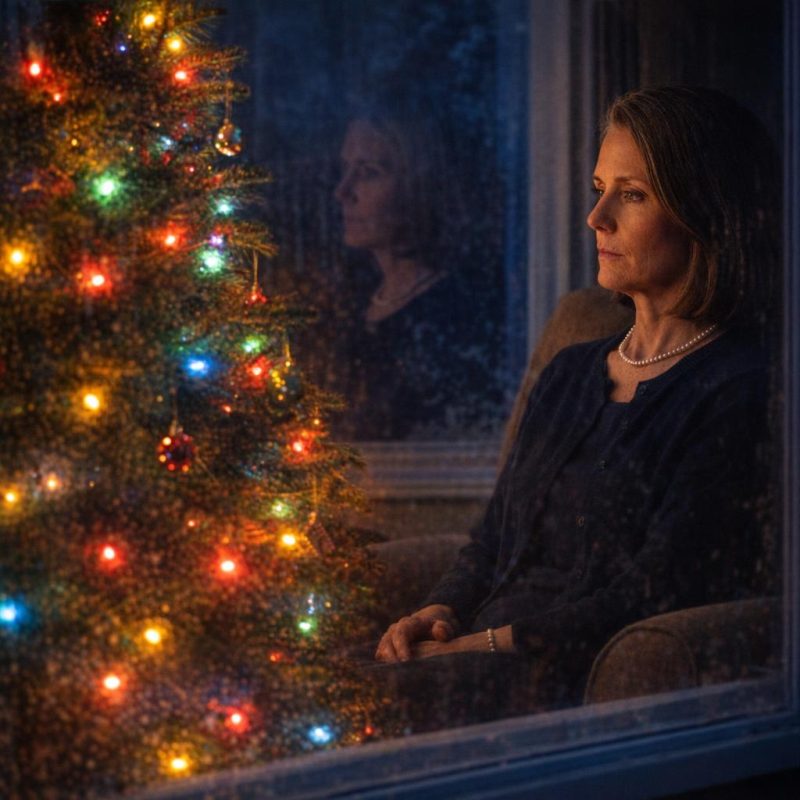 Image by RM AI
The Christmas Card
I had a box of Christmas cards I had ordered years ago from a stationery company, simple ones with a winter landscape on the front, dignified without being cold. I sat at the kitchen table on a Sunday evening and selected one for Leo. I held it for a moment before I opened it, thinking about what to say and what not to say. I did not want to sound reproachful. I did not want to sound desperate, though I was beginning to feel something close to it. In the end I wrote simply that I loved him, that I missed him, and that my door was always open. I wrote that I hoped he was well and that I thought of him every day. I addressed the envelope to his apartment — I still had the address from a card he had sent me two years prior — and I put a stamp on it carefully, pressing it down at the corners the way my mother had taught me. I drove to the post office on Monday morning, which was the only day that week the roads were clear of ice. I stood at the mail slot for longer than I should have, holding the envelope and looking at his name in my own handwriting. I thought about all the things I had not written. Then I let it go, and watched it disappear into the slot.
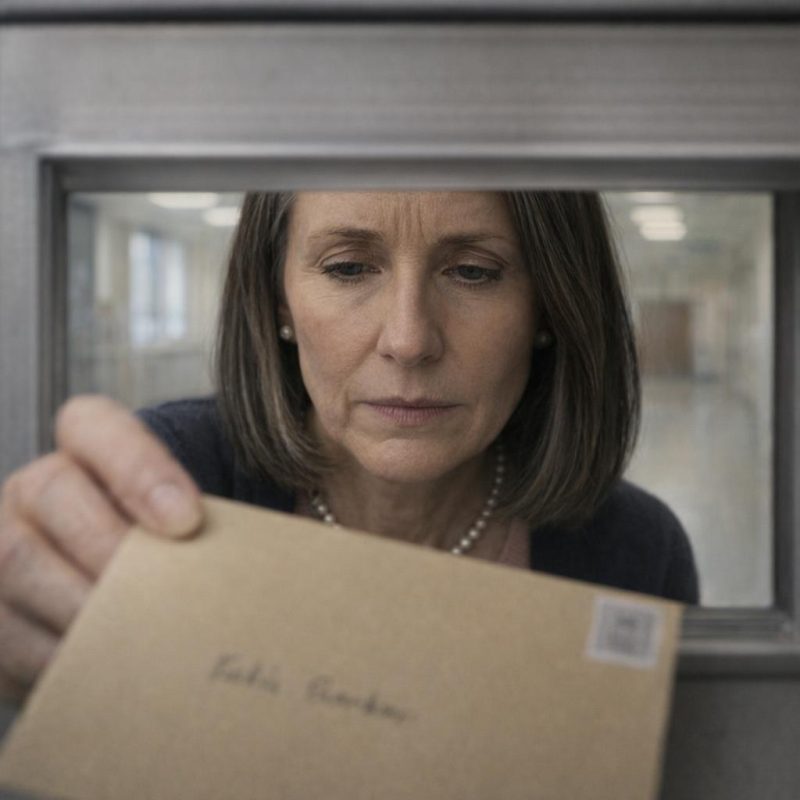 Image by RM AI
New Year's Eve Alone
I had never minded New Year's Eve particularly — it had always seemed to me more of a marker than a celebration, a line drawn across the calendar to give the year a shape. But Leo and I had made a small tradition of it when he was young, staying up past midnight with sparkling cider and a plate of the shortbread cookies I made only at Christmas. Even after he went to college, he had called at midnight most years, just to say happy new year, just to check in. I turned on the television as the evening came on and sat in my chair with a cup of tea that went cold before I finished it. The coverage showed crowds in bright coats, people laughing and pressed together against the cold. I watched the countdown begin and thought about the last time we had watched it together, the two of us on this same sofa, and how ordinary it had seemed then. Six months of silence had a weight to it that I had not fully measured until that night. The numbers on the screen counted down to zero. The fireworks came up in colors. I sat in the dark room with the television light moving across the walls, and I was crying before I understood that I had started, and the new year arrived without ceremony, without a phone call, without anything at all.
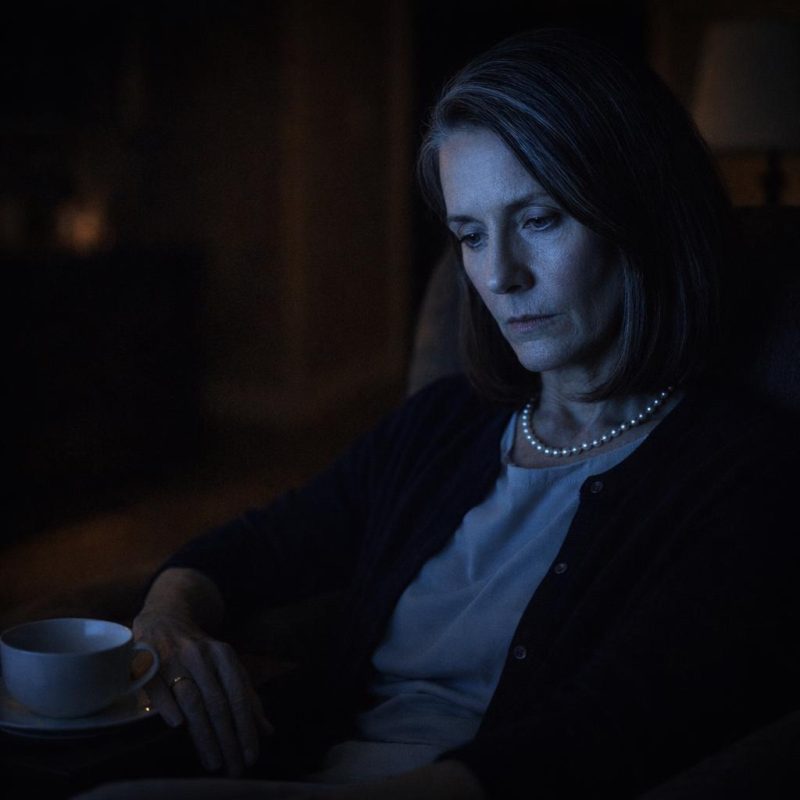 Image by RM AI
Six Months
I had kept a journal for most of my adult life, though in recent years it had become more of an occasional record than a daily practice. On the morning of January fifteenth, I opened it to a blank page and wrote the date at the top, and then beneath it I wrote: six months. I sat with that for a moment before I continued. I wrote down what we had eaten at the birthday dinner — the roast chicken, the potato gratin, the lemon cake I had made from the recipe his mother used to use. I wrote down what he had been wearing, a dark blue shirt with the collar open, and that he had looked tired around the eyes in a way I had noticed but had not remarked upon. I wrote down the conversation as best I could reconstruct it, the questions I had asked and the short answers he had given, the way he had checked his phone twice and apologized once. I wrote down that he had hugged me at the door when he left, briefly, and that I had stood on the porch and watched his car until it turned the corner. I did not know why I was writing it all down. Perhaps I was afraid of forgetting. Perhaps I was trying to find something I had missed. I read back over the page when I was finished, and it was full of details I had memorized without meaning to.
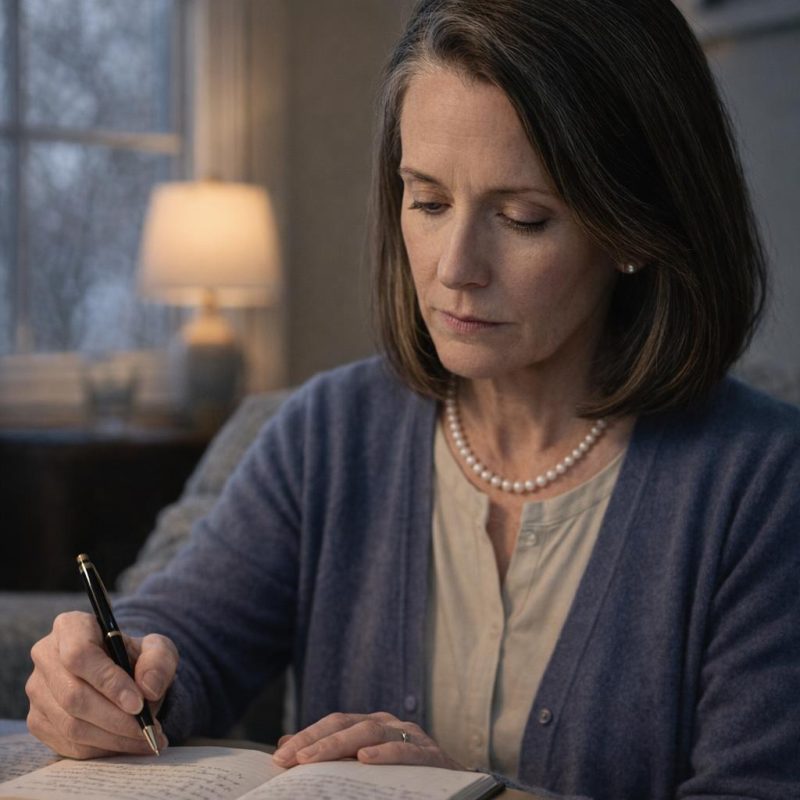 Image by RM AI
The Phone Call Attempt
I had not called Leo's phone directly in months. I had sent the card, I had written the note before Thanksgiving, but I had not dialed his number, and I think some part of me had been avoiding it without quite admitting that to myself. On a Tuesday evening in late January I sat down on the edge of my bed and picked up the phone with both hands. My hands were not entirely steady. I dialed his number from memory — I had never needed to look it up — and I listened to it ring. I counted the rings the way you do when you are trying to stay calm, giving yourself something to do with your mind. One, two, three. I told myself he might simply be in class, or at the library, or somewhere loud where he could not hear it. Seven, eight, nine. I told myself there were a dozen reasonable explanations. Eleven, twelve. And then the ringing stopped, and there was a brief silence, and then I heard his voice — his actual voice, unhurried and clear, the voice I had known since he was a small boy learning to talk — asking me to please leave a message after the tone.
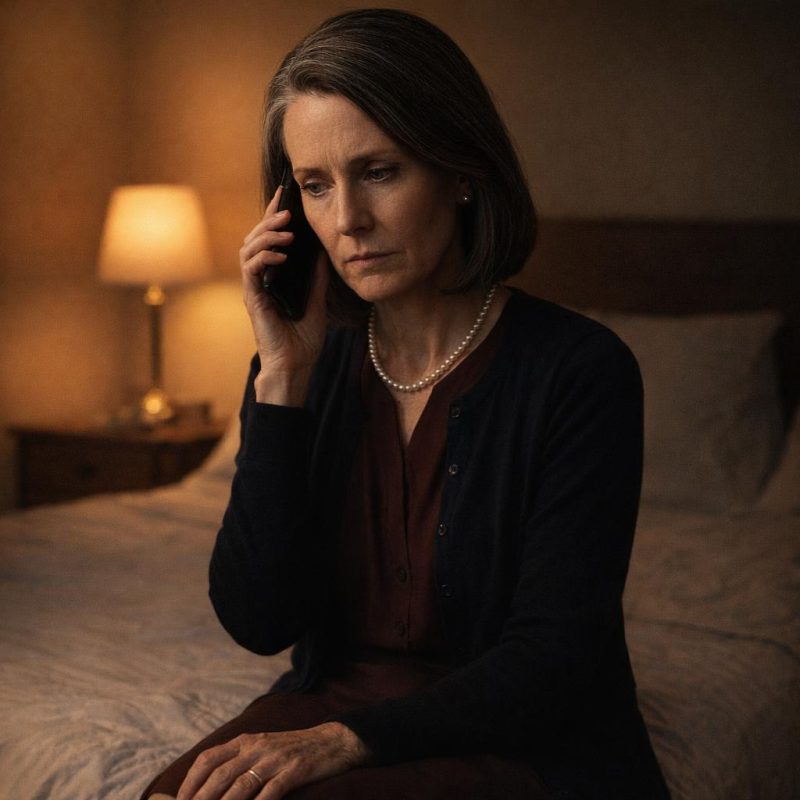 Image by RM AI
The Workplace Call
I found the number for Leo's employer on a business card he had given me the previous spring, one of those small glossy cards with the company name in clean dark lettering. I had kept it in the drawer of my writing desk without quite knowing why. I called on a Wednesday morning, when I thought the office would be settled into its routine. A woman answered on the second ring, pleasant and efficient, and asked how she could direct my call. I told her I was hoping to speak with Leo. There was a brief pause — not long, perhaps two seconds — and then she said that he was unavailable at the moment. I asked if there was a better time to reach him, a time when he might be free. She said she was not able to provide that information. I thanked her and set the phone down. I sat at my desk for a while after that, looking at the business card still lying on the blotter in front of me. I had not learned anything useful. I had not gotten any closer to him. But something about the exchange had stayed with me, something I could not quite name — the particular way her voice had shifted, just slightly, when she said his name, pulling a fraction tighter than the rest of the sentence.
 Image by RM AI
The Second Birthday
My seventy-third birthday fell on a Thursday. I woke earlier than usual, before the light had fully come through the curtains, and lay still for a moment the way you do when you are trying to remember something important. Then I remembered. I got up and made my coffee and stood at the kitchen window while it brewed, watching the neighbor's cat pick its way across the frost-stiffened grass. I had not expected a party. I had not expected much of anything, really. But I had expected something — a card, perhaps, or a brief message, the kind that takes thirty seconds to send and means more than the sender usually knows. I checked my phone before breakfast and found nothing from Leo. I checked it again after I washed my dishes. I sat in the front room through most of the afternoon with a book open in my lap that I did not read, and the phone on the side table beside me, face up. Ethan had sent a kind note in the morning, which I was grateful for. The sun moved across the floor in its slow way and eventually reached the far wall and began to fade. I watched it go. Somewhere around five o'clock, with the room going gray and quiet around me, I understood with a flat and certain clarity that the phone was not going to ring.
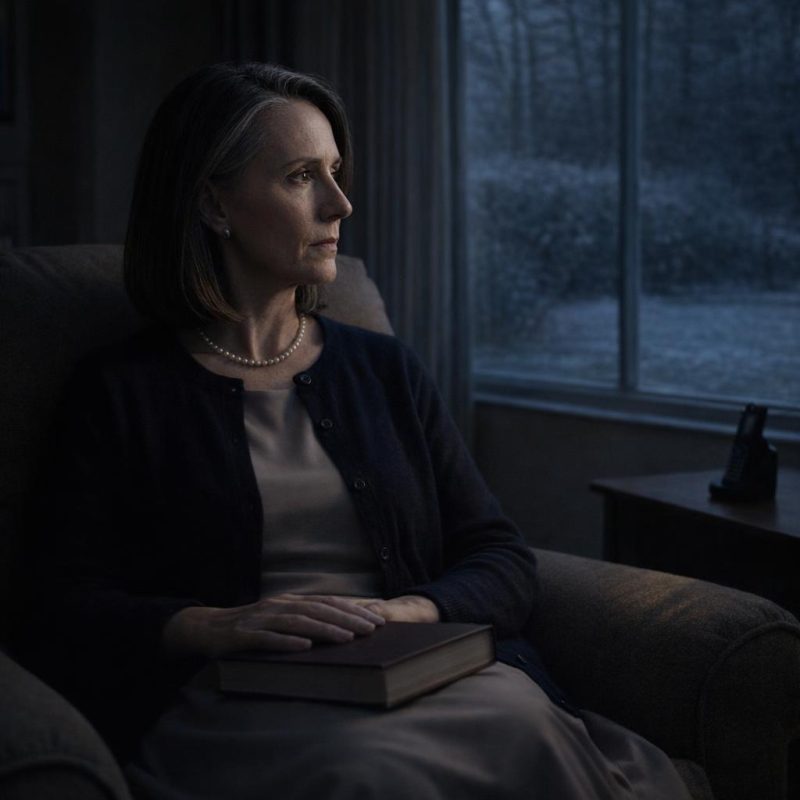 Image by RM AI
Letters in a Drawer
I had always believed in the value of putting things into words. It was something I had told the children at the library for years — that writing a thing down gave it shape, made it manageable. So I sat at my desk on a Sunday afternoon with good paper and my fountain pen and I wrote to Leo. I told him I missed him in the way you miss a season that has passed — not with anger, exactly, but with a kind of bewildered ache. I asked him, as plainly as I could, what I had done wrong. I told him that if I had caused him some hurt I did not know about, I wanted the chance to understand it. I wrote for nearly an hour. When I finished, I folded the letter carefully along its creases and held it for a moment. Then I opened the center drawer of my writing desk. There were six other letters there, each one folded the same way, each one addressed to no one because I had never gotten as far as writing his name on an envelope. I set the new letter on top of the stack. I looked at them for a moment — seven letters now, all of them saying versions of the same thing, none of them ever sent. I closed the drawer, and the small sound it made seemed to belong to something much larger than a piece of furniture.
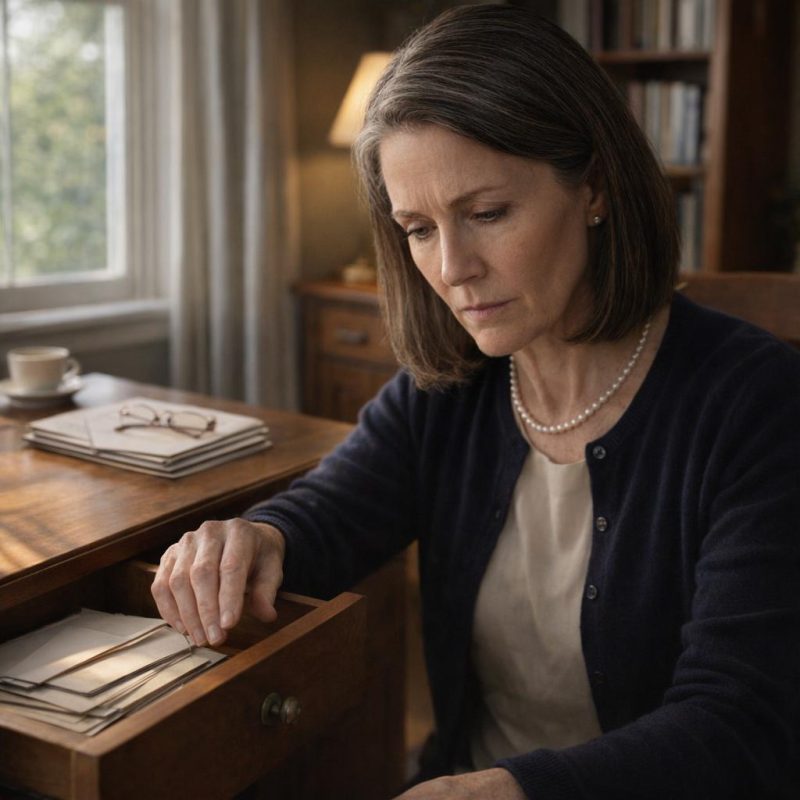 Image by RM AI
Eighteen Months
I was sitting at the kitchen table one morning in early spring when I counted back through the months and arrived at a number that stopped me: eighteen. Eighteen months since Leo had stood in my doorway with that store-bought cake and his careful smile. I sat with that number for a while, turning it over. Then, without quite meaning to, I tried to hear his laugh in my memory — that particular sound he had made since he was a small boy, a little too loud, always a beat behind the joke. I reached for it the way you reach for a word that has slipped just out of reach. It was not there. Not clearly. I could remember that it had existed, the way you remember the general shape of a dream after waking, but the actual sound of it had gone soft and indistinct. I went to my phone and searched for any video I might have saved — a holiday gathering, a birthday, anything with his voice in it. I found photographs but no recordings. I carried the phone to the front room and sat down with it and scrolled through the pictures slowly, studying his face in each one. He was smiling in most of them. I looked at his open mouth in one photograph, mid-laugh at something I could no longer remember, and I could not hear a single note of it.
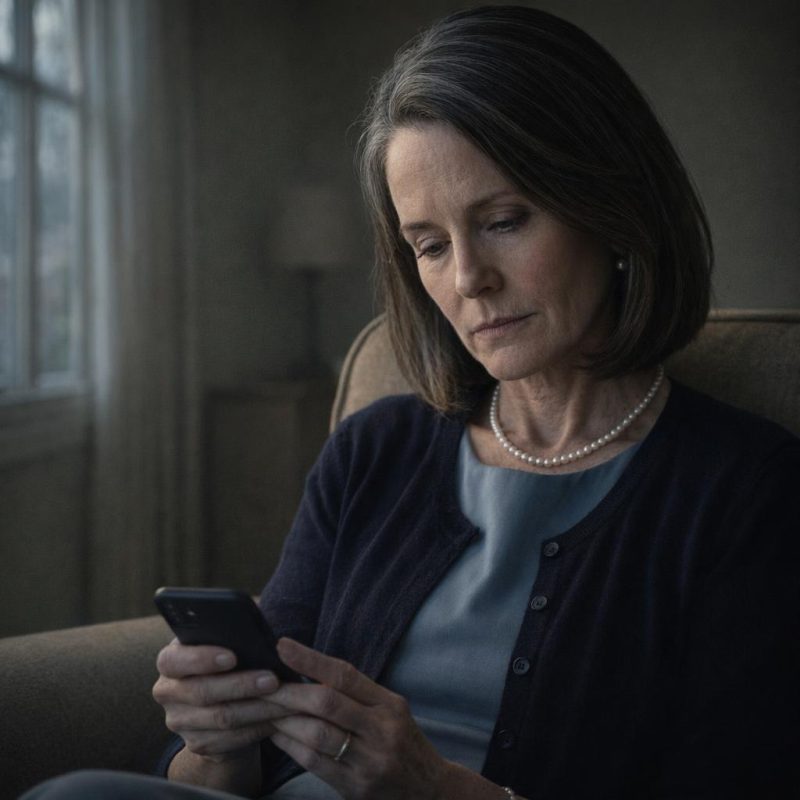 Image by RM AI
The Empty Mailbox
It began as something I told myself was practical. The mail came in the early afternoon, and I had always collected it promptly — it was simply good habit, nothing more. But somewhere in the second week after my birthday I noticed that I had begun walking to the mailbox with a particular kind of attention, a held-breath quality that had nothing to do with bills or circulars. I was looking for something from Leo. A card, perhaps, or even just a note on plain paper. Something that said he had thought of me. Each afternoon I lifted the small metal door and looked inside. Each afternoon there were envelopes — the electric bill, a furniture catalog, a reminder from my dentist — and nothing else. I carried them back to the house and set them on the kitchen counter and did not look at them again until evening. I did this for seven days in a row. By the seventh day the walk itself had changed in character. My steps were slower going out than coming back. I knew, before I reached the end of the front path, what I would find. And yet I went. I opened the door, looked inside at the thin stack of impersonal envelopes, and closed it again. The small metallic sound the latch made as it caught seemed, in the quiet of that afternoon, to be the only answer I was going to get.
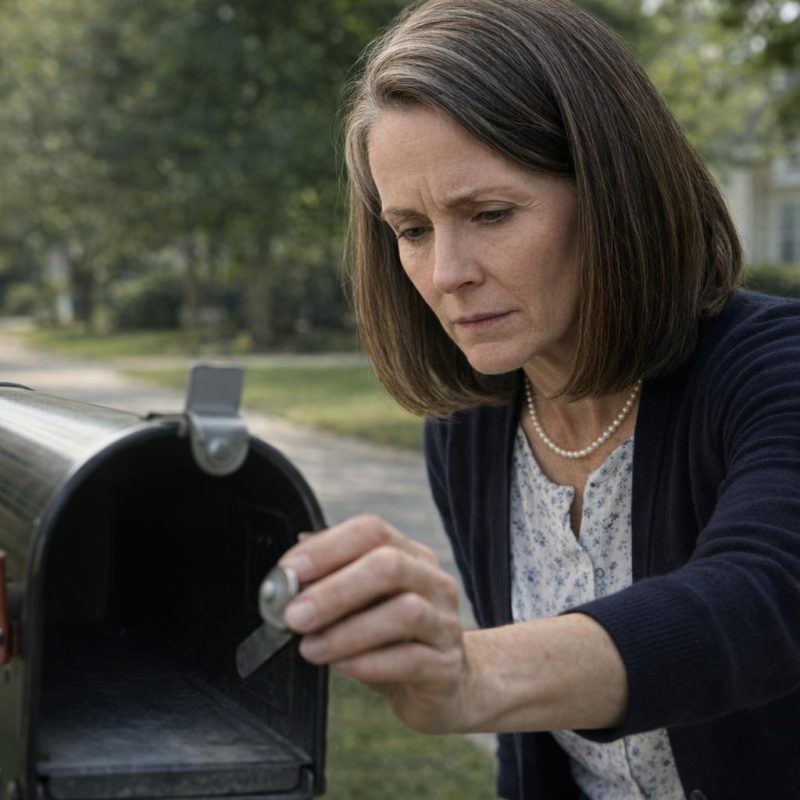 Image by RM AI
Two Years
The date came up on my calendar the way ordinary dates do — quietly, without ceremony. Two years. I sat with that for a long time before I got up from the kitchen table. I went to the front room and settled into the chair by the window, the wingback one with the faded armrests, which happened to be the chair I had been sitting in the last evening Leo visited. I remembered him standing in the doorway with his coat already on, saying he would call soon. I had believed him. I had believed him completely, the way you believe someone you have known since they were small enough to carry. I thought about all the explanations I had constructed over the months — that he was busy, that something had happened at work, that Vanessa had pulled him in a direction I did not yet understand. I had held each of those explanations carefully, the way you hold something fragile, because the alternative was too large to look at directly. But sitting in that chair on that particular morning, with two years between me and the last time I had heard his voice, I found I could not hold them anymore. He was not coming back. I did not know why. I was not sure I would ever know why. I let myself cry, finally, without trying to be sensible about it, and the grief settled into my chest and simply stayed there, heavy and still.
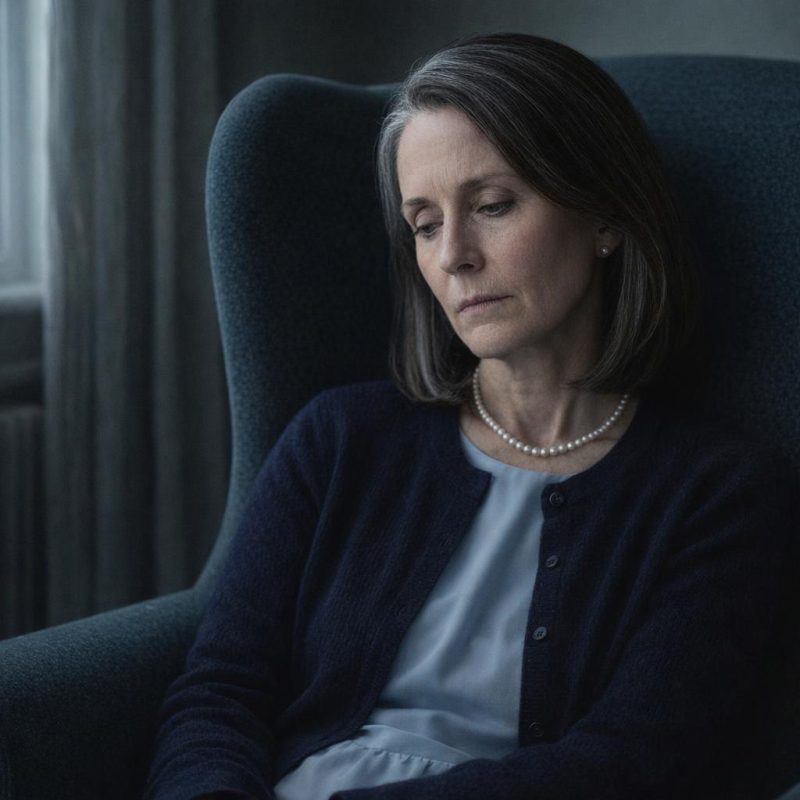 Image by RM AI
The Prescription Refill
Life has a way of continuing regardless of what you are carrying inside it. The prescription reminder came by automated telephone call on a Tuesday, the same as it always did, and I wrote the pickup date on the notepad by the phone, the same as I always did. That Thursday I drove to the pharmacy on Clement Street, parked in the small lot behind the building, and went through the motions with the mechanical precision of someone who has performed the same errand many hundreds of times. I gave my name at the counter. The young woman typed it in and told me it would be a few minutes. I thanked her and moved away from the counter to wait. The store was quiet at that hour — a weekday morning, the kind that belongs mostly to retirees and people between appointments. I walked slowly down the vitamins aisle without any particular intention, reading labels I had no interest in, simply occupying the time. I was thinking about nothing, or trying to. The fluorescent light above me hummed in its steady, indifferent way. I turned at the end of the aisle and started back, and that was when I saw him — a young man standing near the cold remedies, his back partly toward me, something familiar in the set of his shoulders and the way he held his head.
 Image by RM AI
A Kind Face
He turned before I could decide whether to say anything, and I saw his face clearly. It was Ethan — older, of course, the boyishness mostly gone, but unmistakably him. I had known him since he was nine years old, had fed him dinner at my table more times than I could count, had watched him and Leo tear through my back garden on summer afternoons as though the world were made entirely for their benefit. Seeing him there, under the flat pharmacy light, produced a warmth in me that I had not felt in some time. I said his name before I thought about it. He looked up and went very still for a moment, and then he came toward me with the kind of deliberate, careful walk that people use when they are approaching someone they are not sure how to reach. I smiled at him. I was genuinely glad to see him — a face that belonged to a happier chapter, a reminder that the world I had known had been real. He stopped in front of me, and I saw then that his expression was not the easy, uncomplicated pleasure I had expected. His eyes were dark with something I could not immediately name. It was not surprise, exactly, and it was not simple sadness. It was the particular look of someone who has been carrying a weight they did not know how to set down, and I felt the warmth in my chest go quiet.
 Image by RM AI
Condolences
He reached out and took both of my hands in his, gently, the way people do at funerals. That was the first thing that struck me as wrong — not unkind, but wrong, the gesture belonging to a different kind of moment than a chance meeting in a pharmacy aisle. He said he was so sorry. He said it the way people say it when they mean something specific, not as a pleasantry. I thanked him, because that is what you do, and I asked him how he had been, trying to find the ordinary shape of the conversation. But he did not follow me there. He kept his hands around mine and looked at me with that same weighted expression and said again that he was truly, deeply sorry for everything I had been going through. I did not know what to say to that. I stood there holding his hands in the middle of the aisle, the cold remedies on one side and the antacids on the other, trying to locate the tragedy he was referring to. I was not aware of having suffered anything beyond the ordinary grief of Leo's silence, and I had not spoken of that to Ethan in years. His words had the shape of condolences, the specific gravity of them, and I could not find anything in my recent life that seemed to warrant them. The confusion settled over me like something physical, soft and disorienting, and I could not find my footing in it.
 Image by RM AI
The Wrong Kind of Sorry
I tried to reassure him. I told him I was quite all right, that the past two years had been quiet and a little lonely, but that I was managing well enough. I said Leo had been very busy — his career, his social obligations, the demands of a young man building a life — and that I understood. I told Ethan I prayed every week that Leo would find his way back to me when things settled down, that I kept his old room just as it was, that I still set two coffee cups out of habit some mornings before I caught myself. I said it all in the measured way I had practiced saying it, the way that made it sound like patience rather than grief. Ethan's hands had dropped to his sides. He was staring at me with an expression I could not immediately name — not pity, not sadness, but something closer to disbelief, as though I had said something that did not fit the shape of the world as he understood it. His mouth opened slightly and then closed again. I watched him try to find words and fail. Whatever I had said, it had not reassured him. It had done something else entirely, something I could not yet name, and the look on his face made my heart begin to knock against my ribs.
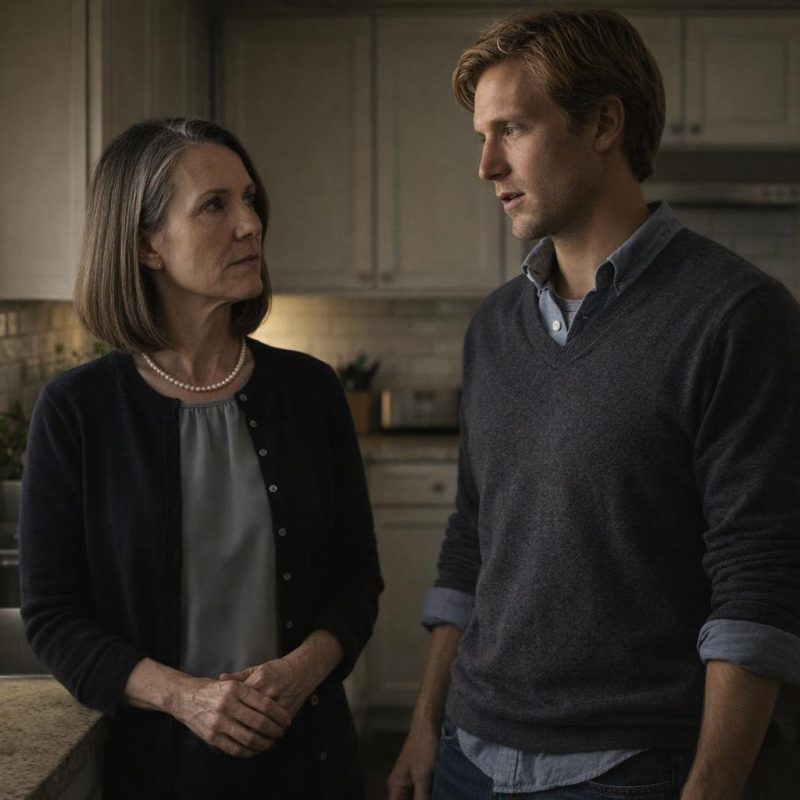 Image by RM AI
Didn't He Tell You
He took a small step back, as though he needed the distance to think. His hands, which had been so warm around mine a moment before, hung at his sides now, and he looked at me the way you look at something that should not be possible. I asked him what was wrong. He did not answer right away. He glanced down the aisle in both directions, a quick, almost furtive look, and then back at me. When he finally spoke, his voice had dropped to barely above a whisper. He asked me if Leo had told me. Just that. If Leo had told me. I said I did not understand what he meant. I asked what Leo was supposed to have told me. Ethan pressed his lips together and looked at the floor for a moment, and I could see something working behind his eyes — not reluctance exactly, but the particular struggle of a person who has just understood that they are about to say something that cannot be unsaid. My heart was pounding now in a way I had not felt in years, a deep, slow, dreadful pounding, the kind that tells you before your mind does that something is very wrong. He looked up at me, and his voice came out in four words that landed like stones: "Dorothy, he told us."
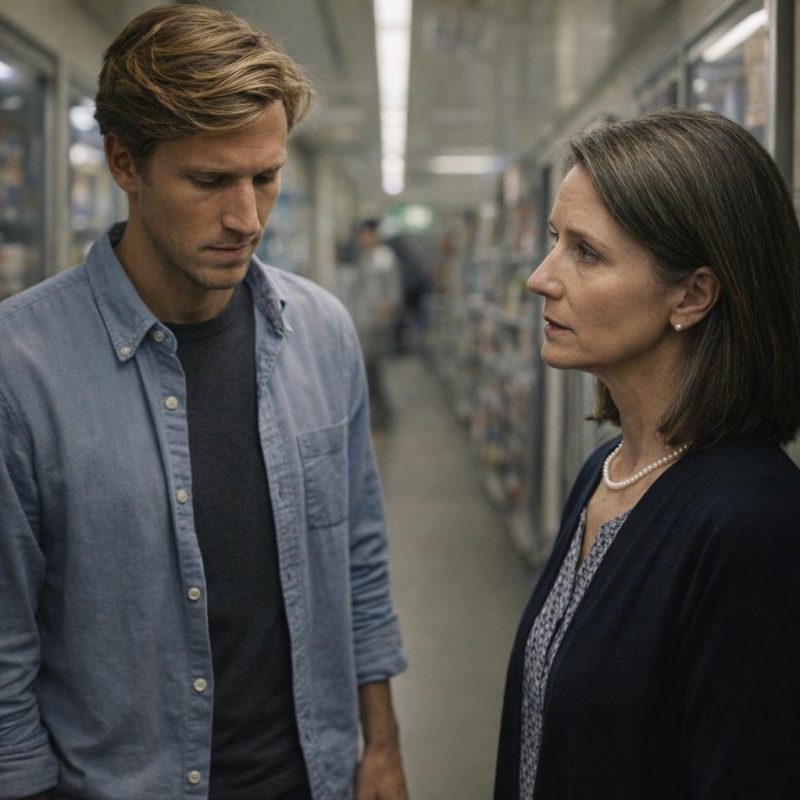 Image by RM AI
The Lie Revealed
He told me slowly, carefully, the way you tell someone something that might break them. He said that about two years ago, Leo had gathered people — friends, coworkers, a few distant relatives — and told them that I had been diagnosed with severe dementia. Not the gentle, forgetting-your-keys kind, Ethan said, his voice barely holding. Leo had told them I had become volatile. Dangerous, even. He said the word violent and I heard it the way you hear a sound in the night that you cannot immediately place. Ethan said Leo had told everyone that I had attacked him during one of my episodes, that the doctors had said I could no longer live alone, that he had been forced — heartbroken, he had apparently said, absolutely heartbroken — to have me placed in a facility. A locked one. Out of state. Ethan said the words locked psychiatric facility and I felt the floor of the pharmacy become uncertain beneath my feet. I was standing in the cold remedies aisle in my good wool coat with my basket over my arm, and somewhere out in the world, in the minds of everyone who had ever known me, I was locked away in a room I had never seen, lost to a disease I did not have, and my grandson had put me there.
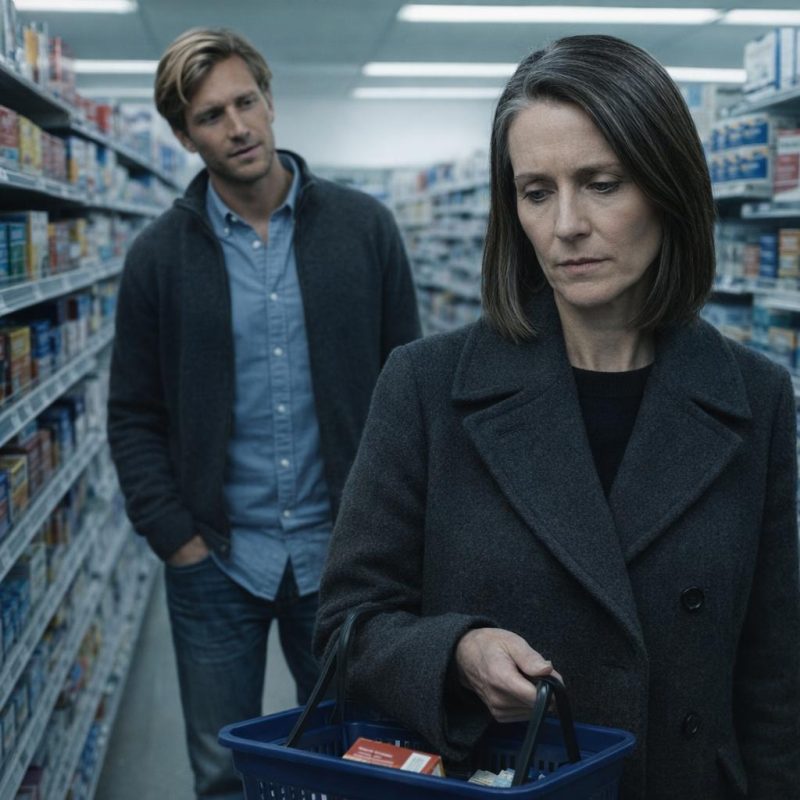 Image by RM AI
Standing in the Wreckage
I did not speak. I am not sure I could have. Ethan stood beside me and did not try to fill the silence, which was the kindest thing he could have done. The pharmacy hummed around us — the refrigerator cases at the back, the faint music from the speakers overhead, a child somewhere in the next aisle asking for something in that persistent, rising way children do. All of it continued as though nothing had changed, and I found that almost unbearable. I kept hearing Ethan's words in the order he had said them. Dementia. Violent. Locked facility. Out of state. I turned them over the way you turn over an object you have found on the ground, trying to understand what it is and how it came to be there. Two years of silence. Two years of telling myself Leo was busy, that he would call when things settled, that the distance between us was temporary and ordinary. Two years of coffee cups and kept rooms and quiet Sunday prayers. And all that time, in the story Leo had told the world, I was already gone. I was not waiting for him. I was not here at all. The understanding did not arrive like a wave. It settled into me slowly, the way cold does when you have been standing outside too long, working its way into the bones until it is simply part of you.
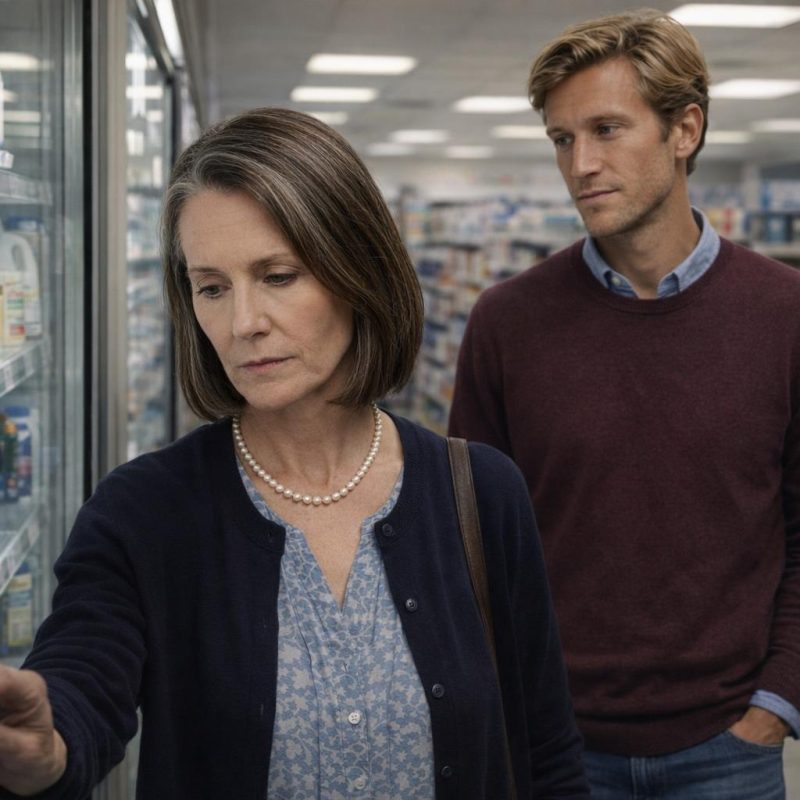 Image by RM AI
The Farewell Dinner
Ethan was the one who broke the silence. He said there was something else I needed to know, and his voice had the same careful quality as before, the voice of a man delivering news he wishes he did not have. He told me that about six weeks after Leo spread the story, Leo and Vanessa had hosted a dinner. A farewell dinner, Ethan called it, though the word sat wrong in my mouth when I repeated it back to him. He said Leo had invited a dozen people — close friends, a few colleagues — and stood up at the table and gave a speech. He talked about what a wonderful grandmother I had been. He talked about how hard it was to watch someone you love disappear. He said he was grieving, Ethan told me, that Leo had actually used that word, grieving, as though I were already dead and buried rather than sitting in my house twelve miles away, eating my supper alone and wondering why he never called. Vanessa had sat beside him the whole evening, Ethan said, her hand on his arm. Everyone had believed it. Everyone had offered their condolences. And Leo had accepted every one of them, gracious and sorrowful, while I sat in my kitchen not knowing any of it was happening.
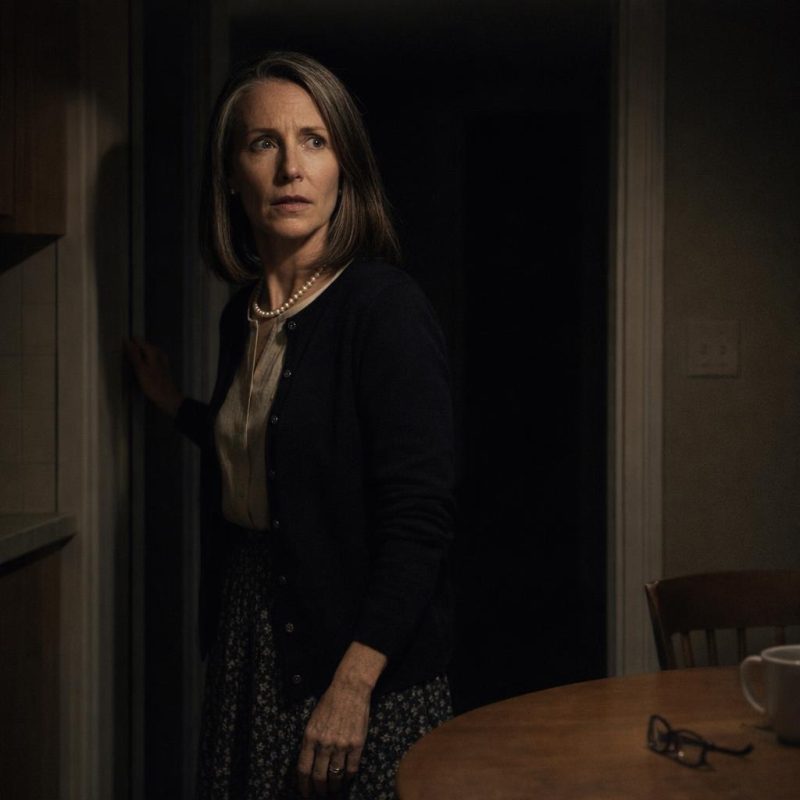 Image by RM AI
The Performance
Ethan told me Leo's voice had broken during the speech. He said it quietly, almost apologetically, as though the detail itself embarrassed him now. He said Leo had paused in the middle of a sentence, pressed his hand to his mouth, collected himself. He said people had gotten up from their chairs to embrace him. He said a woman named Carol — I knew Carol, I had sent her a Christmas card every year for a decade — had wept openly and told Leo he was so brave. Ethan said he himself had put a hand on Leo's shoulder and told him that I would have been proud of the man he had become. He said those words to me in the pharmacy aisle and then stopped, and I could see the shame of it on his face, the particular shame of having been made a fool of by someone you trusted completely. I did not blame him. I could not. I knew better than anyone how convincing Leo could be when he wanted something. I stood there and I let myself picture it — the candlelit table, the bowed heads, the hands reaching out to comfort my grandson while he performed his grief for a room full of people who had no reason to doubt him. The image settled over me like something cold and permanent, and I did not move.
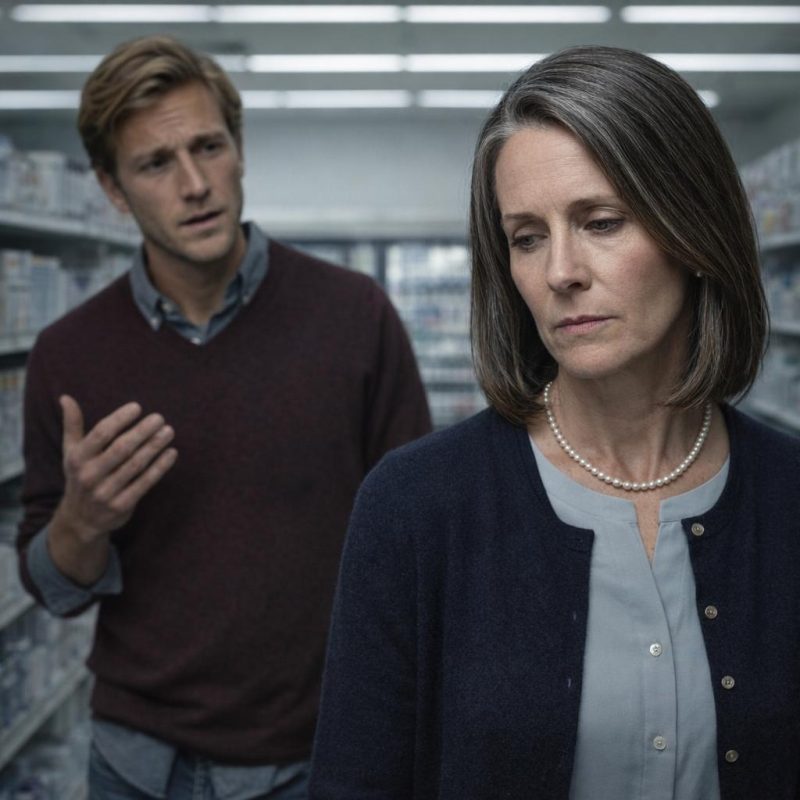 Image by RM AI
Fifty Thousand Dollars
Ethan said there was one more thing. He reached into his coat pocket and took out his phone, and I watched him navigate to something with the careful deliberateness of a man who has rehearsed this moment and still is not sure he is ready for it. He turned the screen toward me. It was a fundraising page. The kind I had seen shared on social media, the kind people create for medical emergencies and hospital bills. The title read something about memory care and ongoing treatment costs, and below it was a photograph. I recognized it immediately. It was from Leo's college graduation — I was standing beside him in my blue dress, squinting a little in the afternoon sun, smiling the way you smile when you are genuinely happy and do not know anyone is watching. Leo had cropped himself out. It was only me, slightly blurred, looking confused in the way the light had caught my expression, and beneath it was a description of my supposed condition that I will not repeat because the words were not mine and never had been. Ethan scrolled down without being asked. The total raised sat at the bottom of the page in large, clean numerals: fifty-two thousand, four hundred dollars. I stared at my own face looking back at me from that screen.
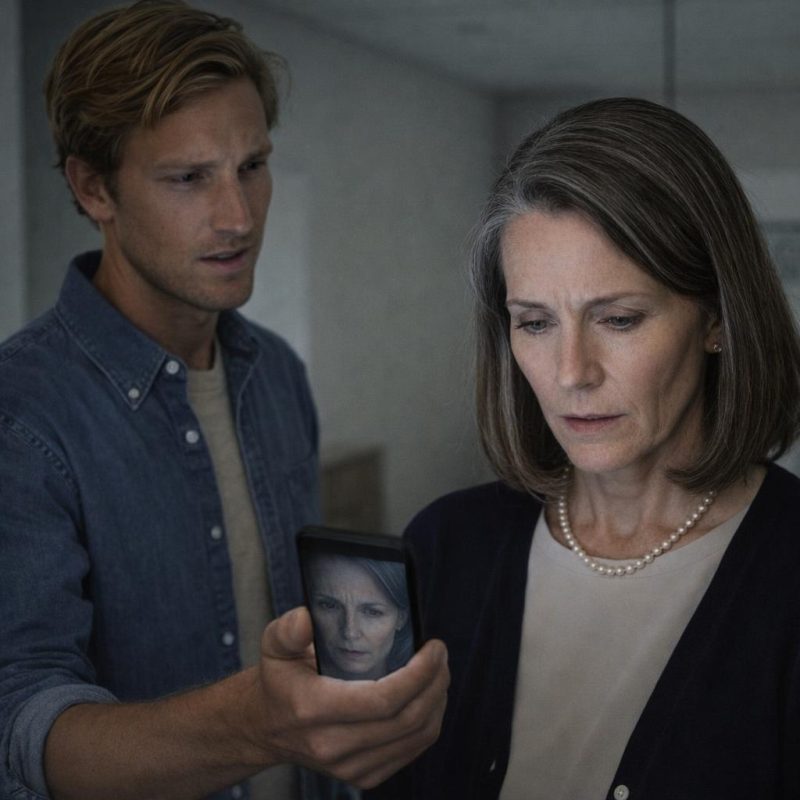 Image by RM AI
The Drive to the Station
I handed the phone back to Ethan. My hand was steady. I noticed that about myself in a distant, almost clinical way — that my hand was perfectly steady, that my voice, when I spoke, came out level and clear. I told him I needed him to drive me to the police station. Not tomorrow. Not after I had gone home and thought about it. Now. He looked at me for a moment, and whatever he saw in my face was apparently sufficient, because he simply said yes and put his phone back in his pocket. We walked out of the pharmacy together, past the cold remedies and the antacids and the young woman at the register who wished us a good afternoon, and none of it seemed quite real. Ethan held the door. I got into the passenger seat of his car and set my basket on my lap and looked straight ahead through the windshield at the ordinary street, the ordinary afternoon, the world going about its business as though nothing had shifted. I had spent two years being patient. I had spent two years being understanding and quiet and alone. That was finished now. As Ethan pulled out of the parking lot and pointed the car toward town, a stillness came over me that had nothing to do with peace and everything to do with purpose, and I sat with it all the way to the station.
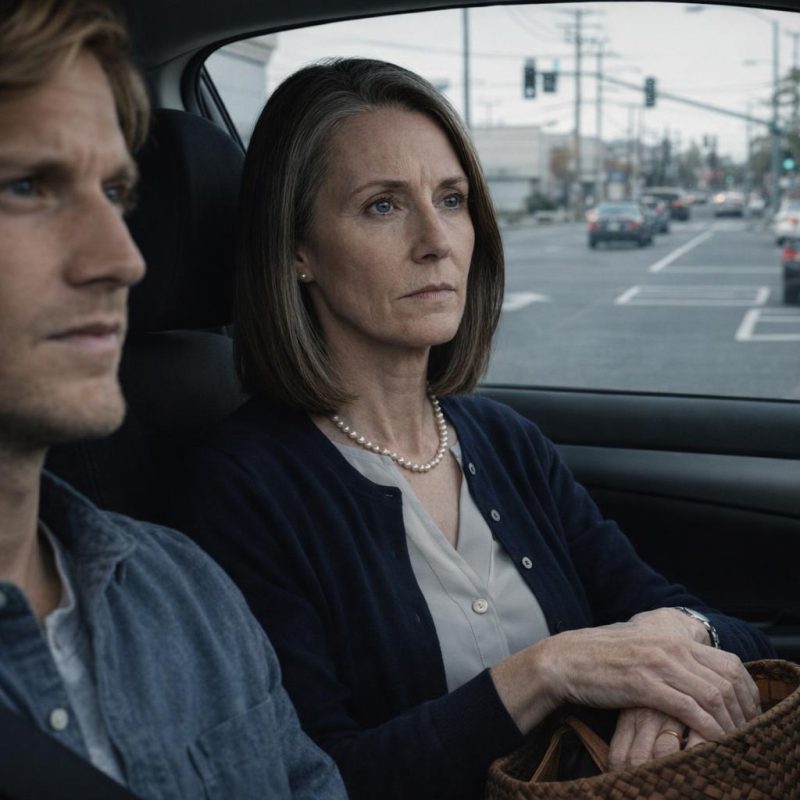 Image by RM AI
The Evidence
The interview room at the police station was small and smelled of old coffee and industrial cleaner, and Detective Morrison had the kind of steady gray eyes that made you feel he had heard every variety of human trouble and was prepared to hear one more. I sat across from him with my hands folded on the table and told him, as plainly as I could, that my grandson had told people I had dementia when I did not. I told him about the two years of silence, about the fundraising campaign I had never authorized, about the money collected in my name. Then I opened my folder. Dr. Patterson's records were on top — three pages of clean, dated documentation, the most recent evaluation less than a month old, every cognitive marker well within normal range. I set them on the table and watched him read. Ethan sat beside me and pulled up the fundraising campaign on his phone, turning the screen so Detective Morrison could see the photographs, the donation totals, the language about my deteriorating condition. The detective did not rush. He read everything twice. He asked me several careful questions, and I answered each one without embellishment. When he set the papers down and said the words wire fraud, something in my chest settled into a quiet I had not felt in two years — not relief exactly, but the particular stillness of a woman who had stopped being a victim and started being a witness.
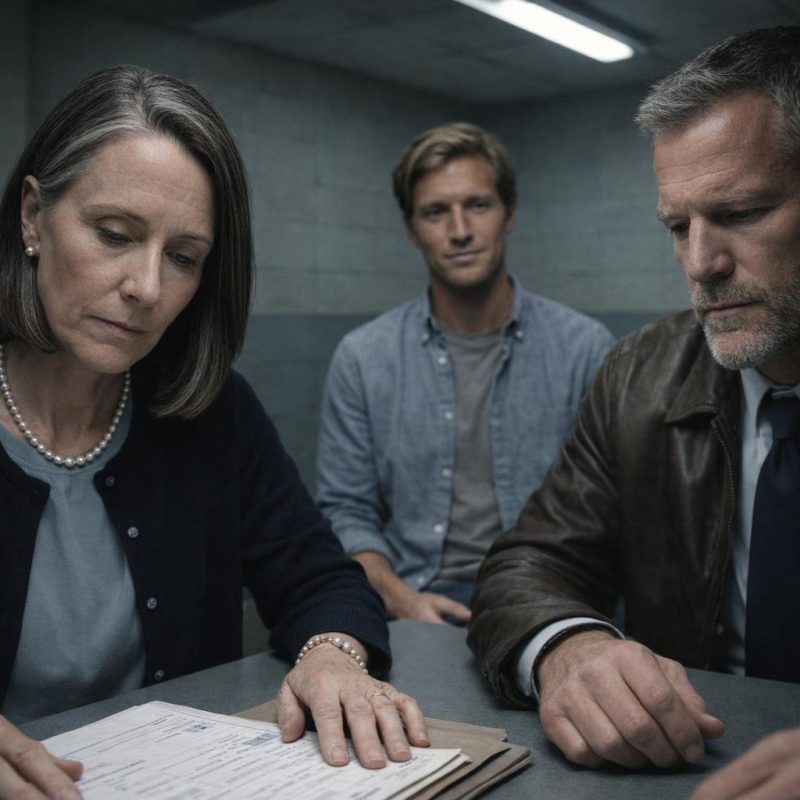 Image by RM AI
The Investigation Begins
Detective Morrison explained the process in the same measured tone he had used throughout — methodical, unhurried, as though the weight of what he was describing required that kind of steadiness. Wire fraud. Grand larceny. He said the amounts collected through the campaign, combined with the documented false statements, gave him sufficient grounds to open an immediate investigation. He slid a formal statement form across the table and asked me to walk him through everything from the beginning. I did. I described the last two years in careful sequence — the silence that had descended after Vanessa entered Leo's life, the unanswered calls, the neighbor who had mentioned the fundraiser in passing, the afternoon in the pharmacy when Ethan had shown me the campaign on his phone. I did not editorialize. I simply told him what had happened, in the order it had happened, and he wrote it all down. Ethan gave his own statement afterward, confirming what he had witnessed and when. Detective Morrison told us the investigation would take time — that we should not expect a quick resolution and that I should not attempt to contact Leo while it was ongoing. I told him I understood. Then he pushed the complaint form toward me, and I picked up the pen, and I signed my name in the same careful hand I had used to sign report cards and library cards and birthday letters for sixty years.
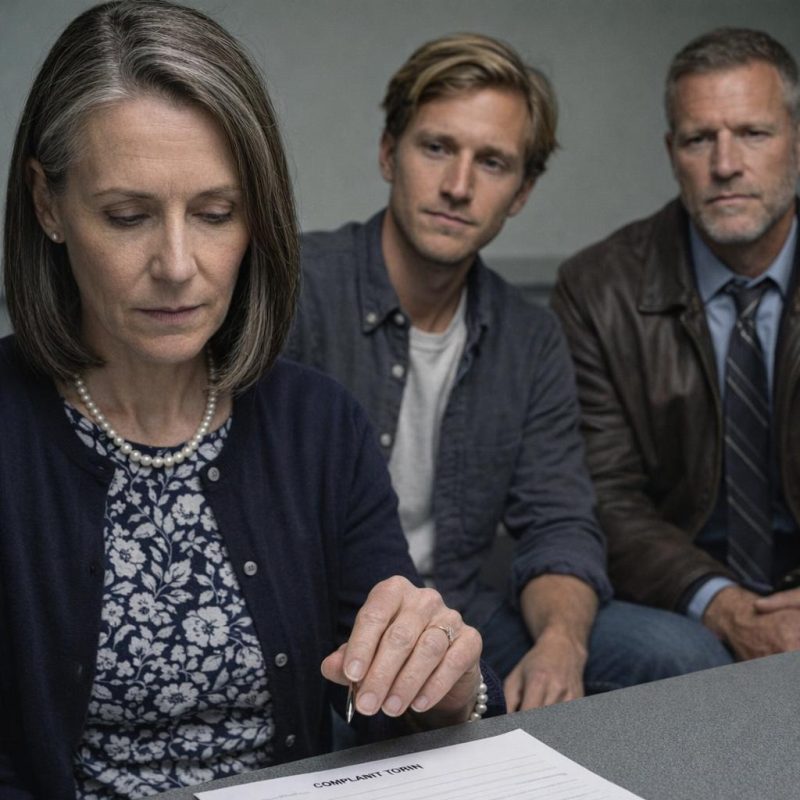 Image by RM AI
The Waiting
I drove myself home from the police station that evening, which surprised me a little — I had half expected my hands to shake on the wheel, or for some delayed wave of emotion to arrive once the adrenaline of the afternoon had passed. It did not. I made myself a cup of tea, sat at the kitchen table, and listened to the house settle around me in the dark. The days that followed had a particular quality to them — quiet, but not the hollow quiet of the previous two years. This was something different. I kept to my routines. I watered the plants on the back porch. I returned my library books and checked out two more. I attended my Tuesday morning Bible study and said nothing to anyone about what I had set in motion. Detective Morrison had asked me not to discuss the investigation, and I honored that without difficulty. There was nothing to discuss, really. The evidence was in his hands now. The machinery of consequence was turning, slowly and without my assistance, and my only task was to wait. I did not contact Leo. I did not drive past his apartment or look at the fundraising page again. I simply lived my days, one after another, for two full weeks, and felt beneath the ordinary surface of each one a deep and untroubled certainty, like bedrock.
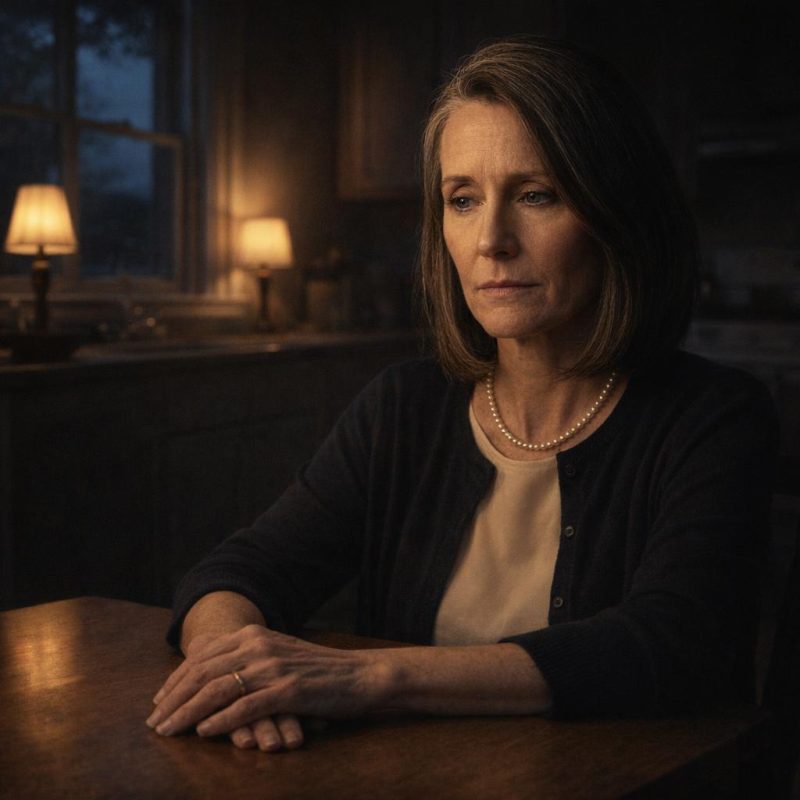 Image by RM AI
The Charity Gala
The call came on a Thursday morning while I was deadheading the roses along the back fence. I heard my phone ring from the kitchen windowsill and went inside, still wearing my gardening gloves. It was Ethan. He asked if I was sitting down, and I told him I was standing in my kitchen and that he should simply tell me. He said Leo and Vanessa were hosting a charity gala — a formal fundraising dinner at the Hargrove Room at the Bellmont Hotel, with a guest list, a catered meal, a silent auction, and a projected fundraising goal of twelve thousand dollars, all of it ostensibly for my ongoing care. He had seen the invitation through a mutual acquaintance. He said the event had a printed program with my photograph on the cover. I pulled off one gardening glove and set it on the counter and stood very still while he talked. I asked him if Detective Morrison knew. He said he had already called him. I asked him for every detail he had — the layout of the room, the expected number of guests, whether it was open to the public or invitation only. He answered each question carefully. When he finished, I thanked him and told him I would be in touch. I set the phone down on the counter beside my gardening glove and looked out the window at the roses I had just been tending. The gala was Saturday evening at seven o'clock, at the Bellmont Hotel on Carver Street.
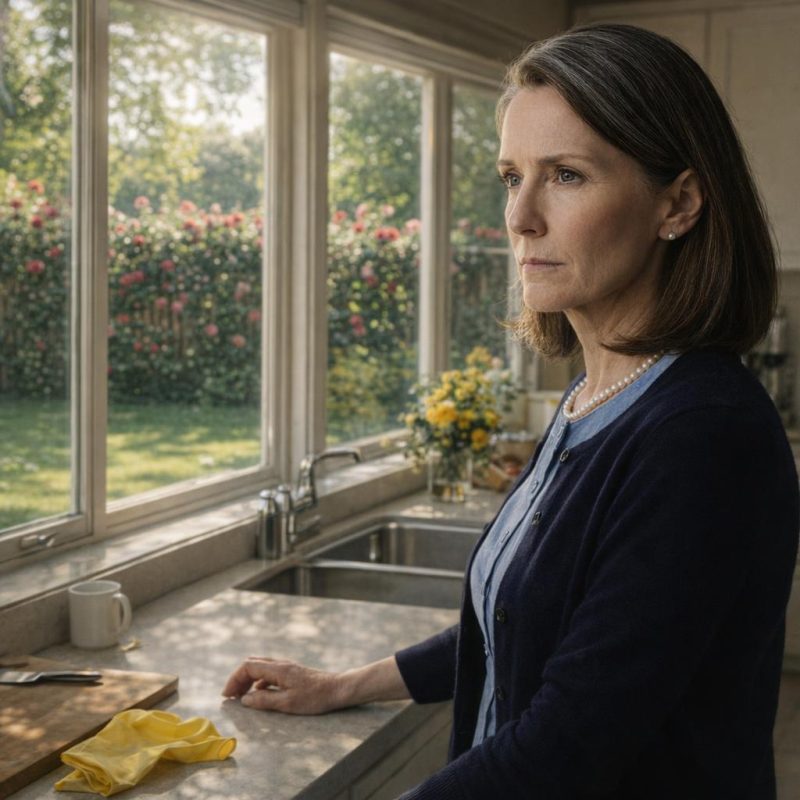 Image by RM AI
The Finest Dress
I opened my closet on Saturday afternoon with the same deliberateness I had once brought to preparing for parent-teacher conferences and library board presentations — occasions that required you to look like exactly who you were, without apology. I knew which dress before I even reached for it. The navy wool crepe, the one I had worn to my retirement dinner eleven years ago, with the pearl buttons at the cuff and the clean, unadorned neckline. I pressed it the night before and hung it on the outside of the closet door so it would be ready. I did my hair the way I always did for formal occasions — pinned back, neat, nothing theatrical. I put on my good pearl earrings, the ones Harold had given me for our fortieth anniversary. I applied my lipstick in the bathroom mirror with a steady hand, a quiet rose that I had worn for decades. Then I put on my wire-rimmed glasses and stood back and looked at myself for a long moment. I was seventy-four years old. I had raised a child who had tried to erase me. I had walked into a police station and laid the evidence on a table without flinching. The woman looking back at me from the mirror had silver hair and good posture and eyes that had stopped asking for permission. She looked ready.
 Image by RM AI
The Ghost Walks In
The Bellmont Hotel's banquet room was warm and bright when I arrived, filled with the sound of a string quartet and the low murmur of perhaps eighty guests in evening dress. I could see round tables set with white linens and candles, a podium at the far end of the room, and near it, a large printed banner with my photograph — the one from my retirement, I realized, the one that had sat on Leo's bookshelf for years. I walked in through the main entrance at seven fifteen, after the room had filled, and I did not hurry. I moved through the edge of the crowd at a measured pace, my handbag over my arm, my back straight. The first person to notice me was a woman near the door who stopped mid-sentence and simply stared. Then the man beside her turned. Then the couple at the nearest table. The murmuring thinned and then stopped, and the silence spread outward through the room like a stone dropped in still water, until even the guests near the podium had turned to look. I kept walking. I did not smile or wave or offer any explanation. I simply walked through the center of the room, past the tables and the candles and the banner with my face on it, and I let them look. Across the room, near the podium, I saw Leo. The color left his face as though someone had pulled a drain.
 Image by RM AI
The Scream
For a moment, Leo simply stood there, one hand resting on the podium, his mouth slightly open, looking at me the way a man looks at something he has convinced himself cannot exist. Then Vanessa moved. She stepped forward from beside him, her voice cutting across the silent room before she had fully turned to face the crowd. She said I had escaped. Those were her exact words — that I had gotten out, that I was confused and disoriented and that someone needed to call the facility immediately. Her voice was loud and certain at first, the way it always was, and I watched several guests near the front take a half-step back, uncertain. I did not speak. I stood where I was, in my navy dress with my pearl earrings and my wire-rimmed glasses, and I let her talk. She said I was dangerous. She said I didn't know where I was. She turned to Leo and said his name sharply, demanding he do something, and he still had not moved, still had not spoken, still had not looked away from me. Vanessa turned back to the room and said it again — that I had escaped, that this was a medical emergency — and this time her voice climbed higher and thinner, and I could hear the place where it began to crack, and the guests could hear it too, and the murmuring that rose around us was no longer uncertain. The silence that followed the crack in her voice was the loudest thing in the room.
 Image by RM AI
The Handcuffs
Two men near the back of the room set down their glasses at the same moment and moved forward through the crowd with the unhurried efficiency of people who had been waiting for a specific cue. I recognized Detective Morrison by his gray temples and his plain dark suit. The second detective I had not met before — younger, with close-cropped hair, moving toward Vanessa with the same quiet purpose. The guests parted without being asked. Detective Morrison reached Leo first and identified himself in a clear, carrying voice, and then he said the charges — wire fraud, grand larceny — and the words fell into that bright, candlelit room like stones into still water. Vanessa began to protest immediately, her voice sharp and insistent, but the second detective spoke over her in a tone that left no room for negotiation, and she stopped. I watched Leo's hands as the detective reached for them. Leo turned his head and looked at me across the room — not with anger, not with defiance, but with something that looked, in that moment, like the face of a boy who had finally understood the full cost of what he had done. I did not look away. I stood in my navy dress with my hands at my sides and I did not look away. The sound of the handcuffs closing around his wrists carried clearly across the quiet room.
 Image by RM AI
The Truth Spoken
Detective Morrison turned to face the room after Leo and Vanessa were secured, and he spoke in the same clear, carrying voice he had used to announce the charges. He explained that the fundraising campaign — the one that had filled this very room with donors and goodwill — had been built on a fabrication. There was no degenerative illness. There was no failing memory. The woman the campaign had described did not exist. He said my name, and then he said I was standing in this room, in full health, and had been for the entirety of the two years during which donations had been collected in my name. I heard the sound move through the crowd — not quite a gasp, not quite silence, but something between the two, a collective intake that seemed to press against the walls. Someone near the front said, quietly, that they had given money. Someone else said they had shared the campaign with their entire church. Ethan moved to stand beside me without a word, close enough that I could feel the steadiness of him there. Detective Morrison confirmed that Leo and Vanessa would face criminal charges, and the two detectives guided them toward the exit as the guests parted. I watched the room turn to look at me — not with pity, but with the slow, dawning recognition that I was exactly who I had always been.
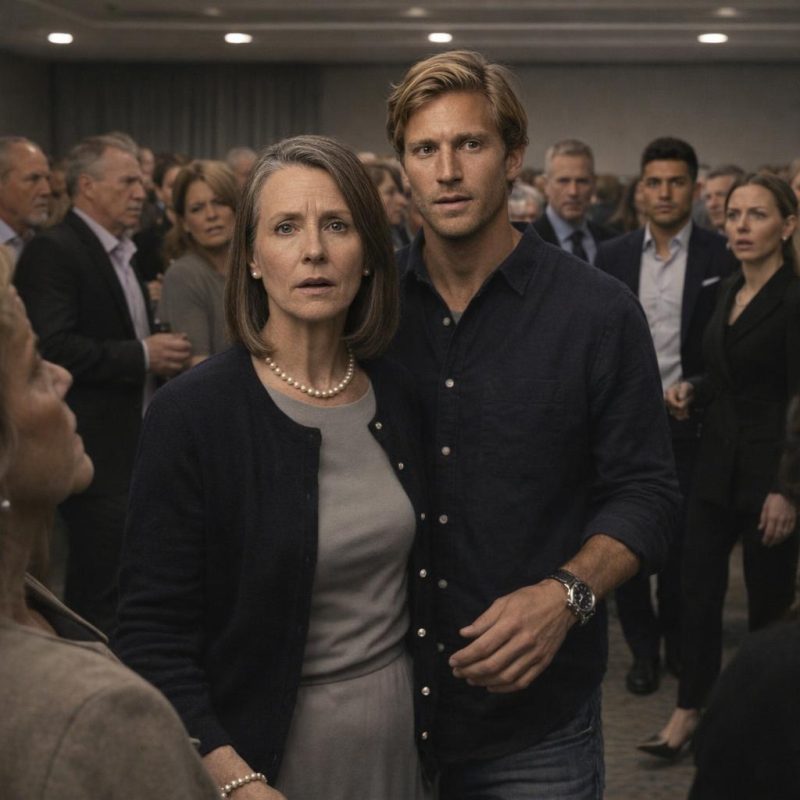 Image by RM AI
The Statement
The reporters were already gathered on the pavement outside when Ethan walked me through the door. There were more of them than I had expected — cameras, microphones, a young woman with a notepad who stepped forward before the others. I had not planned a speech. I had only planned to tell the truth, which I had found, over the past two years, to be a surprisingly simple thing once you stopped being afraid of it. I told them that my grandson had stopped speaking to me approximately two years ago, without explanation or farewell. I told them that I had later learned he had been telling people — donors, acquaintances, anyone who would listen — that I was no longer mentally competent, that I required care I could not afford, that their generosity was urgently needed. I told them that I had never received a single dollar of those funds, and that I had brought documentation of that fact to the police. The young woman with the notepad asked whether I was angry. I thought about it honestly before I answered. I said that I was tired, and that tired was its own kind of answer. Detective Morrison stepped forward then and confirmed the charges on record. Ethan kept his hand at my elbow the entire time, and when the last question was asked and the cameras finally lowered, I stood on that pavement and felt the full, settled weight of having said it all out loud.
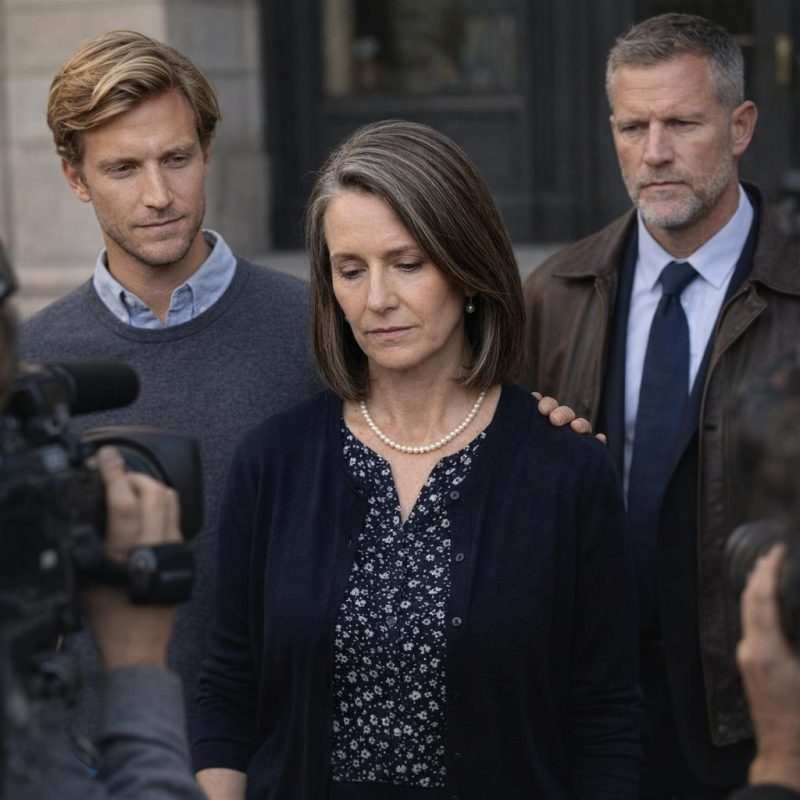 Image by RM AI
The Apologies
The phone began ringing the following morning before I had finished my first cup of tea. The first caller was a woman named Margaret who said she had donated three hundred dollars and had shared the campaign link with her book club. She apologized twice, and then a third time, and I told her gently that she had done nothing wrong — that she had been deceived by someone she had every reason to trust. The second caller was a man who said he had seen the news and wanted to know if there was anything practical he could do. I thanked him and said I would let him know. By early afternoon I had lost count of the calls. Ethan arrived around two o'clock with a container of soup and the particular expression he wore when he was trying not to fuss. He sat across from me at the kitchen table and asked, plainly, how I was managing. I told him the truth — that I felt as though I had been carrying something very heavy for a very long time, and that putting it down had not made me feel light so much as it had made me feel the full extent of how tired my arms were. He nodded as though that made complete sense to him. We sat together for a while after that, not saying much. Then, just as the afternoon light was beginning to soften, there was a knock at the front door — a firm, deliberate knock from someone I did not recognize through the glass.
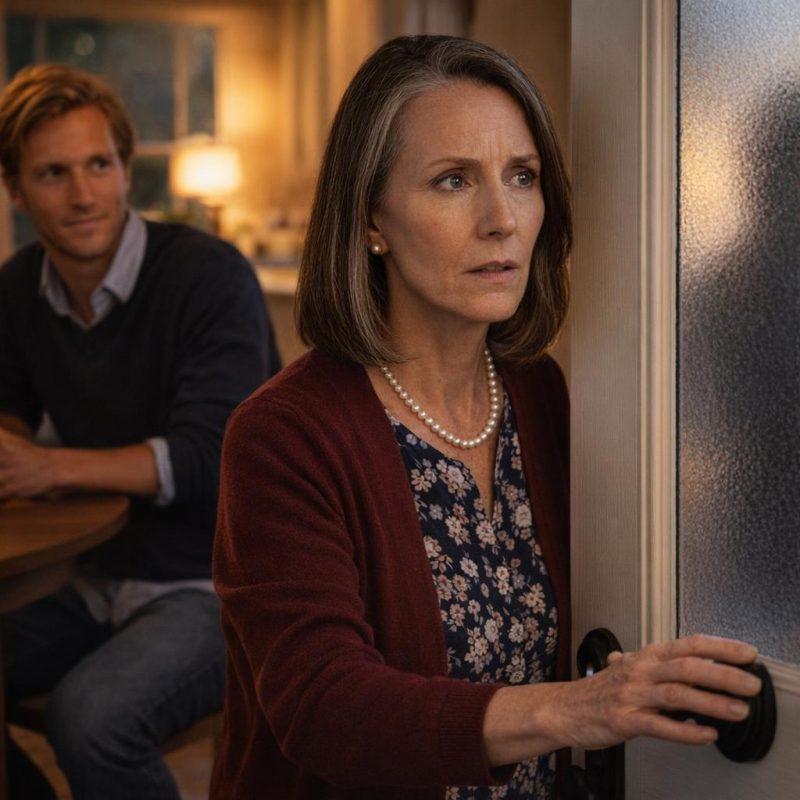 Image by RM AI
The Truth's Power
After Ethan left that evening, I sat in my living room in the chair by the window and let the quiet settle around me. The lamp on the side table cast the same warm circle it always had. The books on the shelf were in the same order I had kept them for thirty years. Nothing in the room had changed, and yet I felt, sitting there, that I was seeing it differently — as though I had been away for a long time and had only just returned. I thought about the two years of silence, the way I had moved through my days with a grief I could not name to anyone because I could not explain it without sounding like a woman who had lost her grip on things. I thought about the morning Ethan had sat at that same kitchen table and told me what he had found. I thought about walking into that gala in my navy dress, and the moment Leo had turned and seen me standing there. I thought about his face when the handcuffs closed. There was pain in all of it — real pain, the kind that does not resolve cleanly or quickly. I did not expect it to. But underneath the pain, steady and unmistakable, was something I had not felt in two years: the knowledge that I had not stayed quiet, that I had gathered my evidence and walked through that door, and that the truth had been worth every step it cost me.
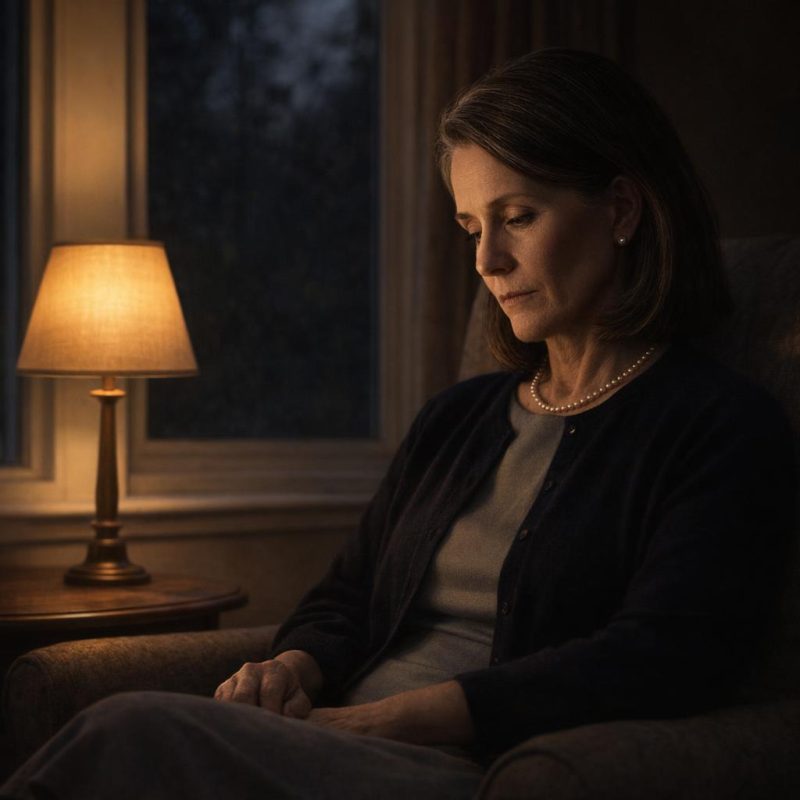 Image by RM AI